



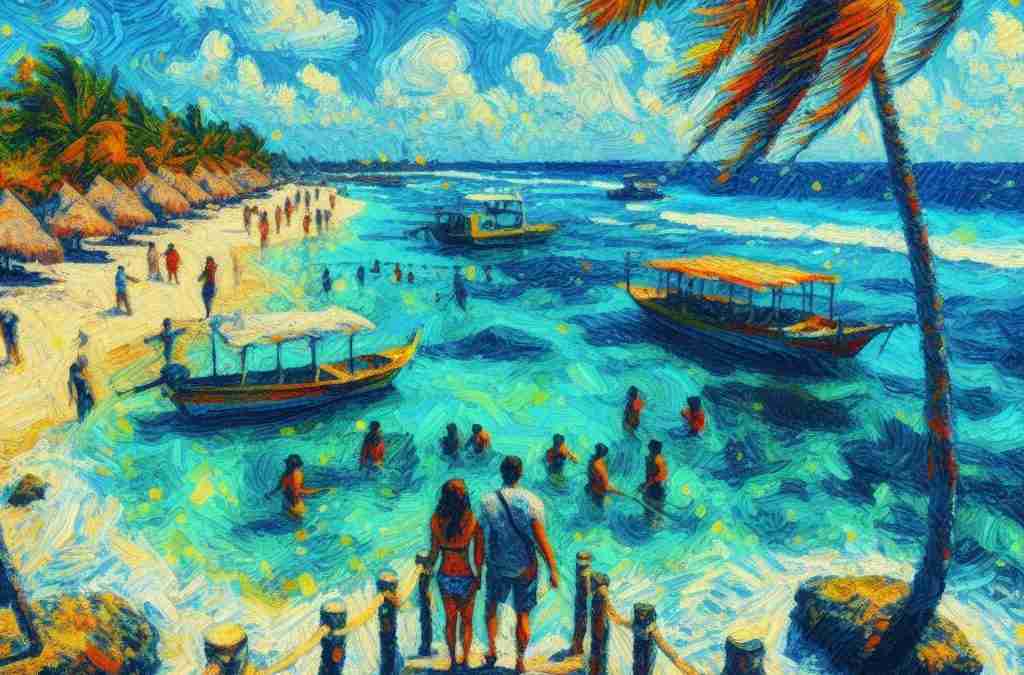
Uncovering Cozumel’s Secret Ocean Paradise
By Tom Seest
Are There Oceans And Seas Around Cozumel And Mexico?
At TopCozumelNews, we help people traveling to Cozumel plan their trips and activities using information collected on our trips to the beautiful island.
Cozumel is one of the most sought-after Caribbean cruise destinations. Visitors often expect to find miles of white sand beach with crystal clear waters. But Cozumel offers so much more than that!
Cozumel’s beaches tend to be mostly rocky, keeping them mostly secluded and uncrowded.

Are There Oceans And Seas Around Cozumel And Mexico?
Table Of Contents
Have You Explored the Breathtaking Waters of the Sea of Cortez?
The Sea of Cortez is an incredible body of water located between Baja California Peninsula and Mexico’s mainland. It has been designated a UNESCO World Heritage Site due to its diverse marine ecosystem.
The sea is an enthralling destination to discover, boasting miles of coastline and endless opportunities for diving or snorkeling. It’s ideal for families as well as those seeking some peace and quiet.
The Sea of Cortez offers serene blue waters, breathtaking scenery and an array of cruises and activities that make it the perfect holiday spot. Take a leisurely sail to the islands or embark on an exciting yacht cruise for an unforgettable cruiser yacht experience!
In addition to being a popular tourist destination, the Sea of Cortez also attracts sportfishers. Here, visitors can see several species of fish and whales such as blue whales, sperm whales, and whale sharks regularly.
Unfortunately, the abundance of these sea creatures is diminishing due to commercial fishing activities. With gill nets and illegal fishing practices becoming more commonplace, catches are now far less than they used to be.
Unfortunately, this has led to a severe depletion of squid – the primary prey item for sperm whales in the area – as well as other smaller fish. While things appear dire right now, we remain hopeful for an improvement soon.
Despite its challenges, the Sea of Cortez is an incredible destination that attracts both adventurers and nature admirers alike. It has been described by John Steinbeck as “ferocious with life” and Jacques Cousteau as the “aquarium of the world”. Regardless of its challenges, visitors to this biodiverse region will not be disappointed!
The Sea of Cortez is a natural marvel and an UNESCO World Heritage Site, so it is imperative that it remains healthy and intact for future generations to enjoy. Many organizations work tirelessly to protect the sea, its animals, and plants living there, with numerous conservation projects currently underway in the area.
Have You Explored the Breathtaking Waters of the Sea of Cortez?
Is the Sea of Mexico Calling You to Cozumel?
The Sea of Mexico is an ocean-like body located within a semi-enclosed bowl-shaped basin. Its vast marine ecosystem has been shaped by various drivers and pressures such as land mass shifts and climate change.
The Gulf of Mexico is a three-dimensional system defined by temperature and salinity gradients between polar regions and the equator, global ocean circulation patterns, and water density differences between northern and southern latitudes (Turner & Rabalais, 2019). It consists primarily of bays and coastal lagoons with low elevations and large bodies of shallow water.
Its general circulation is driven by the Loop Current, which travels clockwise across the upper Gulf of Mexico and is driven by river flow into the sea. As part of global ocean circulation, this current is affected by differences in water density between polar regions and equatorial areas as well as persistent zonal atmospheric winds.
The Gulf of Mexico is known for its numerous beaches and coves, rocky limestone landscapes with white sand, vibrant reefs filled with marine life and warm waters that make snorkeling and scuba diving ideal. Cozumel Island has become one of the world’s top vacation spots and is often visited by cruise ships.
This island is known for its stunning beaches and crystal-clear waters, but it also has some incredible archaeological ruins to explore! History buffs should make sure to visit Museo de Cozumel; here you’ll find exhibits focusing on Maya culture, pirates and buccaneers, traditional Mexican folk art, and more.
Experience Cozumel’s natural splendors like never before by taking a day trip onboard a luxury 12-meter (40-foot) yacht. Not only will you see the area from above, but you can also savor an onboard gourmet lunch while admiring stunning views of Cozumel’s beaches as you sail away!

Is the Sea of Mexico Calling You to Cozumel?
Discover the Mysteries of the Gulf of Mexico
The Gulf of Mexico is an ocean located in the Atlantic Ocean that borders three countries: United States, Mexico and Cuba. It serves as a major trade route and boasts one of the world’s largest seas.
The region boasts a vibrant maritime heritage and vital marine resources that have greatly affected the lives of those who reside along its shores. Unfortunately, over time this area has also suffered from pollution and frequent hurricanes.
Salt is a ubiquitous element of the Gulf of Mexico’s water, though its supply has been depleted due to fishing and other industries. One section of the ocean in particular has become severely saline and hazardous for marine life.
The “Killer Pool” or the “Hot Tub of Despair” is a high-saltwater body known as the “Killer Pool,” or the “Hot Tub of Despair.” This pool contains more than four times more salt than surrounding areas, which can severely harm marine life and even result in their death.
Saltwater pools exist worldwide, but one in the Gulf of Mexico stands out due to its dangerously high levels of saline content. Dubbed “Killer Pool,” it was only recently discovered and has earned itself a grim name.
Scientists speculate that the high salinity water in the Gulf of Mexico is caused by a mixture of dissolved gases and chemicals. When heated, this saline solution is released, making for very salty seawater.
The Gulf of Mexico is home to an abundance of shipwrecks and marine debris. This trash often arrives from far away, wreaking havoc on the ecosystem in the area.
In the Gulf of Mexico, numerous species of fish thrive. These include sharks, whales, dolphins and other creatures native to this area.
In addition to marine creatures, the Gulf of Mexico is home to an array of plant life. Furthermore, its numerous islands and reefs play a crucial role in marine ecology.
The Gulf of Mexico is an incredibly productive region for oil and gas production, boasting over 4,000 drilling platforms. Around 18% of America’s total oil output comes from offshore wells. Unfortunately, several oil spills have occurred within this gulf area that have had detrimental effects on its ecosystem.

Discover the Mysteries of the Gulf of Mexico
Discover the Mysteries of the Caribbean Sea Near Cozumel Mexico
The Caribbean Sea is the largest of the Atlantic Ocean’s tropical seas, covering an area of 2,754,000 km2 (1,063,000 square miles). It lies between South America and Central America to the south and west, Cuba, Hispaniola, Jamaica, Puerto Rico to the north, and a vast chain of Lesser Antilles in the east.
The Caribbean Sea’s shallow depths and relatively warm temperatures make it a haven for numerous marine species, some of which are endangered. Furthermore, the Caribbean Sea boasts the second-largest barrier reef in the world: Mesoamerican Barrier Reef. Stretching 620 miles along Mexico, Belize and Guatemala’s shorelines, this reef protects more than 600 square miles of ocean floor.
The Caribbean Sea coastlines are protected by coral reefs and offer tourists white sand, clear water and diverse sea habitats teeming with wildlife. No wonder then, that this region has become one of the world’s major tourist attractions – particularly for diving and fishing enthusiasts!
The sea is home to an important oil production zone with an annual output of 170 million tons. Furthermore, it’s a major fishing ground producing around half a million metric tons of fish annually for surrounding countries.
Natural products from the Caribbean Sea have also contributed to drug discovery. The region’s abundant marine natural products have been utilized in producing ibuprofen, a widely prescribed medication, as well as many other pharmaceuticals and cosmetics.
The Caribbean Sea is famous for its abundance of coral reefs, composed largely of hardened calcareous algae. These reefs provide food to a variety of fish such as sailfish, swordfish and blue marlin.
In the Caribbean Sea, there are a variety of sea creatures including dolphins, whales, seals and manatees. A few endemic species like sperm whales and humpback whales are endemic to this region as well.
Despite its immense size and diversity, the Caribbean Sea is particularly vulnerable to environmental hazards. Underwater earthquakes are frequent, while two oceanic trenches – Hispaniola Trench and Puerto Rico Trench – lie beneath its floor. Hurricanes also pose a significant threat for islands in this sea; although fewer hurricanes occur here than in other regions such as western Pacific or Gulf of Mexico, their effects can be devastating when they do strike.
Discover the Mysteries of the Caribbean Sea Near Cozumel Mexico
Please share this post with your friends, family, or business associates who may visit Cozumel.