The Mystical Origins Of Cozumel Revealed
By Tom Seest
At TopCozumelNews, we help travelers enjoy Cozumel by collating information learned from frequently traveling to beautiful Cozumel.
Be sure to read our other related stories at TopCozumelNews to learn more about the Island of Cozumel.
What Is The History Of Cozumel Or Kozumel?
Well, my friends, let me take a moment to regale you with the fascinating history of Cozumel, or as it was once known, Kozumel.
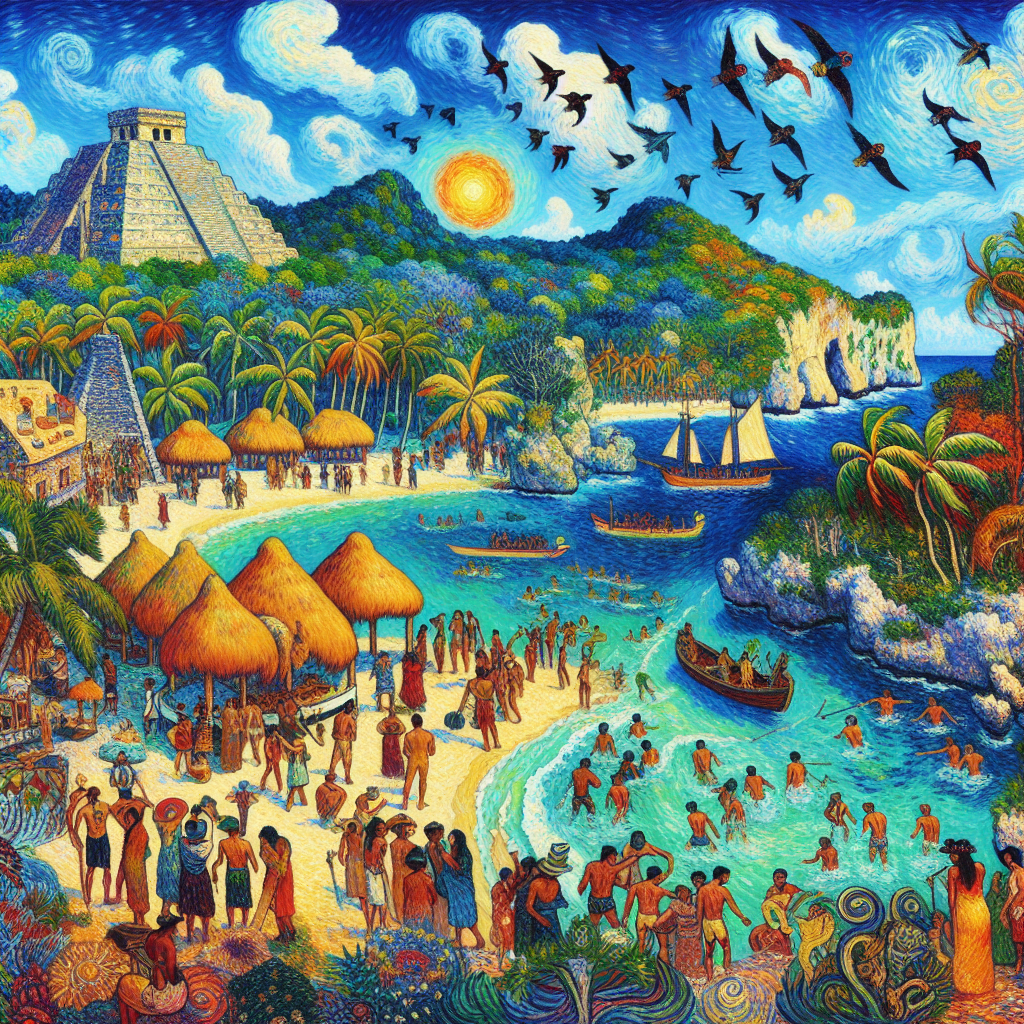
This beautiful island off the coast of Mexico has quite a storied past. The name “Cozumel” is believed to have been derived from the Mayan words “Cuzamil” or “Ah Cuzamil Peten,” which both mean “land of the swallows.” And indeed, Cozumel has been a sanctuary for birds and humans alike for centuries.
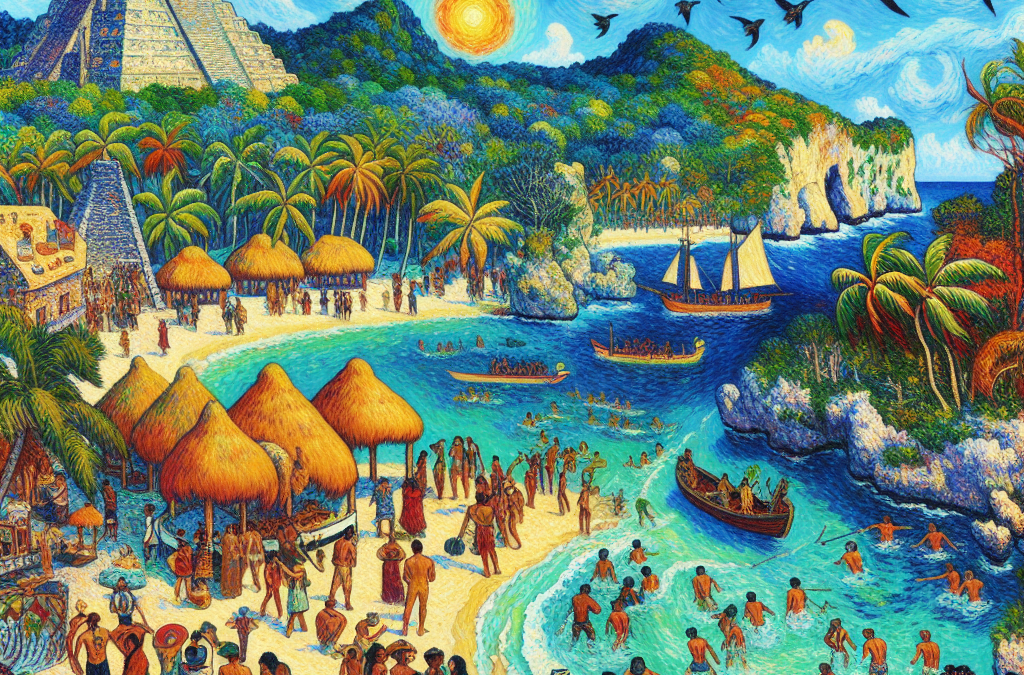
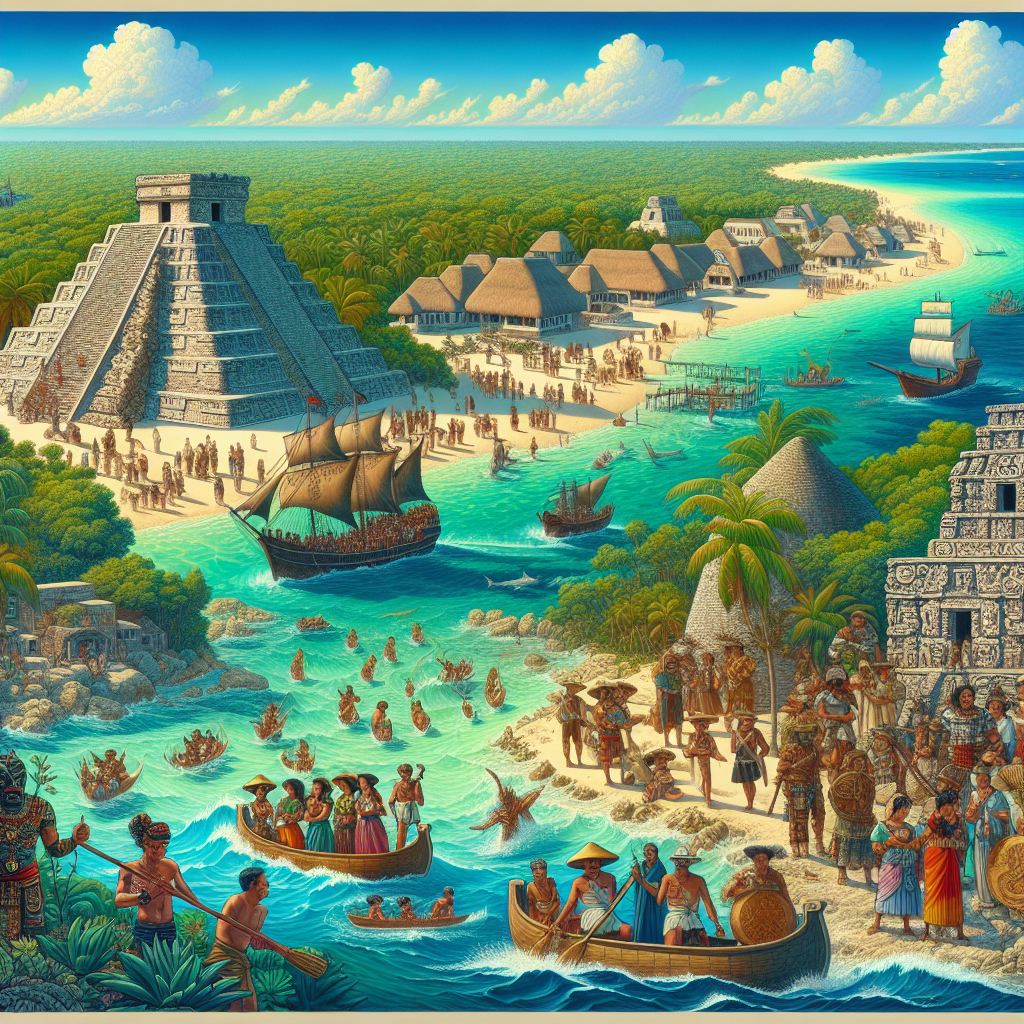
The first settlers on Cozumel were the Mayans, who considered the island to be a sacred place dedicated to Ixchel, the goddess of fertility, medicine, and the moon. They built temples and shrines to honor her, attracting pilgrims from the mainland seeking her favor. These pilgrims would make the journey to Cozumel via canoes, braving the treacherous currents of the Caribbean Sea.
In the early 16th century, the Spanish conquistador Hernan Cortes arrived on Cozumel during his campaign to conquer the Yucatan Peninsula. The Mayans offered little resistance, believing the Spaniards to be the returning gods of their myths. The Spanish claimed Cozumel and converted the indigenous population to Christianity, though the island remained relatively isolated from the rest of Mexico for many years.
Cozumel’s fortunes began to change in the late 19th century when the Mexican government recognized the island’s potential as a hub for trade and tourism. In 1961, Cozumel welcomed its first cruise ship, marking the beginning of its transformation into a popular destination for visitors from around the world.
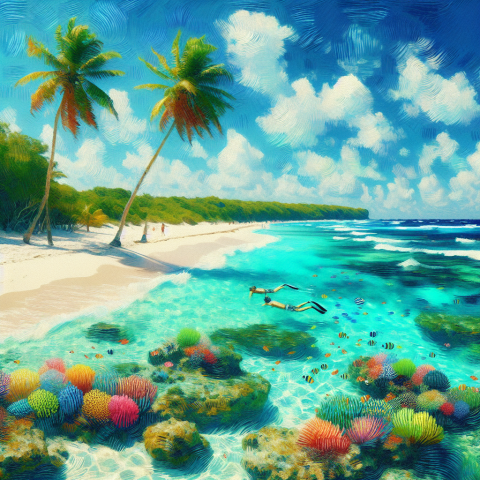
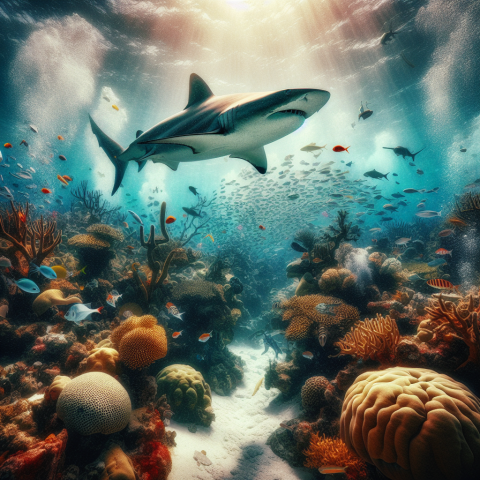
Today, Cozumel is known for its stunning coral reefs, crystal-clear waters, and vibrant marine life, making it a mecca for scuba divers and snorkelers. The island’s charming town, San Miguel, boasts a mix of Mayan, Spanish, and Caribbean influences, creating a unique fusion of cultures that is reflected in its cuisine, music, and architecture.
Cozumel’s history is a tapestry of ancient traditions, colonial conquest, and modern development. It is a testament to the endurance of the human spirit and the power of nature to inspire and sustain us. So, the next time you find yourself on this enchanting island, take a moment to appreciate the legacy of those who came before us and the beauty that surrounds us.
What Is The History Of Cozumel Or Kozumel?
What Is The History Of Cozumel Or Kozumel?
- The name “Cozumel” is believed to have been derived from the Mayan words “Cuzamil” or “Ah Cuzamil Peten,” which both mean “land of the swallows.”.
- The first settlers on Cozumel were the Mayans, who considered the island to be a sacred place dedicated to Ixchel, the goddess of fertility, medicine, and the moon.
- In the early 16th century, the Spanish conquistador Hernan Cortes arrived on Cozumel during his campaign to conquer the Yucatan Peninsula.
- The Mexican government recognized the island’s potential as a hub for trade and tourism in the late 19th century.
- In 1961, Cozumel welcomed its first cruise ship, marking the beginning of its transformation into a popular destination for visitors from around the world.
- Today, Cozumel is known for its stunning coral reefs, crystal-clear waters, and vibrant marine life.
- Cozumel’s history is a tapestry of ancient traditions, colonial conquest, and modern development.
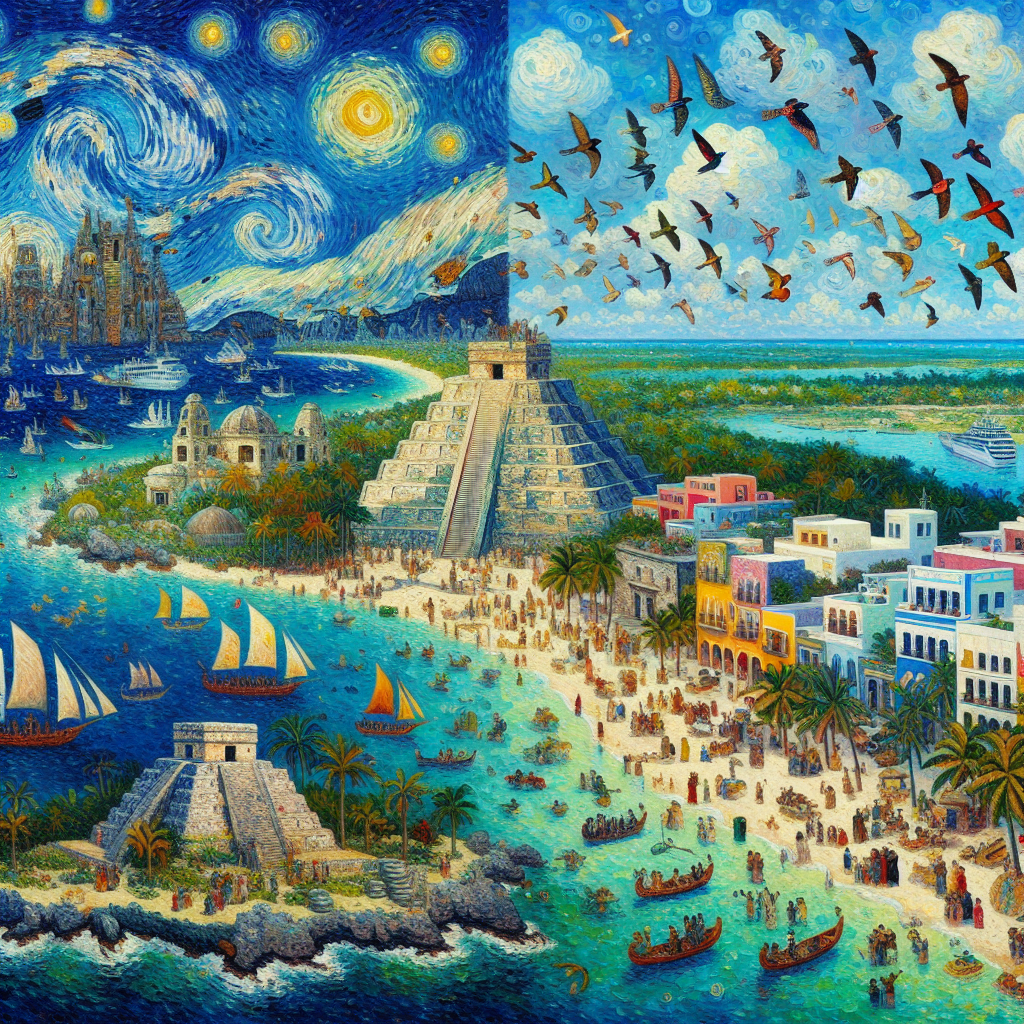
What Is The History Of Cozumel Or Kozumel?
Table Of Contents
- What Is The History Of Cozumel Or Kozumel?
- What Is The Significance Of Cozumel In Mayan Culture?
- How Did Cozumel Become A Popular Tourist Destination?
- How Has Cozumel Evolved Over The Centuries?
- What Are Some Must-See Historical Sites In Cozumel?
- Who Were The Original Inhabitants Of Cozumel?
- Why Is Cozumel Called The “Island Of Swallows”?
- How Has Cozumel Been Affected By Natural Disasters?
- Is Cozumel Also Known As Kozumel?
- Conclusion
- Other Resources
- Glossary Of Terms
- Other Questions
- Haiku
- Poem
- Checklist
- Quizzes And Puzzles
What Is The Significance Of Cozumel In Mayan Culture?
Cozumel, an island off the eastern coast of Mexico, holds a deep significance in Mayan culture that has been preserved for centuries. The Mayans believed that Cozumel was the home of Ixchel, the goddess of the moon, fertility, and childbirth. This sacred island was a place of pilgrimage for Mayans seeking blessings and guidance from Ixchel.
One of the most significant rituals that took place on Cozumel was the Mayan New Year ceremony. During this sacred event, Mayan priests and shamans would gather on the island to offer prayers and sacrifices to Ixchel in hopes of securing a prosperous year ahead. The Mayans believed that by appeasing Ixchel, they would ensure fertility, abundance, and good health for their communities.
In addition to its religious significance, Cozumel was also an important trading hub for the Mayans. The island’s location along the Mesoamerican trade route made it a key center for exchanging goods and resources with neighboring civilizations. Mayan merchants would travel to Cozumel to barter for precious materials such as jade, obsidian, and cacao.
Furthermore, Cozumel played a crucial role in the Mayan’s maritime culture. The island’s strategic location allowed the Mayans to develop advanced seafaring techniques, such as navigating using the stars and currents. Mayan sailors would launch their canoes from Cozumel to explore distant lands, trade with other indigenous groups, and expand their influence across the region.
The legacy of Cozumel in Mayan culture can still be seen today in the island’s archaeological sites, such as the San Gervasio ruins. These ancient structures serve as a reminder of the Mayan civilization’s deep connection to Cozumel and the spiritual importance they placed on the island.
CCozumel holds a special place in Mayan culture as the sacred home of the goddess Ixchel, a vital trading hub, and a center of maritime exploration. The island’s significance in Mayan society is a testament to the rich history and cultural heritage of this ancient civilization. Today, Cozumel continues to attract visitors from around the world who seek to experience the magic and mystique of this unique island and learn more about its fascinating past.
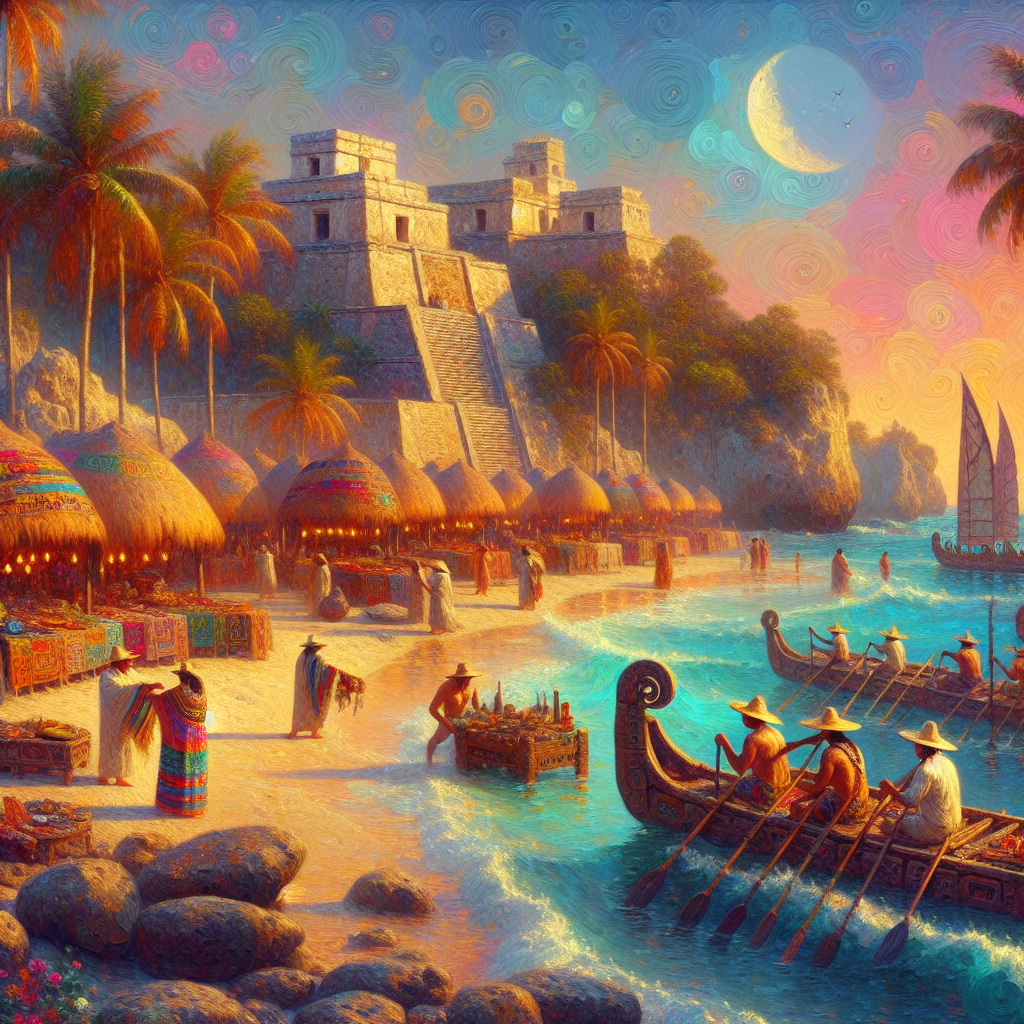
What Is The Significance Of Cozumel In Mayan Culture?
What Is The Significance Of Cozumel In Mayan Culture?
- Cozumel, an island off the eastern coast of Mexico, holds a deep significance in Mayan culture.
- The Mayans believed Cozumel was the home of Ixchel, the goddess of the moon, fertility, and childbirth.
- Mayan New Year ceremony was a significant ritual on Cozumel where prayers and sacrifices were offered to Ixchel.
- Cozumel was an important trading hub along the Mesoamerican trade route for the Mayans.
- The island played a crucial role in Mayan maritime culture, allowing for advanced seafaring techniques.
- The legacy of Cozumel in Mayan culture can be seen in archaeological sites such as the San Gervasio ruins.
- Today, Cozumel continues to attract visitors seeking to experience its unique magic and learn about its fascinating past.
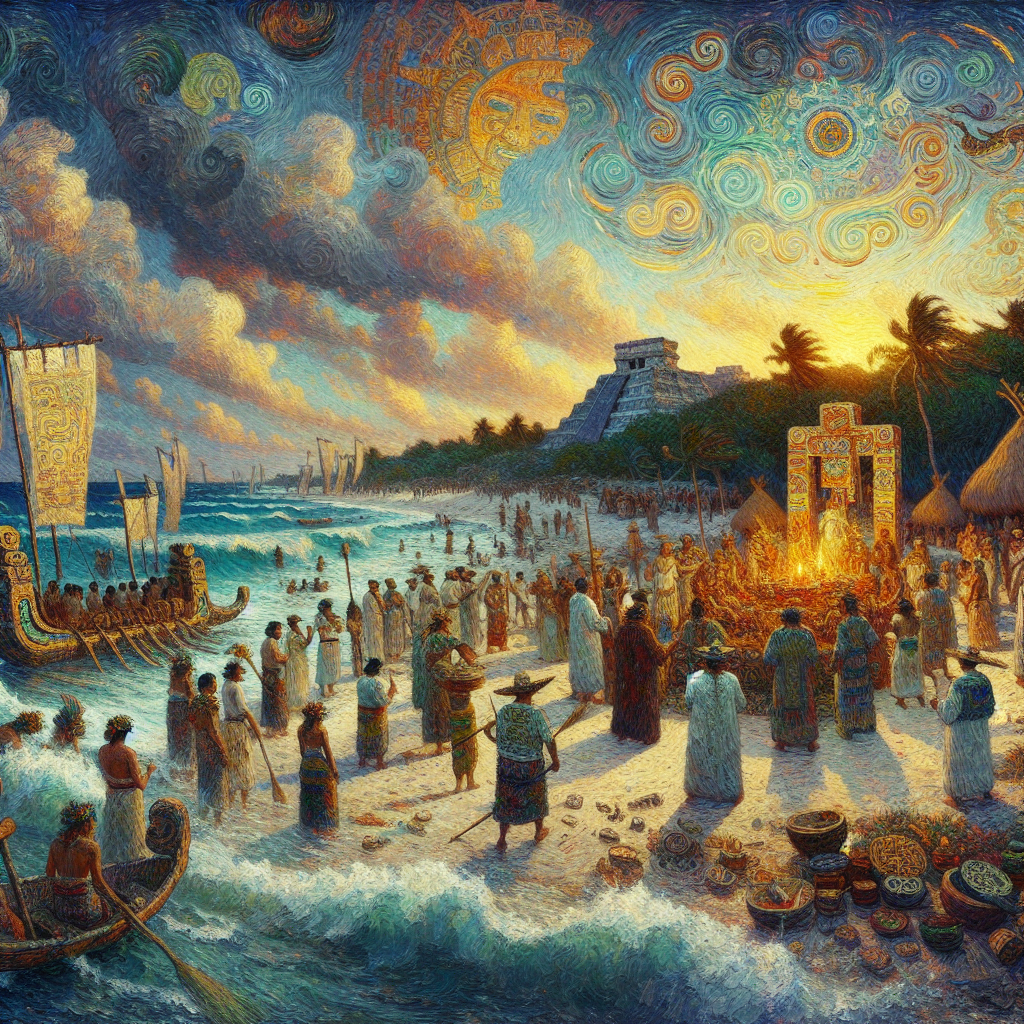
What Is The Significance Of Cozumel In Mayan Culture?
How Did Cozumel Become A Popular Tourist Destination?
Cozumel, a once hidden gem in the Caribbean, has transformed itself into a must-visit tourist destination. But how did this small island off the coast of Mexico rise to fame and attract millions of visitors each year?
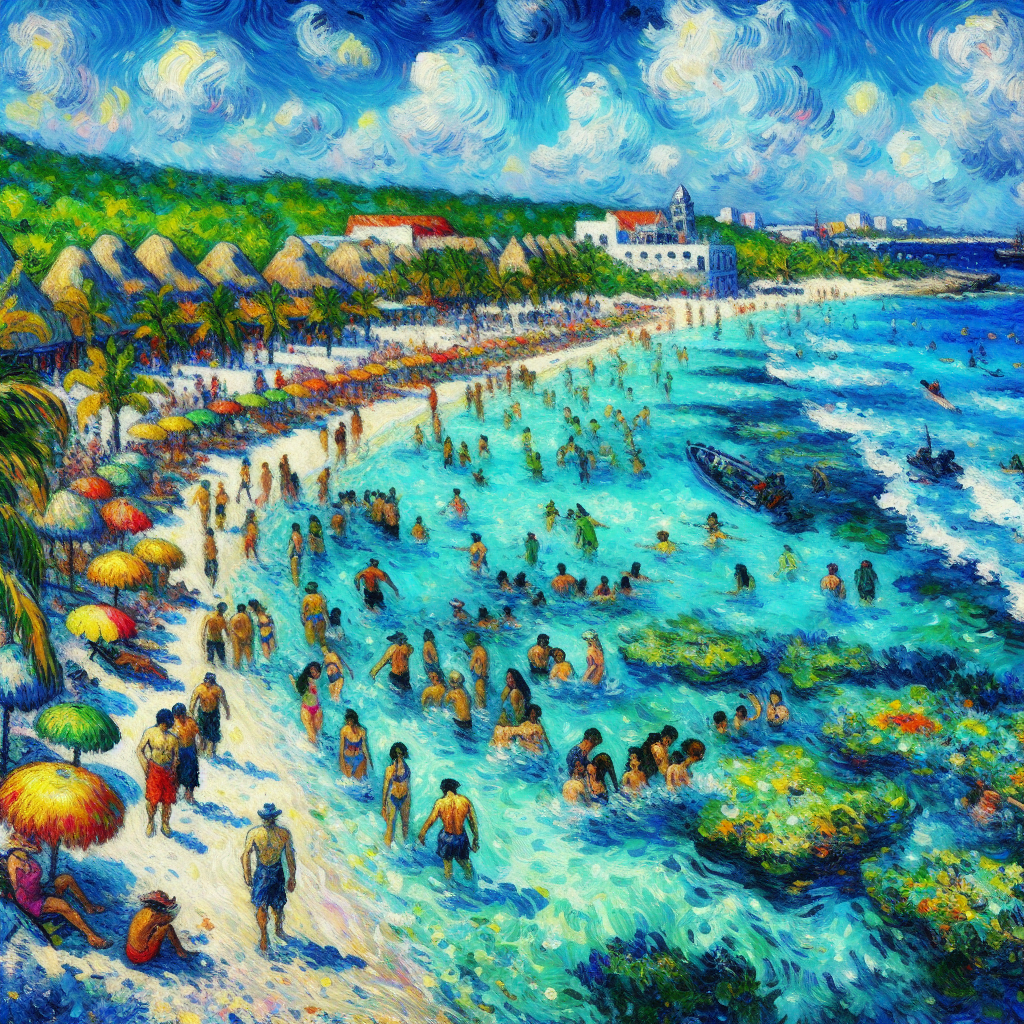
One key factor in Cozumel’s popularity is its stunning natural beauty. With crystal-clear turquoise waters, white sandy beaches, and vibrant coral reefs, the island offers a paradise-like setting that appeals to travelers seeking a tropical escape. Snorkeling and scuba diving enthusiasts are drawn to Cozumel’s renowned underwater world, teeming with colorful marine life and fascinating shipwrecks to explore.
Another contributing factor to Cozumel’s rise as a tourist hotspot is its rich cultural heritage. The island is home to ancient Mayan ruins, such as the San Gervasio archaeological site, that offer a glimpse into the region’s history and spirituality. Visitors can also experience traditional Mexican cuisine, music, and art in the charming town of San Miguel, immersing themselves in the local culture.
Additionally, Cozumel’s convenient location plays a significant role in its popularity. Situated just off the coast of the Yucatán Peninsula, the island is easily accessible via ferry or cruise ship, making it a convenient stop for travelers exploring the Mexican Riviera or the wider Caribbean. The island’s modern infrastructure, including an international airport and a range of accommodations, ensures that visitors can enjoy a comfortable and seamless experience during their stay.
Furthermore, Cozumel’s reputation as a safe and welcoming destination has helped attract a diverse range of travelers, from families and couples to adventure seekers and solo explorers. The island’s friendly locals, known for their hospitality and warmth, make visitors feel like part of the community, enhancing the overall experience of visiting Cozumel.
Overall, Cozumel’s transformation into a popular tourist destination can be attributed to a combination of factors, including its natural beauty, cultural appeal, accessibility, and reputation for safety. As more travelers discover the allure of this Caribbean gem, it is likely that Cozumel will continue to thrive as a top vacation spot for years to come. So pack your bags, and get ready to experience the magic of Cozumel for yourself.
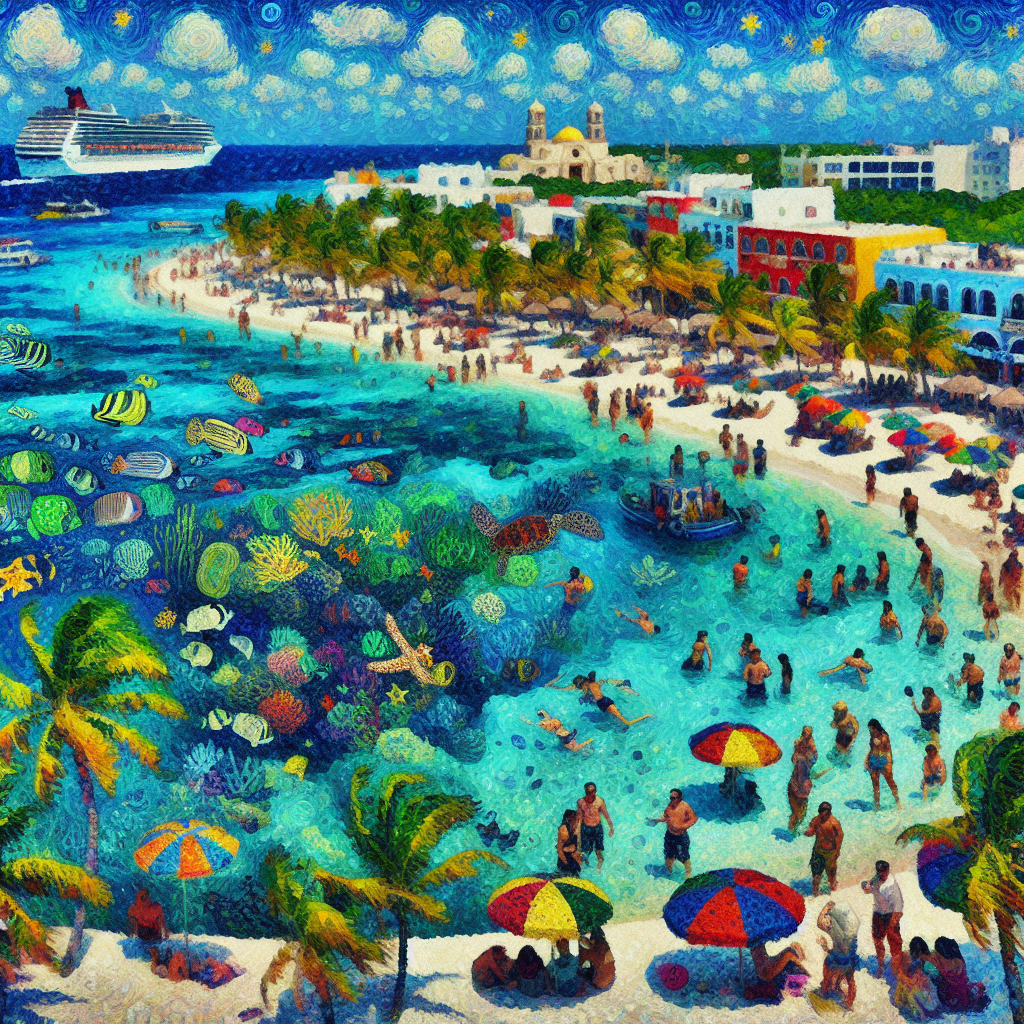
How Did Cozumel Become A Popular Tourist Destination?
How Did Cozumel Become A Popular Tourist Destination?
- Stunning natural beauty: crystal-clear turquoise waters, white sandy beaches, vibrant coral reefs.
- Renowned underwater world: draws snorkeling and scuba diving enthusiasts with colorful marine life and shipwrecks.
- Rich cultural heritage: ancient Mayan ruins, traditional Mexican cuisine, music, and art in San Miguel.
- Convenient location: easily accessible via ferry or cruise ship from Yucatán Peninsula, modern infrastructure.
- Safe and welcoming destination: attracts diverse range of travelers, friendly locals enhance experience.
- Overall transformation: natural beauty, cultural appeal, accessibility, safety contribute to Cozumel’s popularity.
- Future outlook: as more travelers discover Cozumel, it will continue to thrive as a top vacation spot.
How Did Cozumel Become A Popular Tourist Destination?
How Has Cozumel Evolved Over The Centuries?
Cozumel, a picturesque island located off the coast of Mexico’s Yucatan Peninsula, has a rich history that has seen it evolve over the centuries into the vibrant tourist destination it is today.
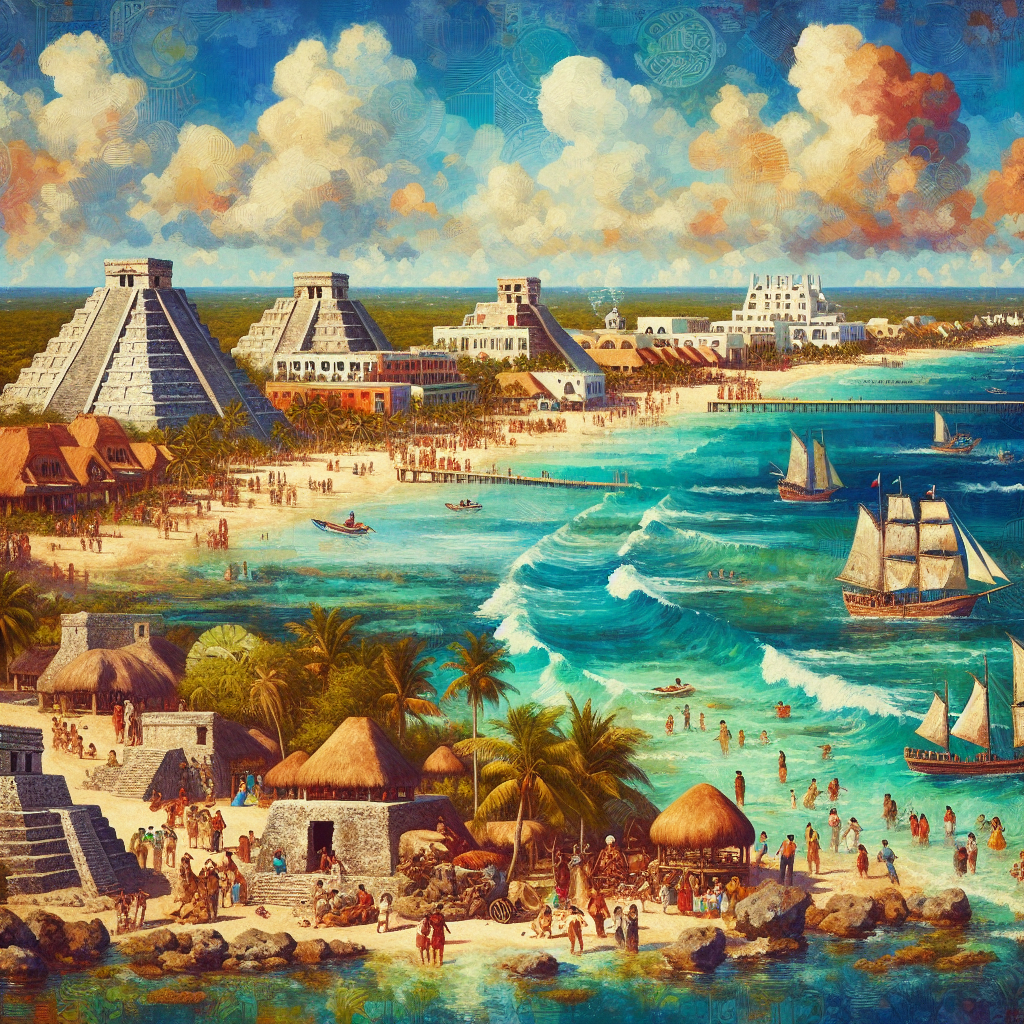
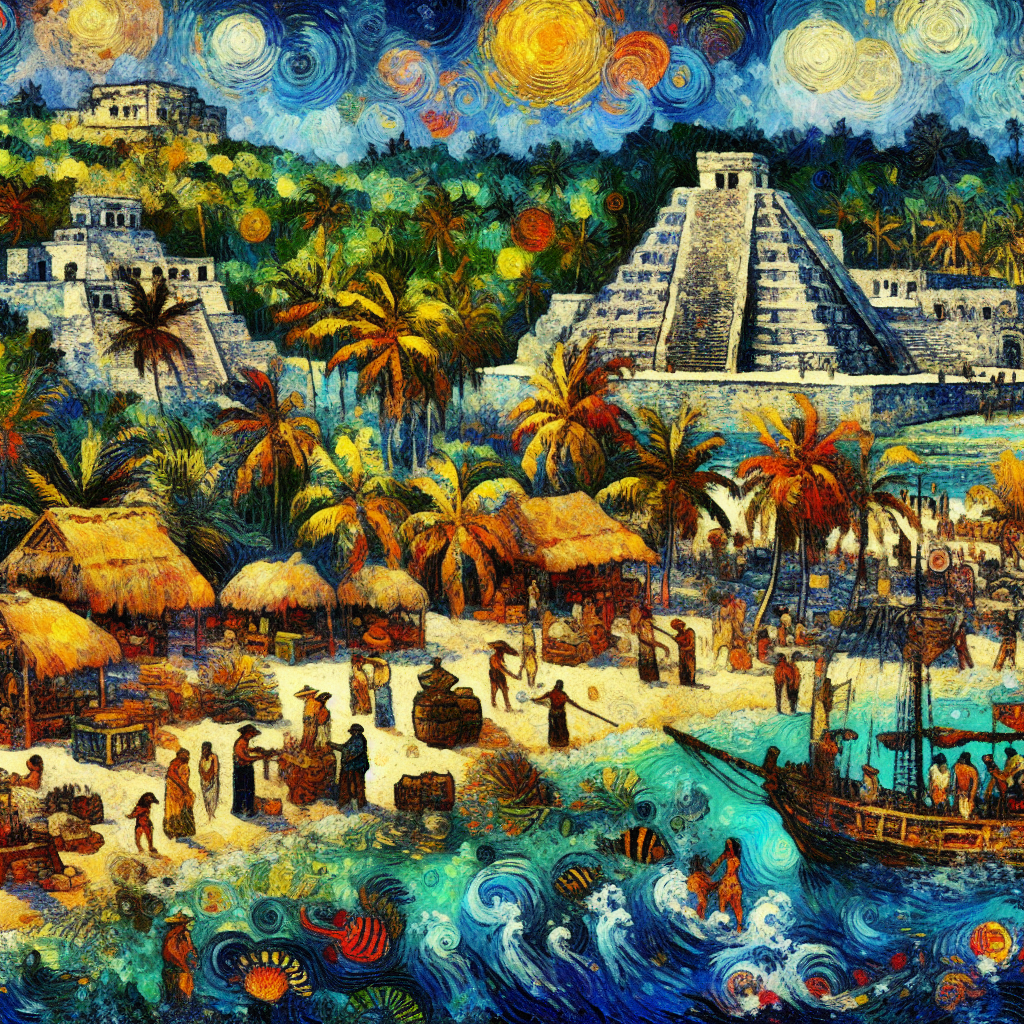
Believed to have been inhabited by the Mayans as far back as 300 AD, Cozumel served as an important center for trade and religious ceremonies. The island’s fertile land provided abundant resources for the Mayan people, allowing them to flourish and build impressive structures such as temples and palaces.
During the Spanish conquest in the 16th century, Cozumel fell under Spanish rule and was used as a stopping point for Spanish explorers and missionaries on their way to the mainland. The island’s population dwindled as many of the Mayans were either killed or enslaved by the Spanish.
In the 19th century, Cozumel became a hub for the lucrative coconut industry, with plantations covering much of the island. The island’s economy boomed as coconuts were exported to markets around the world. However, this industry eventually declined, leading to economic struggles for the island’s inhabitants.
In the mid-20th century, Cozumel began to see a shift towards tourism as word spread about its stunning beaches, crystal-clear waters, and vibrant marine life. The construction of hotels and resorts brought a steady stream of visitors to the island, boosting its economy and transforming it into a popular tourist destination.
Today, Cozumel is known for its thriving tourism industry, with millions of visitors flocking to the island each year to enjoy its beautiful beaches, world-class diving and snorkeling opportunities, and rich cultural heritage. The island’s economy is largely dependent on tourism, with many locals working in the hospitality industry or selling handmade crafts to tourists.
Despite its evolution over the centuries, Cozumel has managed to retain much of its natural beauty and charm. The island’s lush jungles, colorful reefs, and ancient ruins serve as a reminder of its rich history and cultural heritage. Cozumel continues to captivate visitors with its stunning landscapes and warm hospitality, making it a must-visit destination for those seeking adventure and relaxation in a tropical paradise.
How Has Cozumel Evolved Over The Centuries?
How Has Cozumel Evolved Over The Centuries?
- Cozumel has a rich history, believed to have been inhabited by the Mayans as far back as 300 AD.
- The island served as an important center for trade and religious ceremonies for the Mayans.
- During the Spanish conquest in the 16th century, Cozumel fell under Spanish rule and saw a decline in population.
- In the 19th century, Cozumel became a hub for the coconut industry, leading to economic struggles as the industry declined.
- In the mid-20th century, Cozumel shifted towards tourism, attracting visitors with its beautiful beaches and marine life.
- Today, Cozumel is a popular tourist destination known for its tourism industry, beautiful beaches, and rich cultural heritage.
- Despite its evolution, Cozumel has retained much of its natural beauty and charm, captivating visitors with its stunning landscapes and warm hospitality.
How Has Cozumel Evolved Over The Centuries?
What Are Some Must-See Historical Sites In Cozumel?
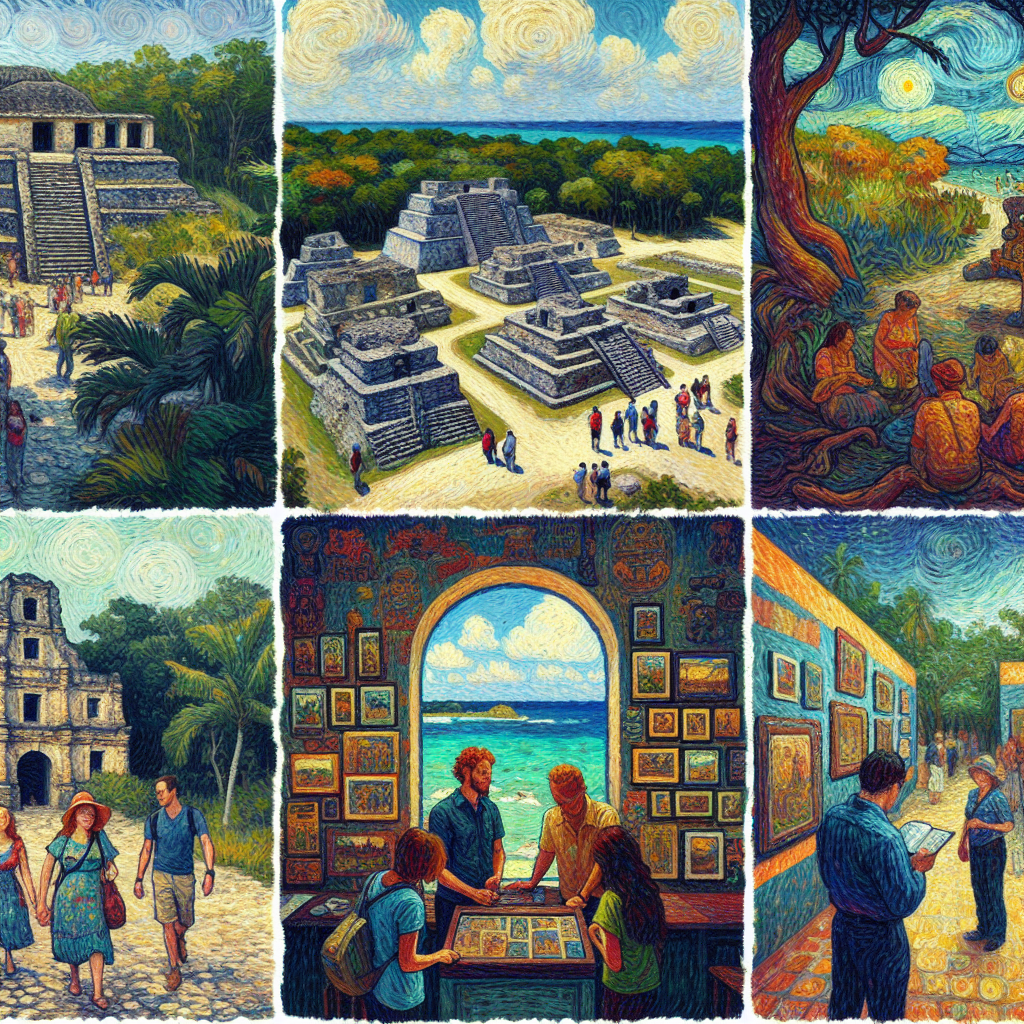
When visiting Cozumel, history buffs will not want to miss out on exploring some of the must-see historical sites on the island.
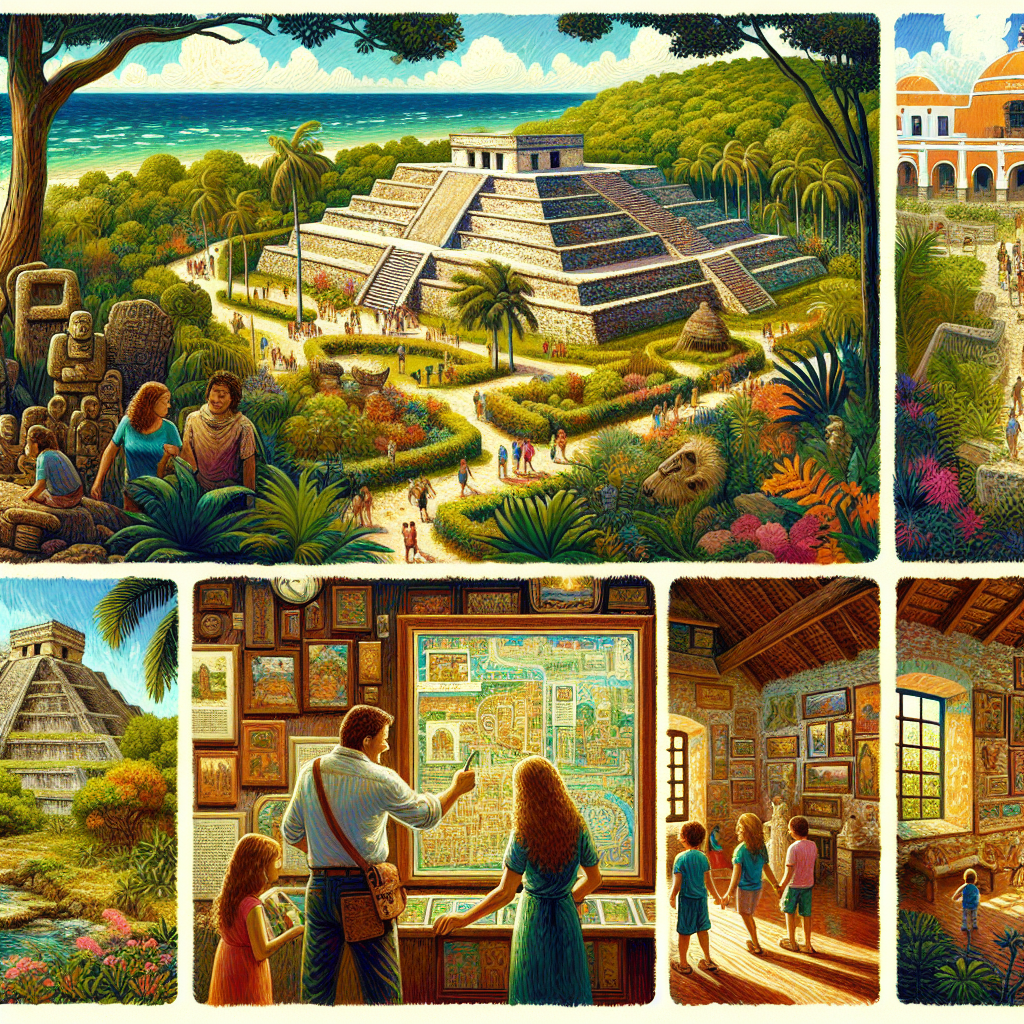
One prominent historical site to visit is the San Gervasio Mayan Ruins. These ruins are a fascinating insight into the ancient Mayan civilization that once thrived on the island. Walking through the crumbling structures and learning about the rituals and practices of the Mayans who lived here is a truly immersive experience.
Another historical site not to be missed is the El Cedral Mayan Ruins. This is the oldest Mayan settlement on the island and offers a glimpse into the early roots of the Mayan civilization. The ruins are well-preserved and provide a fascinating look at the daily lives of the ancient people who called Cozumel home.
For those interested in more recent history, a visit to the Museo de la Isla de Cozumel is a must. This museum showcases the history and culture of the island, from its early settlement by the Mayans to its modern-day development as a popular tourist destination. Exhibits include artifacts, photographs, and interactive displays that bring the island’s history to life.
The Cedral Hacienda is another historical site that should not be missed. This former plantation offers a glimpse into the island’s colonial past and the impact of Spanish colonization on the local culture. Visitors can explore the grounds, which include a historic house, chapel, and gardens, and learn about the history of the plantation and its role in shaping the island’s economy.
Finally, a visit to the El Caracol Temple is a must for history enthusiasts. This ancient Mayan temple is believed to have been used for astronomical observations and religious ceremonies. The temple’s unique design and historical significance make it a must-see for anyone interested in the history of the Mayan civilization.
Overall, Cozumel is a treasure trove of historical sites waiting to be explored. From ancient Mayan ruins to colonial plantations, the island offers a rich tapestry of history for visitors to discover and appreciate.
What Are Some Must-See Historical Sites In Cozumel?
What Are Some Must-See Historical Sites In Cozumel?
- San Gervasio Mayan Ruins offer insight into ancient Mayan civilization.
- El Cedral Mayan Ruins show the early roots of Mayan civilization.
- Museo de la Isla de Cozumel showcases the island’s history and culture.
- Cedral Hacienda provides a glimpse into the island’s colonial past.
- El Caracol Temple was used for astronomical observations and ceremonies.
- Cozumel is a treasure trove of historical sites for visitors to explore.
What Are Some Must-See Historical Sites In Cozumel?
Who Were The Original Inhabitants Of Cozumel?
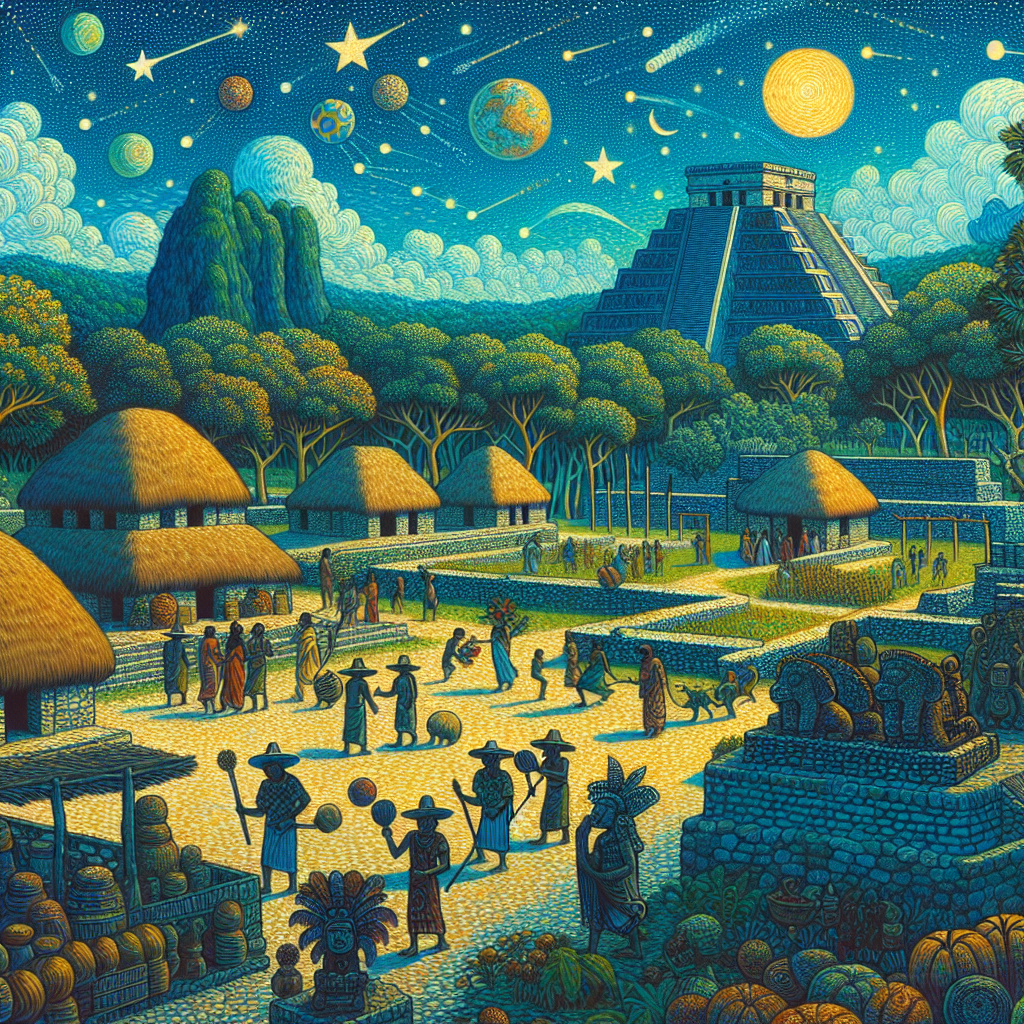
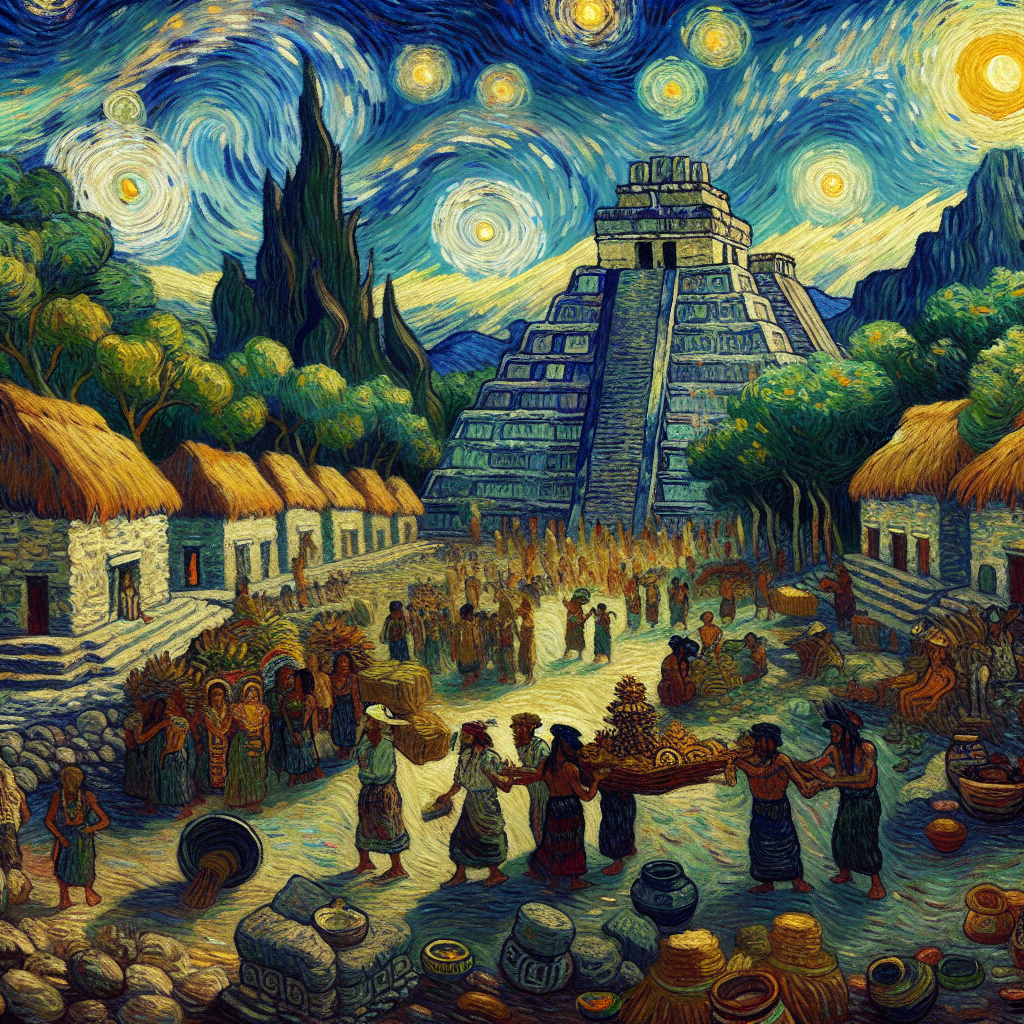
The original inhabitants of Cozumel were the Mayans, a fascinating and advanced civilization that thrived in the Yucatan Peninsula for centuries. These indigenous people were skilled in agriculture, astronomy, and architecture, leaving behind intricate ruins and impressive pyramids that still stand to this day.
The Mayans believed Cozumel to be a sacred island, dedicated to Ixchel, the goddess of fertility and medicine. They would often make pilgrimages to the island to worship and seek blessings from the goddess, leaving offerings of jade, gold, and other precious items at her shrines.
One of the most famous sites on Cozumel is El Cedral, an ancient Mayan village that dates back thousands of years. Here, you can see the remnants of their homes, temples, and ball courts, giving you a glimpse into what life was like for the original inhabitants of the island.
The Mayans also had a rich cultural heritage, with intricate artwork, pottery, and textiles that showcased their skilled craftsmanship. They were skilled farmers, growing crops like maize, beans, and squash using advanced techniques such as raised beds and irrigation systems.
One of the most impressive contributions of the Mayans was their calendar system, which was incredibly accurate and complex. They were able to predict eclipses, solstices, and other astronomical events with incredible precision, showing their deep understanding of the natural world.
Unfortunately, the arrival of the Spanish conquistadors in the 16th century marked the beginning of the end for the Mayan civilization on Cozumel. Many were forced into slavery, and their temples and sacred sites were destroyed in the name of Christianity.
Despite this tragic chapter in their history, the Mayan people persevered, and their culture continues to thrive on Cozumel to this day. You can still see their influence in the local cuisine, music, and traditions, making it a truly unique and special place to visit.
So the next time you find yourself on the beautiful island of Cozumel, take a moment to appreciate the rich history and heritage of the original inhabitants who called this place home. Their legacy lives on in the ruins they left behind and the vibrant culture that still thrives in this tropical paradise.
Who Were The Original Inhabitants Of Cozumel?
Who Were The Original Inhabitants Of Cozumel?
- The original inhabitants of Cozumel were the Mayans, an advanced civilization in the Yucatan Peninsula.
- The Mayans believed Cozumel to be a sacred island dedicated to the goddess Ixchel.
- El Cedral is an ancient Mayan village on Cozumel with well-preserved ruins.
- The Mayans had a rich cultural heritage with skilled craftsmanship in artwork, pottery, and textiles.
- The Mayans were skilled farmers and had an accurate and complex calendar system.
- The arrival of Spanish conquistadors led to the decline of the Mayan civilization on Cozumel.
- Despite this, Mayan culture continues to thrive on Cozumel through cuisine, music, and traditions.
Who Were The Original Inhabitants Of Cozumel?
Why Is Cozumel Called The “Island Of Swallows”?
Have you ever wondered why Cozumel is often referred to as the “Island of Swallows”? Well, as it turns out, there is a fascinating story behind this unique nickname.
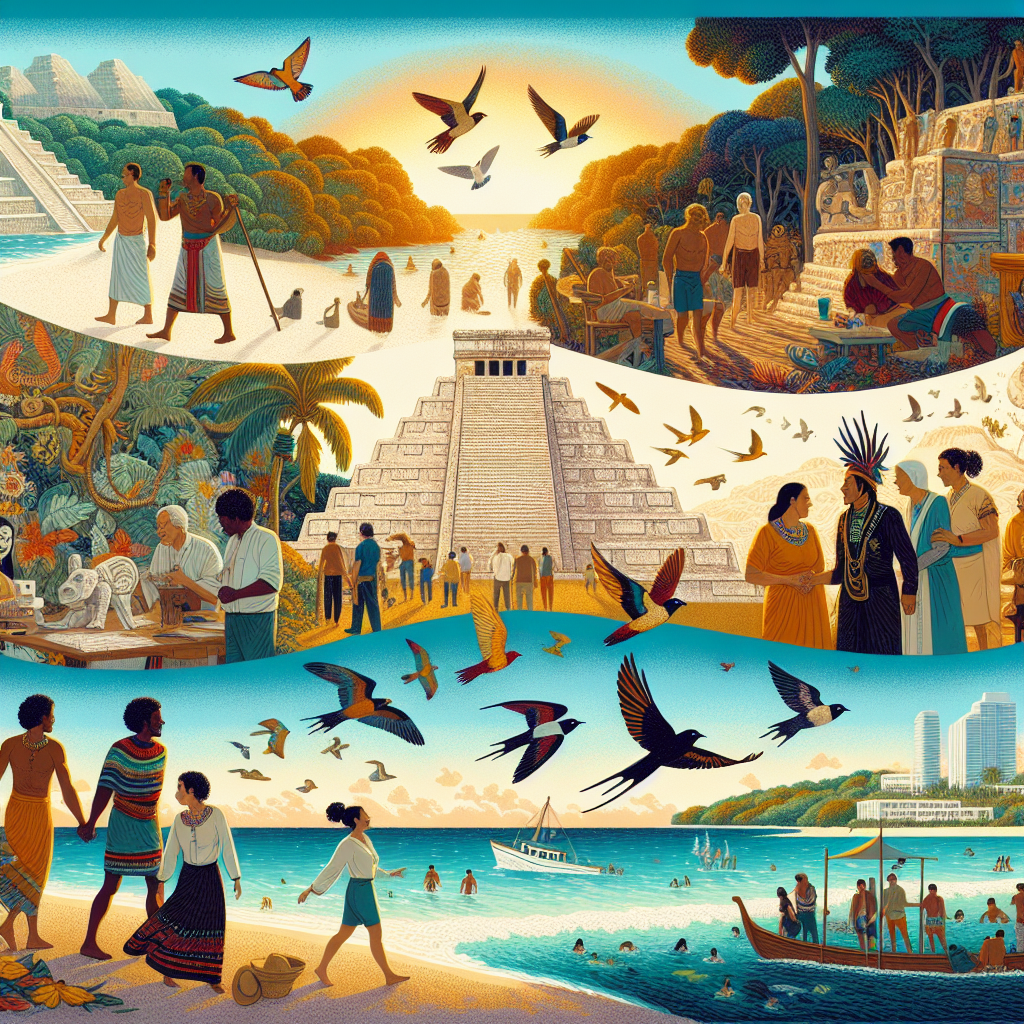
Legend has it that the ancient Mayans believed that Cozumel was a sacred place, dedicated to Ix Chel, the goddess of fertility, medicine, and the moon. According to Mayan folklore, swallows were seen as messengers of the gods, carrying blessings and good fortune to the island.
But the connection between Cozumel and swallows goes beyond just mythology. In reality, Cozumel is actually a popular nesting site for a species of bird known as the Cave Swallow. These small, agile birds can be found throughout the island, building their nests in caves, cliffs, and other natural crevices.
The Cave Swallows are known for their distinctive appearance, with deep blue plumage and cinnamon-colored underparts. They are also known for their impressive aerial acrobatics, darting through the sky with grace and precision.
Every year, thousands of Cave Swallows migrate to Cozumel to breed and raise their young. During the nesting season, which typically lasts from March to August, the island is alive with the sights and sounds of these beautiful birds.
As the Cave Swallows go about their daily routines, they play a crucial role in maintaining the delicate ecosystem of Cozumel. By feeding on insects and other small creatures, they help to keep the island’s natural balance in check.
In addition to their ecological significance, the Cave Swallows also serve as a source of inspiration for locals and visitors alike. Their presence on Cozumel is a reminder of the island’s rich cultural heritage and the deep connection between humans and nature.
So the next time you find yourself on the shores of Cozumel, take a moment to appreciate the beauty of the Cave Swallows and their significance to this enchanting island. And remember, just like these graceful birds, Cozumel is a place of magic, mystery, and natural wonder – a true paradise for all who visit.
Why Is Cozumel Called The “Island Of Swallows”?
Why Is Cozumel Called The “Island Of Swallows”?
- Cozumel is often called the “Island of Swallows” due to a fascinating legend involving the ancient Mayans and the goddess Ix Chel.
- Swallows were believed to be messengers of the gods, bringing blessings and good fortune to Cozumel.
- Cozumel is a nesting site for Cave Swallows, known for their deep blue plumage and impressive aerial acrobatics.
- Thousands of Cave Swallows migrate to Cozumel every year to breed and raise their young.
- The Cave Swallows help maintain Cozumel’s delicate ecosystem by feeding on insects and keeping the natural balance in check.
- These birds also inspire locals and visitors, serving as a reminder of the island’s cultural heritage and the connection between humans and nature.
- Next time you’re in Cozumel, take a moment to appreciate the beauty of the Cave Swallows and the enchanting island they call home.
Why Is Cozumel Called The “Island Of Swallows”?
How Has Cozumel Been Affected By Natural Disasters?
The beautiful island of Cozumel has unfortunately not been spared from the wrath of natural disasters over the years. Situated in the Caribbean Sea, this paradise has faced its fair share of hurricanes, tropical storms, and other calamities that have left a mark on the local community and landscape.
One of the most devastating natural disasters to hit Cozumel was Hurricane Wilma in 2005. This powerful storm made landfall on the island as a Category 4 hurricane, causing widespread destruction and leaving many residents and businesses in ruins. The powerful winds and heavy rainfall caused extensive damage to homes, hotels, and infrastructure, forcing many to evacuate and seek shelter elsewhere. The aftermath of Wilma was a long and arduous recovery process for the people of Cozumel, as they worked tirelessly to rebuild and restore their beloved island.
In addition to hurricanes, Cozumel has also been affected by other natural disasters such as earthquakes and tsunamis. While these events may not be as common as hurricanes, they have still had a significant impact on the island and its residents. The threat of these disasters looms large over the community, reminding them of the unpredictable and uncontrollable forces of nature.
Despite the challenges that Cozumel has faced from natural disasters, the resilience and strength of its people shine through in times of adversity. The community has come together to support one another, offering help and assistance to those in need. From rebuilding homes to providing aid to those who have lost everything, the people of Cozumel have shown incredible compassion and solidarity in the face of disaster.
In the wake of natural disasters, Cozumel has also taken steps to improve its disaster preparedness and response capabilities. The island has implemented emergency management plans, invested in infrastructure improvements, and conducted regular drills and exercises to ensure the safety and well-being of its residents and visitors. These efforts have helped to minimize the impact of future disasters and better protect the community in times of crisis.
Through strength, resilience, and a commitment to rebuilding, the people of Cozumel have shown that they can overcome the challenges posed by natural disasters. While the scars of these events may still linger, the spirit of this island paradise remains unbroken, serving as a beacon of hope and inspiration for all who call it home.
How Has Cozumel Been Affected By Natural Disasters?
How Has Cozumel Been Affected By Natural Disasters?
- The beautiful island of Cozumel has unfortunately not been spared from the wrath of natural disasters over the years.
- One of the most devastating natural disasters to hit Cozumel was Hurricane Wilma in 2005.
- Cozumel has also been affected by other natural disasters such as earthquakes and tsunamis.
- The resilience and strength of its people shine through in times of adversity.
- Cozumel has taken steps to improve its disaster preparedness and response capabilities.
- The people of Cozumel have shown that they can overcome the challenges posed by natural disasters.
- The spirit of this island paradise remains unbroken, serving as a beacon of hope and inspiration for all who call it home.
How Has Cozumel Been Affected By Natural Disasters?
Is Cozumel Also Known As Kozumel?
Ah, the age-old question that has perplexed many a traveler heading to the sunny shores of this Mexican paradise. Is it Cozumel or Kozumel? As a man who has ventured to this stunning island himself, I can shed some light on this topic.
Let’s start by clearing up any confusion right off the bat – the correct spelling is Cozumel. However, the question remains – why do some people refer to it as Kozumel? Well, it all comes down to pronunciation and regional accents. In Spanish, the letter “C” can sometimes be pronounced like a “K,” especially in certain dialects. So, it’s not uncommon to hear the island’s name pronounced as Kozumel by some locals and visitors alike.
But fear not, my fellow travelers, for no matter how you choose to say it, the magic of Cozumel remains the same. This slice of paradise is known for its crystal-clear waters, vibrant coral reefs, and endless opportunities for adventure. Whether you’re a seasoned scuba diver looking to explore the depths of the ocean or a beach bum in search of the perfect spot to soak up the sun, Cozumel has something for everyone.
So, the next time you find yourself debating whether it’s Cozumel or Kozumel, just remember that what truly matters is the incredible experience that awaits you on this beautiful island. Embrace the local culture, sample some authentic Mexican cuisine, and bask in the natural beauty that surrounds you. Whether you’re here for a day trip from the mainland or a longer stay, Cozumel will capture your heart and leave you yearning for more.
And as for the age-old debate of Cozumel vs. Kozumel, well, let’s just agree to let each person say it in their own way. After all, it’s not about the spelling – it’s about the unforgettable memories you’ll make on this enchanted island. So pack your bags, grab your sunscreen, and get ready to experience all that Cozumel (or Kozumel) has to offer. Adventure awaits, my friends, and it’s time to dive in – quite literally, in this case!

Is Cozumel Also Known As Kozumel?
Is Cozumel Also Known As Kozumel?
- The correct spelling is Cozumel, not Kozumel.
- The pronunciation may vary due to regional accents, with some locals and visitors saying Kozumel.
- Cozumel is known for its crystal-clear waters, vibrant coral reefs, and endless adventure opportunities.
- Embrace the local culture, sample authentic Mexican cuisine, and bask in the natural beauty of Cozumel.
- Enjoy the incredible experience that awaits you on this beautiful island.
- Let each person say Cozumel (or Kozumel) in their own way and focus on the memories made on the island.
- Pack your bags, grab your sunscreen, and get ready to dive into all that Cozumel has to offer.
Is Cozumel Also Known As Kozumel?
Conclusion
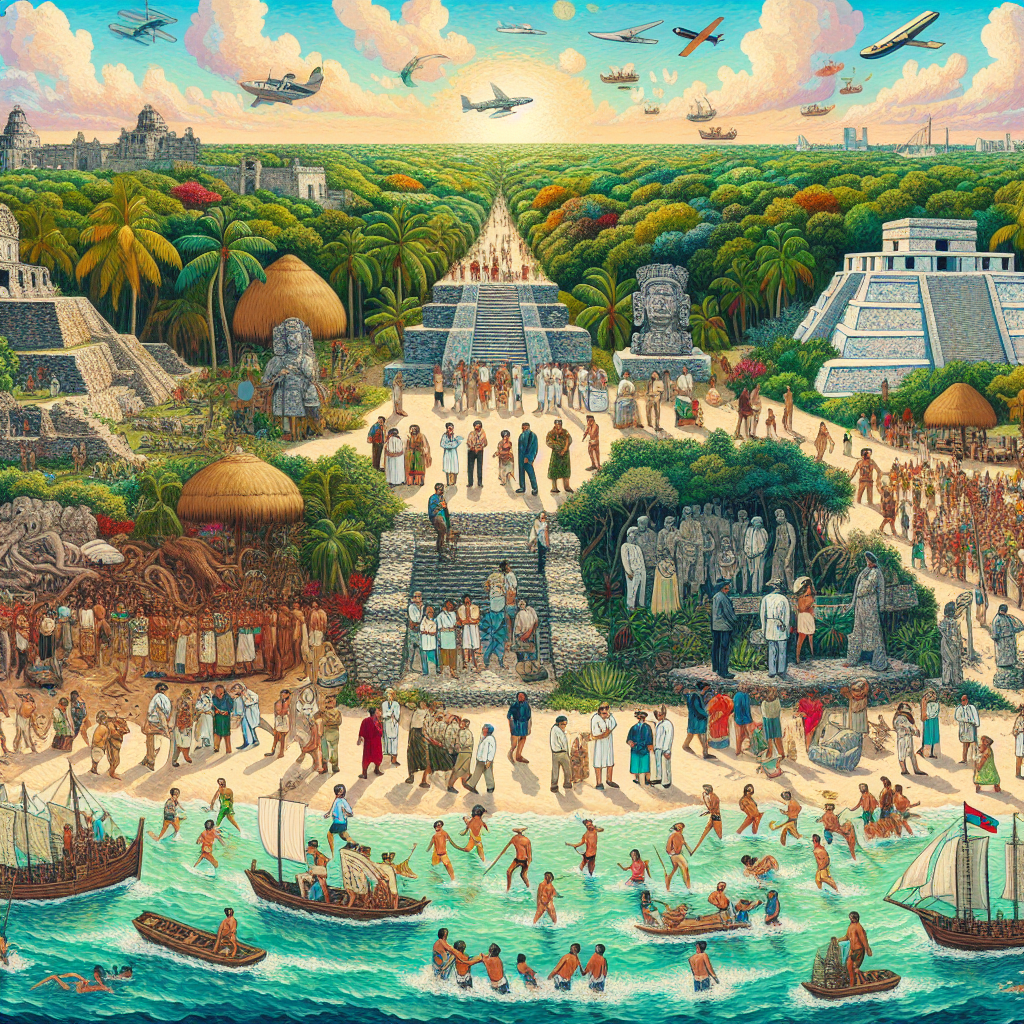
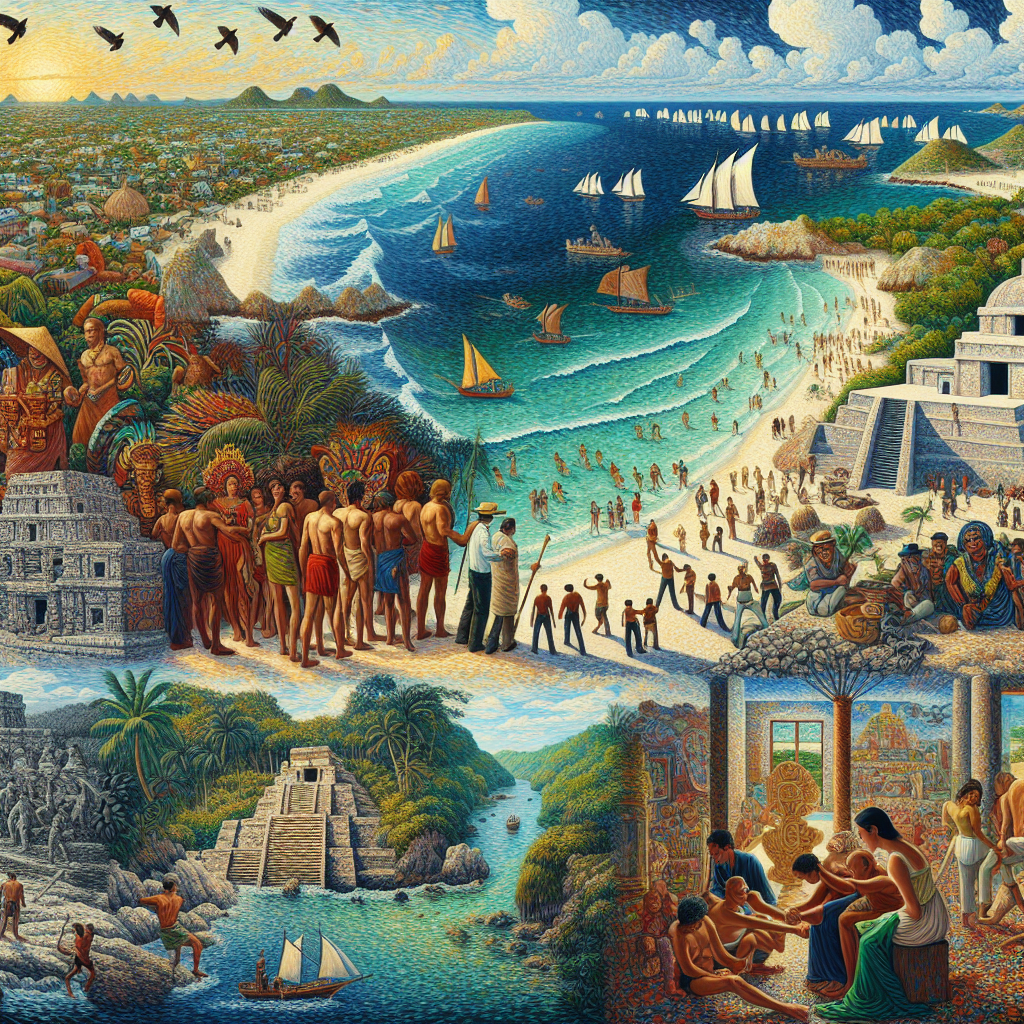
In conclusion, the history of Cozumel, or Kozumel as some may pronounce it, is a fascinating tale woven with ancient traditions, colonial conquests, and modern developments. From its origins as a sacred land dedicated to the goddess Ixchel, to its transformation into a bustling hub for trade and tourism, Cozumel’s story is one of resilience, transformation, and adaptation. The island’s significance in Mayan culture as a place of pilgrimage and trade has left a lasting legacy that can still be felt today in its archaeological sites and cultural traditions.
Cozumel’s evolution over the centuries from a hidden gem to a popular tourist destination can be attributed to its stunning natural beauty, rich cultural heritage, convenient location, and reputation for safety. The island’s thriving tourism industry has brought millions of visitors from around the world seeking adventure, relaxation, and a glimpse into its storied past. Must-see historical sites such as the San Gervasio and El Cedral Mayan ruins offer a window into the island’s ancient civilizations, while natural disasters like Hurricane Wilma have tested the resilience of its people and highlighted the importance of preparedness and community support.
Whether you call it Cozumel or Kozumel, one thing is certain – this enchanting island is a place of magic, mystery, and natural wonder. From the swallows that grace its skies to the rich history of its original Mayan inhabitants, Cozumel beckons travelers to explore its depths, soak in its beauty, and create unforgettable memories. So, as you embark on your journey to this tropical paradise, remember to embrace the legacy of those who came before, savor the vibrant cultures that converge on its shores, and revel in the allure of Cozumel, a place where the past meets the present and adventure awaits.
Conclusion
Conclusion:
- The history of Cozumel is a fascinating tale of ancient traditions, colonial conquests, and modern developments.
- Originally a sacred land dedicated to the goddess Ixchel, Cozumel evolved into a hub for trade and tourism.
- Mayan culture’s influence on the island can still be seen in its archaeological sites and cultural traditions.
- Cozumel’s popularity as a tourist destination is due to its natural beauty, cultural heritage, location, and safety.
- Historical sites like San Gervasio and El Cedral offer insight into the island’s ancient civilizations.
- Natural disasters like Hurricane Wilma have tested the resilience of Cozumel’s people.
- Cozumel is a place of magic, mystery, and natural wonder, where the past meets the present and adventure awaits.
Conclusion
Other Resources
Other Resources
Most of the people who read this are also figuring out where to stay. A couple of places we run or know well, in case it’s useful: Cozumel Journey is an editorial guide to Cozumel — neighborhoods, planning tips, and life on the island for travelers who want context, not a cruise schedule.
Here is a list of other resources you can review online to learn more:
- “The Island”
- “D E S K R E F E R E N C E”
- “Cozumel”
- “What Is Cozumel Known For? By A Local (2024)”
- “Experience the Magic of Diving in Cozumel”
- “About Cozumel”
- cozumeljourney.com
Other Resources
Glossary Terms
What Is The History Of Cozumel Or Kozumel? – Glossary Of Terms
1. Cozumel: An island in the Caribbean Sea off the eastern coast of Mexico’s Yucatán Peninsula, known for its rich Mayan history and beautiful beaches.
2. Kuzamil: The original Mayan name of Cozumel, meaning “Island of Swallows. ”
3. Maya Civilization: A pre-Columbian civilization known for its advanced written language, art, architecture, and astronomical systems, which inhabited Cozumel.
4. San Gervasio: The largest and most significant archaeological site on Cozumel, serving as a hub for Mayan worship.
5. Ix Chel: The Mayan goddess of fertility, medicine, and the moon, who was particularly worshipped on Cozumel.
6. Spanish Conquistadors: European invaders, including Hernán Cortés, who arrived on Cozumel in the early 16th century.
7. Hernán Cortés: Spanish conquistador who landed on Cozumel in 1519 and initiated the Spanish colonization of the Americas.
8. Francisco de Montejo: Conquistador who played a major role in the colonization of the Yucatán Peninsula, including Cozumel.
9. Smallpox: A devastating European-borne disease that drastically reduced the indigenous population of Cozumel after the arrival of the Spanish.
10. Piracy: Common in the Caribbean during the 17th and 18th centuries, affecting Cozumel due to its strategic location.
11. Buccaneers: Pirates of the Caribbean who used Cozumel as a hideout and base of operations.
12. Haciendas: Large estates that were established in the Yucatán Peninsula during the colonial period; though not common on Cozumel, their influence affected the region.
13. Caste War of Yucatán: A major indigenous uprising against Mexican authorities in the 19th century that influenced the region’s history.
14. Lighthouse at Punta Molas: Built in the 19th century to aid in maritime navigation around Cozumel’s coast.
15. Jacques Cousteau: Famous French explorer and filmmaker who promoted Cozumel’s marine biodiversity, boosting its popularity as a diving destination.
16. Palancar Reef: A renowned coral reef off the coast of Cozumel, part of the Mesoamerican Barrier Reef System.
17. Carlos Salinas de Gortari: Mexican president who in the late 20th century played a role in promoting tourism development in Cozumel.
18. Chankanaab Park: A natural marine park established to protect underwater and coastal habitats on Cozumel.
19. Cruise Tourism: A significant industry for Cozumel, attracting millions of visitors annually due to its port facilities.
20. Scuba Diving: A major recreational activity in Cozumel, appreciated for its clear waters and abundant marine life.
21. Mesoamerican Barrier Reef: The world’s second-largest coral reef system, of which Cozumel is a part.
22. El Cedral: The oldest Mayan ruin on Cozumel and an important ceremonial site.
23. Mestizo: A term referring to people of mixed European and indigenous ancestry, common in the post-colonial period of Cozumel.
24. Quintana Roo: The Mexican state where Cozumel is located, named after Andrés Quintana Roo, a Mexican independence leader.
25. Eco-Tourism: A growing sector in Cozumel focusing on sustainable travel and the preservation of natural habitats.
26. Mayan Revival: Interest in and restoration of Mayan culture and architecture, including sites on Cozumel, in the modern era.
27. Carnaval de Cozumel: An annual cultural festival featuring parades, music, and dance, celebrated since the early 20th century.
28. Jean-Frédéric Waldeck: A 19th-century explorer and artist who documented Mayan ruins, including those on Cozumel.
29. Selva Maya: The jungle region covering parts of the Yucatán Peninsula, including areas of Cozumel, rich in biodiversity.
30. Eco-Parks: Natural reserves and parks on Cozumel promoting education and conservation, such as Punta Sur Eco Beach Park.
This glossary covers significant historical, cultural, and ecological aspects that have shaped Cozumel’s heritage and current identity.
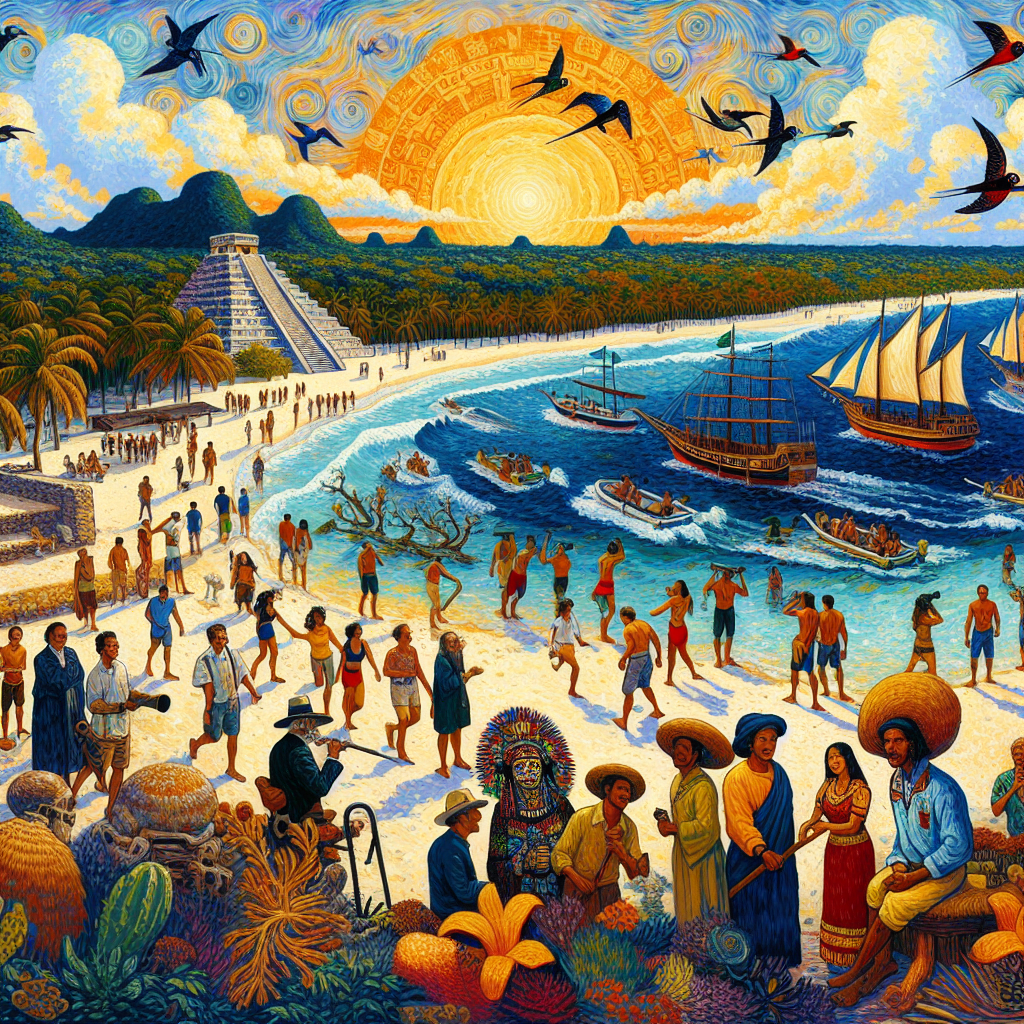
Glossary Of Terms
Other Questions
What Is The History Of Cozumel Or Kozumel? – Other Questions
If you wish to explore and discover more, consider looking for answers to these questions:
- What are some other possible origins of the name Cozumel?
- Who were some significant Mayan figures associated with Cozumel?
- How did the Spanish conquest specifically impact Cozumel’s indigenous population?
- What led to the Mexican government recognizing Cozumel’s potential for trade and tourism?
- How has the arrival of cruise ships influenced Cozumel’s economy and infrastructure?
- What modern attractions and activities are the most popular among tourists in Cozumel?
- What is the significance of the San Gervasio ruins in understanding Mayan culture?
- How did Cozumel’s strategic location benefit ancient Mayan trade and seafaring?
- What major events marked Cozumel’s transition from a trading hub to a tourism hotspot?
- What conservation efforts are in place to protect Cozumel’s coral reefs and marine life?
- How do locals view the balance between tourism and preserving their cultural heritage?
- In what ways have natural disasters shaped Cozumel’s urban planning and community resilience?
- What is the current relationship between Cozumel and its neighboring areas in terms of tourism and trade?
- How do traditional Mayan customs and beliefs persist on the island today?
- What role do Cave Swallows play in Cozumel’s environment aside from their ecological significance?
- How effective are Cozumel’s disaster preparedness measures, and how do they compare to other Caribbean islands?
- Are there any unique local festivals or events linked to Cozumel’s historical and cultural legacy?
- What impact did the decline of the coconut industry have on the local economy and employment?
- What other archaeological sites in Cozumel can visitors explore to learn about the island’s past?
- What myths or legends besides Ixchel are significant to Cozumel’s history and culture?
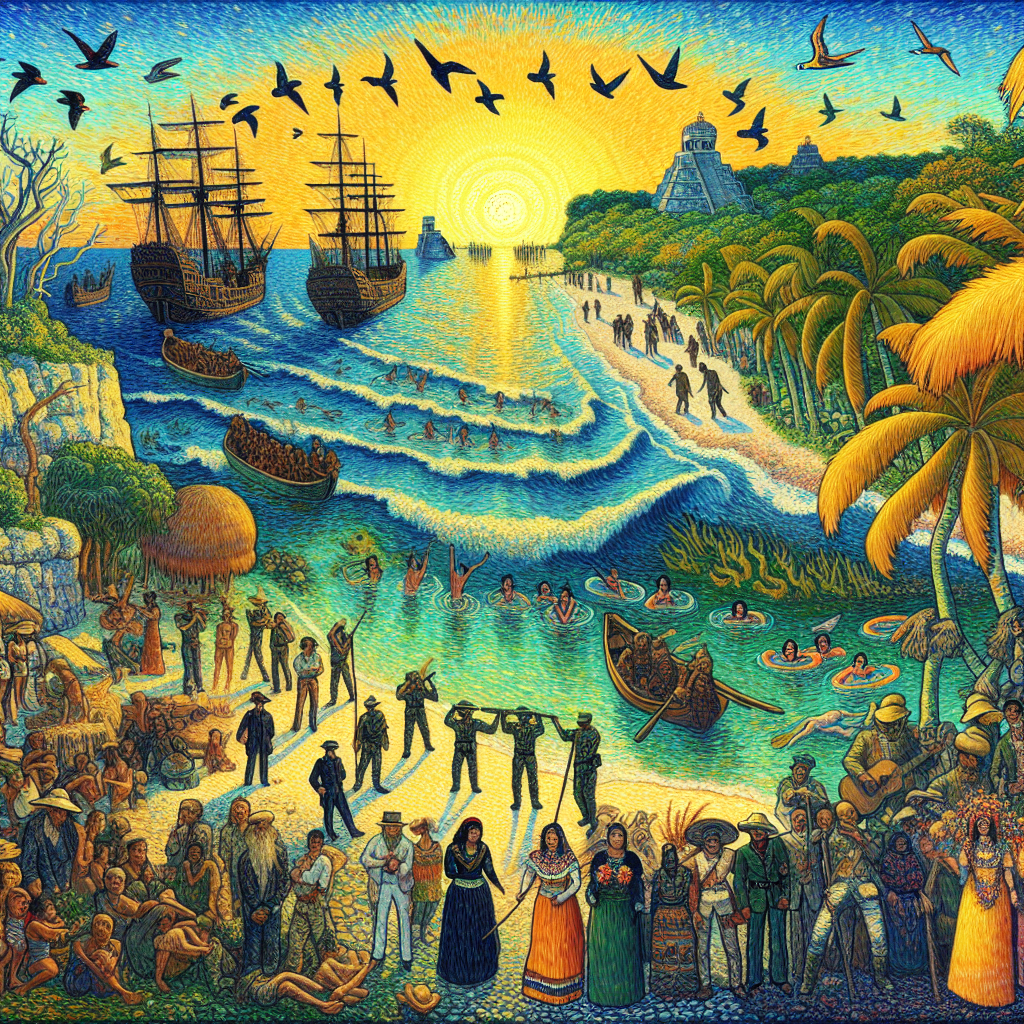
Other Questions
Haiku
What Is The History Of Cozumel Or Kozumel? – A Haiku
Island of swallows,
Mayan gods, coral reefs thrive—
Cozumel endures.
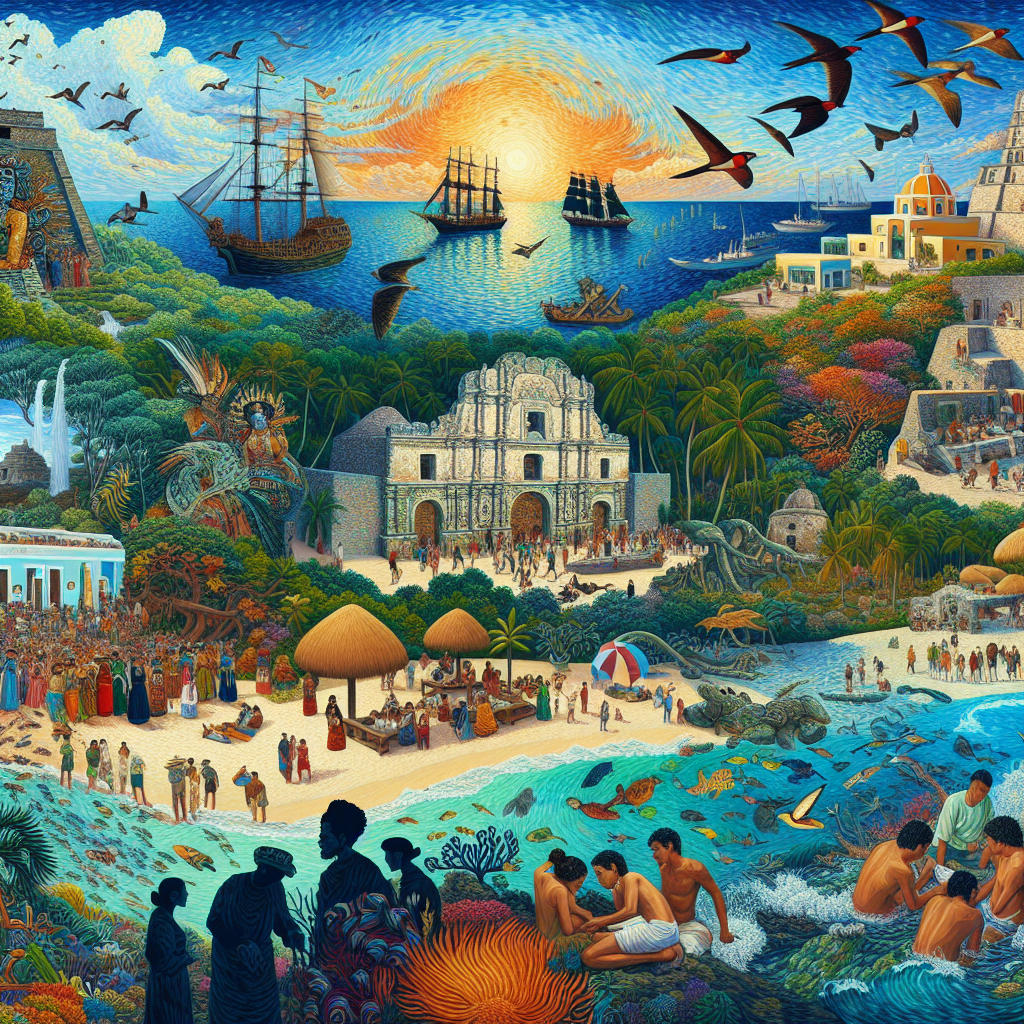
Haiku
Poem
What Is The History Of Cozumel Or Kozumel? – A Poem
Upon the Caribbean’s cerulean seam,
Lies Cozumel, land of swallows in dream.
From secrets kept by Mayan tide,
To Spanish shores where conquest pried.
Ixchel’s whispers through the sacred trees,
Healers, pilgrims, on bending knees.
Temples rose, moon-goddess bowed,
Their canoes cut the currents, undeterred, proud.
Hernán’s ships, the strange gods they bore,
Changed swallows’ lands forevermore.
Silent shrines and crosses grew,
Old myths met the world anew.
Coconuts swaying in a different breeze,
19th century’s imperial tease.
Yet, fortunes turned, the world took heed,
Diving dreams, coral’s creed.
San Miguel’s streets where cultures mix,
Spanish, Mayan, Caribbean fix.
From ancient trade to royal feast,
History woven, never ceased.
The hurricanes’ wrath, winds of strife,
Nature’s fight against human life.
Recovery born from island’s embrace,
Resilience etched in every face.
Today, tourists by the coral flock,
Nature’s wonders, time’s epoch.
Cruise ships anchor by the bay,
In Cozumel’s embrace, they stay.
Remember tales of those who’ve been,
Among the ruins and jade unseen.
Thank the swallows as they soar,
For Cozumel’s heart forevermore.
So whether Kozumel or Cozumel,
The island’s magic casts its spell.
A tapestry of tides and time,
In each wave, hear history rhyme.
Cozumel: Custodian of Ages, Cradle of Futures.
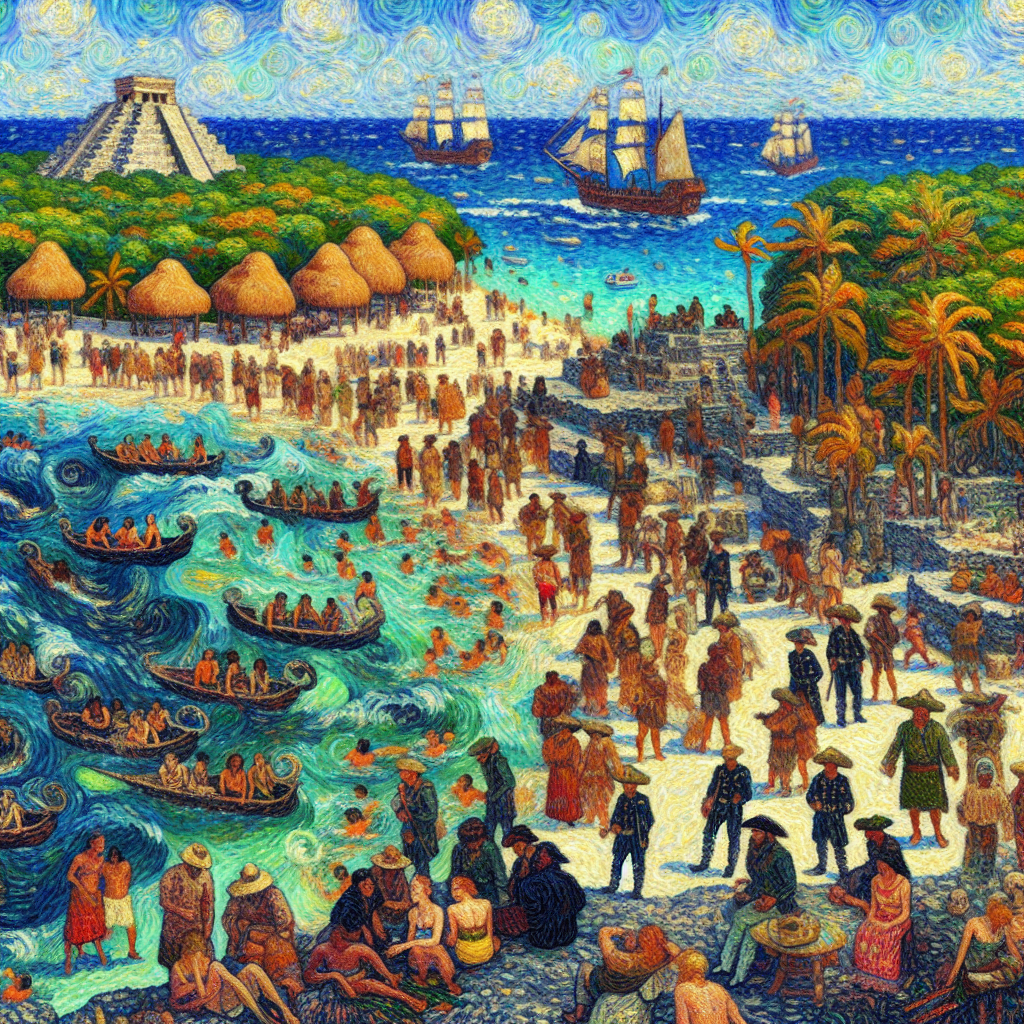
Poem
Checklist
What Is The History Of Cozumel Or Kozumel? – A Checklist
Understanding Cozumel’s History
_____ Origins and Name: _____ Derived from Mayan words “Cuzamil” or “Ah Cuzamil Peten” meaning “land of the swallows. ”
_____ Known as a sanctuary for birds and humans for centuries.
_____ Ancient Mayan Significance: _____ Settlers considered it a sacred place dedicated to Ixchel, the goddess of fertility, medicine, and the moon.
_____ Pilgrimage destination from the mainland via canoe.
_____ Colonial Period: _____ Arrival of Spanish conquistador Hernan Cortes in the 16th century.
_____ Conversion of indigenous population to Christianity.
_____ Period of isolation from the rest of Mexico for many years.
_____ Modern Development: _____ Recognized in the late 19th century as a hub for trade and tourism.
_____ Welcomed its first cruise ship in 1961.
Significance in Mayan Culture
_____ Religious and Cultural Importance: _____ Home of Ixchel, the goddess of the moon, fertility, and childbirth.
_____ Site of Mayan New Year ceremonies and rituals.
_____ Important trading hub along the Mesoamerican trade route.
_____ Advanced maritime culture and seafaring techniques.
Evolution Over Centuries
_____ Pre-Colonial to Post-Colonial Transition: _____ Mayan inhabitation dating back to 300 AD.
_____ Spanish rule and missionary activity during the 16th century.
_____ Impact of the coconut industry in the 19th century.
_____ Shift to Tourism: _____ Mid-20th-century development of hotels and resorts.
_____ Current status as a popular tourist destination.
Must-See Historical Sites
_____ San Gervasio Mayan Ruins: _____ Insight into ancient Mayan civilization.
_____ El Cedral Mayan Ruins: _____ Oldest Mayan settlement on the island.
_____ Museo de la Isla de Cozumel: _____ Showcasing the history and culture of the island.
_____ Cedral Hacienda: _____ Glimpse into the colonial past.
_____ El Caracol Temple: _____ Ancient Mayan temple used for astronomical observations.
Natural Disasters
_____ Hurricane Wilma in 2005: _____ Category 4 hurricane causing widespread destruction.
_____ Ongoing Threats: _____ Earthquakes, tsunamis, and other natural calamities.
_____ Community resilience and recovery efforts.
Additional Cultural Insights
_____ Original Inhabitants: _____ The Mayans and their contributions to agriculture, astronomy, and architecture.
_____ Cozumel as the Island of Swallows: _____ Historical and mythological significance.
_____ Cave Swallows and their ecological role.
Tips for Tourists
_____ Navigating Name Pronunciations: _____ Understanding the debate between “Cozumel” and “Kozumel. ”
_____ Embracing the Local Experience: _____ Enjoying the island’s natural beauty, local cuisine, and rich cultural heritage.
This checklist can serve as a guide to delve into the rich history, cultural significance, and modern evolution of Cozumel, enhancing your appreciation and exploration of this enchanting island.
Checklist
Jeopardy! Style Puzzle
Let’s create a Jeopardy! style game using the glossary terms and definitions. We’ll create five categories with clues, and you’ll have to guess the correct terms.
Categories:
1. Ancient Cozumel
2. Spanish Impact
3. Natural Wonders
4. Modern Influences
5. Cozumel Traditions
Clues and Answers:
#Ancient Cozumel
1. $200: The island in the Caribbean Sea off the eastern coast of Mexico’s Yucatán Peninsula, known for its rich Mayan history and beautiful beaches.
– A: What is Cozumel?
2. $400: The original Mayan name of Cozumel, meaning “Island of Swallows.”
– A: What is Kuzamil?
3. $600: A pre-Columbian civilization known for its advanced written language, art, architecture, and astronomical systems, which inhabited Cozumel.
– A: What is the Maya Civilization?
4. $800: The largest and most significant archaeological site on Cozumel, serving as a hub for Mayan worship.
– A: What is San Gervasio?
5. $1000: The Mayan goddess of fertility, medicine, and the moon, who was particularly worshipped on Cozumel.
– A: Who is Ix Chel?
#Spanish Impact
1. $200: European invaders, including Hernán Cortés, who arrived on Cozumel in the early 16th century.
– A: Who are the Spanish Conquistadors?
2. $400: Spanish conquistador who landed on Cozumel in 1519 and initiated the Spanish colonization of the Americas.
– A: Who is Hernán Cortés?
3. $600: Conquistador who played a major role in the colonization of the Yucatán Peninsula, including Cozumel.
– A: Who is Francisco de Montejo?
4. $800: A devastating European-borne disease that drastically reduced the indigenous population of Cozumel after the arrival of the Spanish.
– A: What is Smallpox?
5. $1000: Pirates of the Caribbean who used Cozumel as a hideout and base of operations.
– A: Who are the Buccaneers?
#Natural Wonders
1. $200: A renowned coral reef off the coast of Cozumel, part of the Mesoamerican Barrier Reef System.
– A: What is Palancar Reef?
2. $400: The world’s second-largest coral reef system, of which Cozumel is a part.
– A: What is the Mesoamerican Barrier Reef?
3. $600: The jungle region covering parts of the Yucatán Peninsula, including areas of Cozumel, rich in biodiversity.
– A: What is Selva Maya?
4. $800: A natural marine park established to protect underwater and coastal habitats on Cozumel.
– A: What is Chankanaab Park?
5. $1000: Natural reserves and parks on Cozumel promoting education and conservation, such as Punta Sur Eco Beach Park.
– A: What are Eco-Parks?
#Modern Influences
1. $200: Famous French explorer and filmmaker who promoted Cozumel’s marine biodiversity, boosting its popularity as a diving destination.
– A: Who is Jacques Cousteau?
2. $400: Mexican president who in the late 20th century played a role in promoting tourism development in Cozumel.
– A: Who is Carlos Salinas de Gortari?
3. $600: A significant industry for Cozumel, attracting millions of visitors annually due to its port facilities.
– A: What is Cruise Tourism?
4. $800: A major recreational activity in Cozumel, appreciated for its clear waters and abundant marine life.
– A: What is Scuba Diving?
5. $1000: A growing sector in Cozumel focusing on sustainable travel and the preservation of natural habitats.
– A: What is Eco-Tourism?
#Cozumel Traditions
1. $200: The Mexican state where Cozumel is located, named after Andrés Quintana Roo, a Mexican independence leader.
– A: What is Quintana Roo?
2. $400: An annual cultural festival featuring parades, music, and dance, celebrated since the early 20th century.
– A: What is Carnaval de Cozumel?
3. $600: The oldest Mayan ruin on Cozumel and an important ceremonial site.
– A: What is El Cedral?
4. $800: A major indigenous uprising against Mexican authorities in the 19th century that influenced the region’s history.
– A: What is the Caste War of Yucatán?
5. $1000: Interest in and restoration of Mayan culture and architecture, including sites on Cozumel, in the modern era.
– A: What is the Mayan Revival?
Feel free to use this game to challenge your friends or students about the history of Cozumel!
True False Quiz
Below is a true or false quiz based on the glossary definitions you provided. Each statement is followed by its correct answer.
1. Cozumel is an island in the Caribbean Sea off the western coast of Mexico’s Yucatán Peninsula.
– False (It’s off the eastern coast)
2. Kuzamil, the original Mayan name of Cozumel, means “Island of Swallows.”
– True
3. The Maya civilization, known for its advanced written language and architecture, did not inhabit Cozumel.
– False (The Maya civilization did inhabit Cozumel)
4. San Gervasio is the largest archaeological site on Cozumel and served as a center for Mayan worship.
– True
5. Ix Chel was a Mayan goddess associated with fertility, medicine, and the sun, and was particularly worshipped on Cozumel.
– False (She is associated with fertility, medicine, and the moon)
6. Spanish Conquistadors, including Hernán Cortés, arrived on Cozumel in the early 18th century.
– False (They arrived in the early 16th century)
7. Hernán Cortés initiated the Spanish colonization of the Americas after landing on Cozumel in 1519.
– True
8. Francisco de Montejo had no involvement in the colonization of Cozumel.
– False (He played a major role in the colonization of the Yucatán Peninsula, including Cozumel)
9. The indigenous population of Cozumel significantly increased after the arrival of the Spanish due to better healthcare.
– False (It drastically reduced due to smallpox)
10. Piracy was a common issue in the Caribbean during the 17th and 18th centuries, affecting Cozumel because of its strategic location.
– True
11. Buccaneers never used Cozumel as a hideout or base of operations.
– False (They did use Cozumel as a hideout and base)
12. Haciendas were very common on Cozumel during the colonial period.
– False (They were not common, though their influence affected the region)
13. The Caste War of Yucatán was a major indigenous uprising that had no impact on Cozumel’s history.
– False (It did influence the region’s history)
14. The Lighthouse at Punta Molas was built in the 20th century to aid in maritime navigation around Cozumel’s coast.
– False (It was built in the 19th century)
15. Jacques Cousteau was a famous French explorer who promoted Cozumel’s marine biodiversity, increasing its popularity as a diving destination.
– True
16. Palancar Reef, part of the Mesoamerican Barrier Reef System, is a renowned coral reef off the coast of Cozumel.
– True
17. Carlos Salinas de Gortari, a Mexican president, played a role in promoting tourism development in Cozumel in the early 20th century.
– False (He did this in the late 20th century)
18. Chankanaab Park was established as a natural marine park to protect underwater and coastal habitats on Cozumel.
– True
19. Cruise tourism is a minor industry for Cozumel, attracting only a few visitors annually.
– False (It is a significant industry, attracting millions of visitors)
20. Scuba diving is a major recreational activity in Cozumel and is well known for its clear waters and abundant marine life.
– True
21. Cozumel is part of the world’s largest coral reef system, the Mesoamerican Barrier Reef.
– False (It’s part of the world’s second-largest coral reef system)
22. El Cedral is the oldest and least important Mayan ruin on Cozumel.
– False (It is the oldest Mayan ruin and an important ceremonial site)
23. The term Mestizo refers to people of mixed European and indigenous ancestry and is common in the post-colonial period of Cozumel.
– True
24. Quintana Roo is the Mexican state where Cozumel is located, named after a Mayan goddess.
– False (It is named after Andrés Quintana Roo, a Mexican independence leader)
25. Eco-tourism focuses on sustainable travel and the preservation of natural habitats, and is growing in Cozumel.
– True
26. Mayan Revival refers to the interest in and restoration of Mayan culture and architecture, including sites on Cozumel, in the modern era.
– True
27. Carnaval de Cozumel is an annual cultural festival featuring parades and music, celebrated since the early 17th century.
– False (It has been celebrated since the early 20th century)
28. Jean-Frédéric Waldeck was a 19th-century explorer and artist who documented Mayan ruins, including those on Cozumel.
– True
29. Selva Maya is the mountain region covering parts of the Yucatán Peninsula, including areas of Cozumel.
– False (It is the jungle region)
30. Eco-parks in Cozumel, such as Punta Sur Eco Beach Park, promote education and conservation.
– True
Hope you find this quiz helpful!
Multiple Choice Quiz
Here is a multiple-choice quiz based on the provided glossary of terms related to the history of Cozumel. Each question includes a definition and four possible terms, with the correct term randomized among them.
Quiz: History of Cozumel
1. Question: What is the original Mayan name of Cozumel, meaning “Island of Swallows”?
a) Punta Molas
b) Smallpox
c) Kuzamil
d) Palancar Reef
2. Question: Who was the famous French explorer and filmmaker that promoted Cozumel’s marine biodiversity, boosting its popularity as a diving destination?
a) Hernán Cortés
b) Jean-Frédéric Waldeck
c) Carlos Salinas de Gortari
d) Jacques Cousteau
3. Question: Which term refers to large estates established in the Yucatán Peninsula during the colonial period, although not common on Cozumel?
a) Haciendas
b) Caste War of Yucatán
c) Spanish Conquistadors
d) Buccaneers
4. Question: What is the largest and most significant archaeological site on Cozumel, serving as a hub for Mayan worship?
a) San Gervasio
b) El Cedral
c) Mesoamerican Barrier Reef
d) Chankanaab Park
5. Question: What is the name of the renowned coral reef off the coast of Cozumel, part of the Mesoamerican Barrier Reef System?
a) Ix Chel
b) Palancar Reef
c) Smallpox
d) Kuzamil
6. Question: Which term describes the pre-Columbian civilization known for its advanced written language, art, architecture, and astronomical systems, which inhabited Cozumel?
a) Maya Civilization
b) Mestizo
c) Eco-Tourism
d) Pirates
7. Question: Which Mexican president played a role in promoting tourism development in Cozumel in the late 20th century?
a) Francisco de Montejo
b) Carlos Salinas de Gortari
c) Andrés Quintana Roo
d) Hernán Cortés
8. Question: What devastating European-borne disease drastically reduced the indigenous population of Cozumel after the arrival of the Spanish?
a) Kuzamil
b) Piracy
c) Smallpox
d) Mestizo
9. Question: Which Mayan goddess of fertility, medicine, and the moon was particularly worshipped on Cozumel?
a) Ix Chel
b) Kuzamil
c) Jean-Frédéric Waldeck
d) Maya Civilization
10. Question: What term refers to pirates of the Caribbean who used Cozumel as a hideout and base of operations?
a) Haciendas
b) Buccaneers
c) Scuba Diving
d) Maya Civilization
11. Question: What is the world’s second-largest coral reef system, of which Cozumel is a part?
a) Mesoamerican Barrier Reef
b) Eco-Parks
c) Francisco de Montejo
d) Scuba Diving
12. Question: What is the name of the annual cultural festival featuring parades, music, and dance, celebrated since the early 20th century in Cozumel?
a) El Cedral
b) Kuzamil
c) Carnaval de Cozumel
d) Ix Chel
13. Question: What is a growing sector in Cozumel focusing on sustainable travel and the preservation of natural habitats?
a) El Cedral
b) Eco-Tourism
c) Piracy
d) Caste War of Yucatán
14. Question: Who was the Spanish conquistador who landed on Cozumel in 1519 and initiated the Spanish colonization of the Americas?
a) Jacques Cousteau
b) Hernán Cortés
c) Carlos Salinas de Gortari
d) Jean-Frédéric Waldeck
15. Question: What is the name for the lighthouse built in the 19th century to aid in maritime navigation around Cozumel’s coast?
a) Francisco de Montejo
b) Ix Chel
c) Lighthouse at Punta Molas
d) Mestre
16. Question: Which term describes the ancient Mayan ruin on Cozumel and an important ceremonial site?
a) Mestizo
b) El Cedral
c) Caste War of Yucatán
d) Francisco de Montejo
Fill In The Blank Quiz
Here are some sentences with missing terms for a fill-in-the-blank puzzle. The provided definitions will serve as clues.
1. The island of __________, located in the Caribbean Sea off the eastern coast of Mexico’s Yucatán Peninsula, is famous for its rich Mayan history and beautiful beaches.
– Definition: An island in the Caribbean Sea off the eastern coast of Mexico’s Yucatán Peninsula, known for its rich Mayan history and beautiful beaches.
2. Originally known as __________, the island’s name means “Island of Swallows” in the Mayan language.
– Definition: The original Mayan name of Cozumel, meaning “Island of Swallows.”
3. The __________ is a pre-Columbian civilization renowned for its advanced written language, art, architecture, and astronomical systems, which inhabited Cozumel.
– Definition: A pre-Columbian civilization known for its advanced written language, art, architecture, and astronomical systems, which inhabited Cozumel.
4. __________ is the largest and most significant archaeological site on Cozumel, serving as a hub for Mayan worship.
– Definition: The largest and most significant archaeological site on Cozumel, serving as a hub for Mayan worship.
5. The Mayan goddess __________, who was particularly worshipped on Cozumel, is associated with fertility, medicine, and the moon.
– Definition: The Mayan goddess of fertility, medicine, and the moon, who was particularly worshipped on Cozumel.
6. European invaders known as __________, including Hernán Cortés, arrived on Cozumel in the early 16th century.
– Definition: European invaders, including Hernán Cortés, who arrived on Cozumel in the early 16th century.
7. __________, a Spanish conquistador, landed on Cozumel in 1519 and initiated the Spanish colonization of the Americas.
– Definition: Spanish conquistador who landed on Cozumel in 1519 and initiated the Spanish colonization of the Americas.
8. A disease called __________, brought by Europeans, drastically reduced the indigenous population of Cozumel after the arrival of the Spanish.
– Definition: A devastating European-borne disease that drastically reduced the indigenous population of Cozumel after the arrival of the Spanish.
9. __________ were pirates in the Caribbean during the 17th and 18th centuries who often used Cozumel as a hideout and base of operations.
– Definition: Pirates of the Caribbean who used Cozumel as a hideout and base of operations.
10. __________ is a renowned coral reef off the coast of Cozumel, part of the Mesoamerican Barrier Reef System.
– Definition: A renowned coral reef off the coast of Cozumel, part of the Mesoamerican Barrier Reef System.
11. The famous French explorer, __________, promoted Cozumel’s marine biodiversity, boosting its popularity as a diving destination.
– Definition: Famous French explorer and filmmaker who promoted Cozumel’s marine biodiversity, boosting its popularity as a diving destination.
12. __________, established to protect underwater and coastal habitats on Cozumel, is a natural marine park.
– Definition: A natural marine park established to protect underwater and coastal habitats on Cozumel.
13. An annual cultural festival known as __________ features parades, music, and dance, and has been celebrated since the early 20th century in Cozumel.
– Definition: An annual cultural festival featuring parades, music, and dance, celebrated since the early 20th century.
14. The jungle region known as __________ covers parts of the Yucatán Peninsula, including areas of Cozumel, and is rich in biodiversity.
– Definition: The jungle region covering parts of the Yucatán Peninsula, including areas of Cozumel, rich in biodiversity.
15. The Mexican president __________ played a role in promoting tourism development in Cozumel in the late 20th century.
– Definition: Mexican president who in the late 20th century played a role in promoting tourism development in Cozumel.
Fill in the blanks with the correct terms from the glossary for a complete puzzle!
Anagram Puzzle
Below is an anagram puzzle using the provided glossary terms related to the history of Cozumel. Each glossary term has been replaced with a scrambled version, and the definition is provided as a clue to solve the anagram.
1. Eluzcom: An island in the Caribbean Sea off the eastern coast of Mexico’s Yucatán Peninsula, known for its rich Mayan history and beautiful beaches.
2. Zaimluk: The original Mayan name of Cozumel, meaning “Island of Swallows. ”
3. Viaalc Minyotica: A pre-Columbian civilization known for its advanced written language, art, architecture, and astronomical systems, which inhabited Cozumel.
4. Sen Ariogasv: The largest and most significant archaeological site on Cozumel, serving as a hub for Mayan worship.
5. Helc XeI: The Mayan goddess of fertility, medicine, and the moon, who was particularly worshipped on Cozumel.
6. Hinson Cap Suadorsit: European invaders, including Hernán Cortés, who arrived on Cozumel in the early 16th century.
7. Anrehn Crtóse: Spanish conquistador who landed on Cozumel in 1519 and initiated the Spanish colonization of the Americas.
8. Osancirf De Moeontj: Conquistador who played a major role in the colonization of the Yucatán Peninsula, including Cozumel.
9. Leaksopx: A devastating European-borne disease that drastically reduced the indigenous population of Cozumel after the arrival of the Spanish.
10. Cirpay: Common in the Caribbean during the 17th and 18th centuries, affecting Cozumel due to its strategic location.
11. Uracusbes: Pirates of the Caribbean who used Cozumel as a hideout and base of operations.
12. Sidsenaha: Large estates that were established in the Yucatán Peninsula during the colonial period; though not common on Cozumel, their influence affected the region.
13. Teacs Raw Of Nácutyá: A major indigenous uprising against Mexican authorities in the 19th century that influenced the region’s history.
14. Golesouhtt At Npatap Molas: Built in the 19th century to aid in maritime navigation around Cozumel’s coast.
15. Suspac Jequel: Famous French explorer and filmmaker who promoted Cozumel’s marine biodiversity, boosting its popularity as a diving destination.
16. Lcaanpar Free: A renowned coral reef off the coast of Cozumel, part of the Mesoamerican Barrier Reef System.
17. Aclors Snails De Rotira: Mexican president who in the late 20th century played a role in promoting tourism development in Cozumel.
18. Lbnaamaack Phkra: A natural marine park established to protect underwater and coastal habitats on Cozumel.
19. Rucise Mrouits: A significant industry for Cozumel, attracting millions of visitors annually due to its port facilities.
20. Absuc Divnig: A major recreational activity in Cozumel, appreciated for its clear waters and abundant marine life.
21. Eomaracisna Briarre Feefr: The world’s second-largest coral reef system, of which Cozumel is a part.
22. Le Rcated: The oldest Mayan ruin on Cozumel and an important ceremonial site.
23. Soetizm: A term referring to people of mixed European and indigenous ancestry, common in the post-colonial period of Cozumel.
24. Anintkau RooQ: The Mexican state where Cozumel is located, named after Andrés Quintana Roo, a Mexican independence leader.
25. Eco-Trismuoi: A growing sector in Cozumel focusing on sustainable travel and the preservation of natural habitats.
26. Yanam Revail: Interest in and restoration of Mayan culture and architecture, including sites on Cozumel, in the modern era.
27. Claaravn De Melzouc: An annual cultural festival featuring parades, music, and dance, celebrated since the early 20th century.
28. Aean-Jrfdiec Ricwalek: A 19th-century explorer and artist who documented Mayan ruins, including those on Cozumel.
29. Lavesa Mya: The jungle region covering parts of the Yucatán Peninsula, including areas of Cozumel, rich in biodiversity.
30. Ceops-Kar: Natural reserves and parks on Cozumel promoting education and conservation, such as Punta Sur Eco Beach Park.
Enjoy solving the anagrams!
Sentence Completion Puzzle
Here are sentences with blanks that can be completed using the glossary terms provided:
1. The island of ___ is famous for its rich Mayan history and stunning Caribbean beaches.
2. Before the island was known as Cozumel, the Maya called it ___, which translates to “Island of Swallows.”
3. The ___, known for their advanced civilization, inhabited Cozumel and left behind significant archaeological sites.
4. The most important Mayan archaeological site on Cozumel is ___, which served as a center for worship.
5. The Mayan goddess ___, who represented fertility, medicine, and the moon, was widely revered on Cozumel.
6. The arrival of ___ in the early 16th century marked the beginning of European influence on Cozumel.
7. ___ was the Spanish conquistador who landed on Cozumel in 1519, initiating its colonization.
8. Another influential conquistador, ___, played a significant role in the colonization of the Yucatán Peninsula, including Cozumel.
9. The introduction of ___ by Europeans led to a drastic decline in the indigenous population of Cozumel.
10. During the 17th and 18th centuries, ___ was a common issue in the Caribbean, affecting Cozumel due to its strategic location.
11. ___, the pirates of the Caribbean, often used Cozumel as a hideout and base.
12. Though not common on Cozumel, large estates known as ___ had an influence on the surrounding regions during the colonial period.
13. The ___ was a significant indigenous uprising in the 19th century that had implications for the entire Yucatán Peninsula, including Cozumel.
14. Built in the 19th century, the ___ aided maritime navigation around Cozumel’s coast.
15. ___ was a famous French explorer whose work highlighted Cozumel’s marine biodiversity, boosting its popularity as a diving destination.
16. The ___ is a famous coral reef off the coast of Cozumel, known for its vibrant marine life.
17. In the late 20th century, Mexican president ___ played a role in promoting tourism development in Cozumel.
18. ___ is a protected natural marine park on Cozumel established for the conservation of underwater and coastal habitats.
19. ___ has become a major industry for Cozumel, bringing millions of visitors to the island’s port each year.
20. Many tourists visit Cozumel for ___, attracted by the island’s clear waters and rich marine ecosystems.
21. Cozumel is part of the ___, the world’s second-largest coral reef system.
22. The oldest Mayan ruin on Cozumel is ___, an important ceremonial site.
23. ___ refers to individuals of mixed European and indigenous ancestry, which became common in Cozumel during the post-colonial period.
24. Cozumel is located in the Mexican state of ___, named after a leader of the Mexican independence movement.
25. ___ is a growing sector in Cozumel that emphasizes sustainable travel and environmental preservation.
26. The ___ reflects modern-day interest in and restoration of Mayan culture and architecture, including on Cozumel.
27. The ___ is an annual cultural festival on Cozumel featuring parades, music, and dancing.
28. In the 19th century, explorer and artist ___ documented Mayan ruins, including those on Cozumel.
29. The ___ is the jungle region of the Yucatán Peninsula that includes parts of Cozumel and is rich in biodiversity.
30. ___ on Cozumel, such as Punta Sur Eco Beach Park, promote education and conservation of natural habitats.
This puzzle will help reinforce the knowledge and terminology related to the history and culture of Cozumel.
Codebreaker Puzzle
Sure, let’s create a codebreaker puzzle using a simple substitution cipher. For this puzzle, we will use the Caesar Cipher with a shift of 3. In this cipher, each letter in the plaintext is shifted three places down the alphabet.
Here are the shifted terms:
1. Frzxphoh: An island in the Caribbean Sea off the eastern coast of Mexico’s Yucatán Peninsula, known for its rich Mayan history and beautiful beaches.
2. NbdDplool: The original Mayan name of Cozumel, meaning “Island of Swallows. ”
3. Pddb Flylolcpawlrq: A pre-Columbian civilization known for its advanced written language, art, architecture, and astronomical systems, which inhabited Cozumel.
4. Vdq Jhuvaslr: The largest and most significant archaeological site on Cozumel, serving as a hub for Mayan worship.
5. Lbk Coil: The Mayan goddess of fertility, medicine, and the moon, who was particularly worshipped on Cozumel.
6. Vsdqlvc Krsydvltawdu: European invaders, including Hernán Cortés, who arrived on Cozumel in the early 16th century.
7. Khqdádm Frutlvcw: Spanish conquistador who landed on Cozumel in 1519 and initiated the Spanish colonization of the Americas.
8. Iubdvqrfrv Gh Prowdjrb: Conquistador who played a major role in the colonization of the Yucatán Peninsula, including Cozumel.
9. Vrddoprks: A devastating European-borne disease that drastically reduced the indigenous population of Cozumel after the arrival of the Spanish.
10. Slvduf: Common in the Caribbean during the 17th and 18th centuries, affecting Cozumel due to its strategic location.
11. Geccduhhu: Pirates of the Caribbean who used Cozumel as a hideout and base of operations.
12. Jdfldgdvk: Large estates that were established in the Yucatán Peninsula during the colonial period; though not common on Cozumel, their influence affected the region.
13. Fgwyhbr Af Yxfvudqr: A major indigenous uprising against Mexican authorities in the 19th century that influenced the region’s history.
14. Olfkrghdv Dw Sxrwd Prrod: Built in the 19th century to aid in maritime navigation around Cozumel’s coast.
15. Mdfjvhv Frxzdfwx: Famous French explorer and filmmaker who promoted Cozumel’s marine biodiversity, boosting its popularity as a diving destination.
16. Sdosgddu Uhhi: A renowned coral reef off the coast of Cozumel, part of the Mesoamerican Barrier Reef System.
17. Fduolv Vdolfdnb Gh Oruwdun: Mexican president who in the late 20th century played a role in promoting tourism development in Cozumel.
18. Fkdnkaxba Edvd: A natural marine park established to protect underwater and coastal habitats on Cozumel.
19. Fuhdvh Wrudaspv: A significant industry for Cozumel, attracting millions of visitors annually due to its port facilities.
20. Vfxgv Hlylqj: A major recreational activity in Cozumel, appreciated for its clear waters and abundant marine life.
21. Pdpdrofxhc Lcdecca Ghdwm: The world’s second-largest coral reef system, of which Cozumel is a part.
22. Ik Hfhwcl: The oldest Mayan ruin on Cozumel and an important ceremonial site.
23. Pbvwlfv: A term referring to people of mixed European and indigenous ancestry, common in the post-colonial period of Cozumel.
24. Txhlxwd Drr: The Mexican state where Cozumel is located, named after Andrés Quintana Roo, a Mexican independence leader.
25. Hfr-Vrxvlpsr: A growing sector in Cozumel focusing on sustainable travel and the preservation of natural habitats.
26. Pdbxd Xlylblb: Interest in and restoration of Mayan culture and architecture, including sites on Cozumel, in the modern era.
27. Fduodduo Gh Frzxphoh: An annual cultural festival featuring parades, music, and dance, celebrated since the early 20th century.
28. Mhdo-Iuhgghuf Wdgogr: A 19th-century explorer and artist who documented Mayan ruins, including those on Cozumel.
29. Yhovd Pdbw: The jungle region covering parts of the Yucatán Peninsula, including areas of Cozumel, rich in biodiversity.
30. Hfr-Pduovw: Natural reserves and parks on Cozumel promoting education and conservation, such as Punta Sur Eco Beach Park.
To decode each term, the solver needs to shift each letter three places back in the alphabet. For example, “Frzxphoh” should be decoded by shifting each letter back by three places to get “Cozumel. ”
Enjoy solving the puzzle!
Matching Quiz
“`html
Cozumel History Matching Puzzle
| Terms | Definitions | |
|---|---|---|
| 1. Piracy | 1. Famous French explorer and filmmaker who promoted Cozumel’s marine biodiversity, boosting its popularity as a diving destination. | |
| 2. Francisco de Montejo | 2. An island in the Caribbean Sea off the eastern coast of Mexicos Yucatán Peninsula, known for its rich Mayan history and beautiful beaches. | |
| 3. Lighthouse at Punta Molas | 3. The original Mayan name of Cozumel, meaning “Island of Swallows.” | |
| 4. San Gervasio | 4. A term referring to people of mixed European and indigenous ancestry, common in the post-colonial period of Cozumel. | |
| 5. El Cedral | 5. Natural reserves and parks on Cozumel promoting education and conservation, such as Punta Sur Eco Beach Park. | |
| 6. Scuba Diving | 6. European invaders, including Hernán Cortés, who arrived on Cozumel in the early 16th century. | |
| 7. Selva Maya | 7. The largest and most significant archaeological site on Cozumel, serving as a hub for Mayan worship. | |
| 8. Kuzamil | 8. Common in the Caribbean during the 17th and 18th centuries, affecting Cozumel due to its strategic location. | |
| 9. Hernán Cortés | 9. Built in the 19th century to aid in maritime navigation around Cozumel’s coast. | |
| 10. Jacques Cousteau | 10. The oldest Mayan ruin on Cozumel and an important ceremonial site. | |
| 11. Kuzamil | 11. Conquistador who played a major role in the colonization of the Yucatán Peninsula, including Cozumel. | |
| 12. Buccaneers | 12. A renowned coral reef off the coast of Cozumel, part of the Mesoamerican Barrier Reef System. | |
| 13. Eco-Tourism | 13. A major indigenous uprising against Mexican authorities in the 19th century that influenced the region’s history. | |
| 14. Caste War of Yucatán | 14. Large estates that were established in the Yucatán Peninsula during the colonial period; though not common on Cozumel, their influence affected the region. | |
| 15. Mesoamerican Barrier Reef | 15. Major recreational activity in Cozumel, appreciated for its clear waters and abundant marine life. | |
| 16. San Gervasio | 16. The Mexican state where Cozumel is located, named after Andrés Quintana Roo, a Mexican independence leader. | |
| 17. Ix Chel | 17. Devastating European-borne disease that drastically reduced the indigenous population of Cozumel after the arrival of the Spanish. | |
| 18. Mayan Revival | 18. Interest in and restoration of Mayan culture and architecture, including sites on Cozumel, in the modern era. | |
| 19. Quintana Roo | 19. The jungle region covering parts of the Yucatán Peninsula, including areas of Cozumel, rich in biodiversity. | |
| 20. Cozumel | 20. The Mayan goddess of fertility, medicine, and the moon, who was particularly worshiped on Cozumel. |
“`
Quizzes And Puzzles
At TopCozumelNews, we help travelers enjoy Cozumel by collating information learned from frequently traveling to beautiful Cozumel.
Be sure to read our other related stories at TopCozumelNews to learn more about the Island of Cozumel.