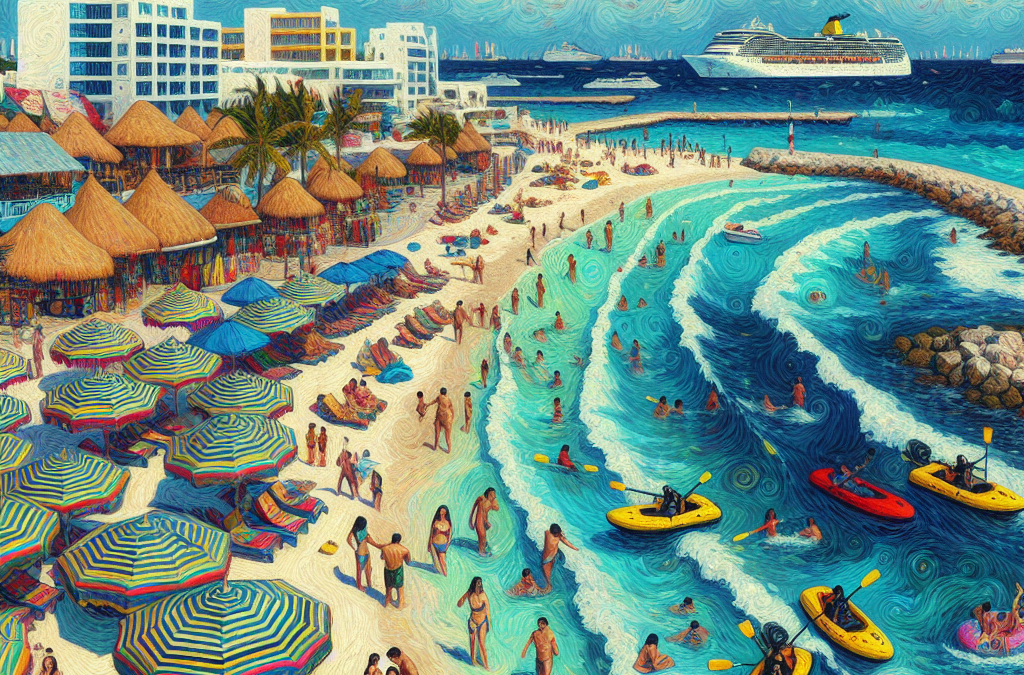
The Impact Of Cozumel’s Environment On Plastic Degradation
By Tom Seest
At TopCozumelNews, we help travelers enjoy Cozumel by collating information learned from frequently traveling to beautiful Cozumel.
Be sure to read our other related stories at TopCozumelNews to learn more about the Island of Cozumel.
Do Plastics Corrode In Cozumel and Why?
When you think of corrosion, you might picture metal rusting away, slowly succumbing to the relentless grip of oxidation. But what about plastics? We often overlook that these synthetic materials can degrade too, especially in paradise settings like Cozumel, where the sun shines fiercely and the ocean churns with salty vigor.
The Caribbean climate, with its high humidity, UV radiation, and salty air, creates a unique environment for plastics—essentially a cocktail of conditions that can accelerate their aging process. While plastics aren’t “corroding” in the same way that iron or copper might, they’re certainly breaking down. Manufacturers produce these materials to resist deterioration, but nature has a knack for proving us wrong.
Let’s talk about UV exposure. Plastic items—whether they’re your favorite beach chairs or a bottle cap left abandoned on the shore—are bombarded by ultraviolet light from the sun. Over time, this radiation causes chemical bonds within the polymers that form the plastic to break apart. When that happens, the plastic starts to lose its strength and structural integrity. It may become brittle, fade in color, or become discolored and chalky. If you’ve ever seen a park bench that looks like it’s seen better days, that’s UV damage doing the heavy lifting.
Then there’s the saltwater. While many plastics lust for the cool embrace of ocean waves, salt can exacerbate the breakdown process. Saltwater combined with sunlight can lead to the formation of tiny cracks and pits in the plastic, making it an inviting environment for microorganisms and other corrosive agents. This is particularly problematic for materials that may be used in marine applications—let’s just say that plastic in a constant state of oceanic flirtation isn’t the best relationship for longevity.
And don’t forget about temperature fluctuations! Cozumel can swing from scorching daylight to cooler evenings, creating stress on plastic items. This constant expansion and contraction can lead to fatigue in the material, causing it to warp and weaken over time.
So, do plastics corrode in Cozumel? While they might not rust, they certainly face an uphill battle against the elements. If you’re down there soaking up the sun, remember: cherish the beauty, but don’t forget the fragility of the materials we create. They may not show wear and tear as quickly as metal, but in the long run, their days are counted too.

Do Plastics Corrode In Cozumel and Why?
Do Plastics Corrode In Cozumel and Why?
- Corrosion typically invokes images of metal rusting, but plastics can degrade as well.
- The Caribbean environment, especially in Cozumel, accelerates plastic aging due to high humidity, UV radiation, and salty air.
- Plastics are designed to resist deterioration, but they are still susceptible to breakdown in harsh conditions.
- Ultraviolet (UV) exposure from the sun causes chemical bonds in plastics to break, leading to loss of strength and color degradation.
- Saltwater exacerbates the breakdown, creating cracks and pits that invite corrosive agents and microorganisms.
- Temperature fluctuations in Cozumel contribute to material fatigue, causing plastics to warp and weaken over time.
- Although plastics don’t rust, they face significant challenges against environmental elements, highlighting their fragility.

Do Plastics Corrode In Cozumel and Why?
Table Of Contents
- Do Plastics Corrode In Cozumel and Why?
- What Factors Contribute To Plastic Degradation?
- Are There Specific Types Of Plastics That Corrode Faster?
- What Role Does Saltwater Play In Plastic Corrosion?
- How Does Uv Exposure Impact Plastic Longevity?
- Are There Regulations Against Plastic Use In Cozumel?
- What Alternative Materials Can Be Used Instead Of Plastics?
- How Can We Minimize Plastic Pollution In Cozumel?
- What Are The Long-Term Effects Of Plastic Corrosion On Ecosystems?
- How Do Local Flora And Fauna Interact With Corroded Plastics?
- What Community Efforts Are In Place To Reduce Plastic Waste?
- How Does Tourism Contribute To Plastic Waste In Cozumel?
- What Can Travelers Do To Help Reduce Plastic Use While Visiting?
- How Can Awareness Be Raised About Plastic Pollution In Cozumel?
- Conclusion
- Other Resources
- Glossary Of Terms
- Other Questions
- Haiku
- Poem
- Checklist
What Factors Contribute To Plastic Degradation?
When we think about plastic, we often conjure up images of convenience: single-use bags, colorful water bottles, and stiff food containers. Yet, lurking behind that convenience is a ticking clock—one that can seem to tick for hundreds of years. Plastic degradation isn’t as straightforward as you might think; it’s a complex dance influenced by a variety of factors, each contributing to how quickly or slowly plastic breaks down.
First up, let’s talk about sunlight. Ultraviolet (UV) radiation from the sun can be a plastic’s worst enemy. When plastics are exposed to UV rays, it causes a chemical reaction that weakens their molecular structure. Over time, this leads to a loss of strength and flexibility, ultimately resulting in cracking or fragmentation. Think of it like leaving a sandwich out in the sun for too long; eventually, it’s not going to hold up too well.
Next on the list is heat. High temperatures can accelerate the degradation process. In places where temperatures soar, we’ve seen certain plastics succumb much faster than in cooler climates. Heat can exacerbate the breakdown of chemical bonds, creating a perfect storm for accelerated aging. Just picture that trusty old Tupperware left in a hot car; it may look fine, but it’s only a matter of time before the heat gets to it.
And let’s not forget the role of moisture and the environment. Water can act as a catalyst for degradation, especially in the presence of microorganisms. Certain bacteria and fungi have adapted to munch on plastic, breaking it down into smaller pieces. That’s right: Nature is not only resilient; it’s creative. When plastics end up in our oceans and waterways, they’re exposed to a cocktail of environmental elements that hasten their demise.
Chemical exposure is another significant factor. Some plastics are sensitive to specific chemicals, such as oils and solvents, which can break down their structures and lead to degradation. Every spill or splash matters, especially in industrial settings, where toxic chemicals may find their way into the mix.
Finally, the type of plastic itself plays a vital role. Not all plastics are created equal. Some are engineered for durability while others are designed for disposability. Additives and recycling processes also impact how plastics degrade. For instance, plastics that have been recycled multiple times may be more susceptible to breakdown.
So, what’s the takeaway? Plastic degradation is not just a matter of time; it’s a complex interaction of environmental conditions, chemical exposure, and the innate properties of the materials themselves. Understanding these factors helps us realize that it’s not just about reducing plastic use—it’s about acknowledging the nuanced lifecycle of these materials in our world.

What Factors Contribute To Plastic Degradation?
What Factors Contribute To Plastic Degradation?
- Plastic is often associated with convenience but poses long-term degradation challenges.
- Sunlight, particularly UV radiation, weakens plastics, leading to cracks and fragmentation.
- Heat accelerates the degradation of plastics, especially in high-temperature environments.
- Moisture, along with microorganisms, can catalyze the breakdown of plastic materials.
- Chemical exposure to solvents and oils can also significantly degrade various plastics.
- The type of plastic influences its durability and degradation rate, with some designed for disposability.
- Understanding these factors highlights the complexity of plastic degradation beyond just reducing usage.

What Factors Contribute To Plastic Degradation?
Are There Specific Types Of Plastics That Corrode Faster?
When we think about corrosion, we often picture rusted metal or rotting wood, but plastics can corrode too, albeit in ways that might surprise you. Contrary to popular belief, not all plastics are created equal when it comes to durability. Some types are inherently more susceptible to degradation than others, and knowing which ones tend to corrode faster can help us make better choices in our everyday lives.
Let’s start with polyvinyl chloride, or PVC. While it’s widely used in pipes and construction materials, PVC doesn’t fare well under the relentless assault of sunlight. When exposed to ultraviolet (UV) radiation, its molecular structure begins to break down. This leads to discoloration, brittleness, and eventual failure. So, if you’re considering outdoor applications, you might want to think twice about using PVC unless it’s engineered with UV stabilizers.
Then there’s polystyrene, often found in everything from disposable cutlery to protective packaging. While it might seem innocuous, polystyrene is a character with a hidden flaw. It’s sensitive to solvents and can become brittle when exposed to even minor chemical contact. It’s like that soft-spoken friend who suddenly erupts when pushed too far. One spill of a harsh solvent can lead to a rapid deterioration, rendering it useless in no time.
Polyethylene, a heavyweight champion in the plastic world, generally holds up quite well. But there’s a twist: not all polyethylene is created equal. The high-density version (HDPE) is tougher and more resistant to environmental stress than its low-density counterpart (LDPE). The latter is more flexible but can also corrode faster in certain environments, especially when exposed to heat or UV light. If you’re using plastics for storage containers or outdoor applications, choose wisely!
And let’s not forget about the thermoplastic polyurethane, or TPU. Used for everything from smartphone cases to medical devices, TPU is tough but not invincible. It can endure some wear and tear but will slowly break down when exposed to oils or heat over time. It’s like that old dependable truck that starts to show its age after numerous cross-country trips.
In summary, while plastics provide us with remarkable utility, their susceptibility to corrosion varies widely. Understanding which types of plastics are prone to quicker degradation can empower us to take proactive measures, extending the life of our products and reducing waste. So the next time you reach for a plastic item, take a moment to consider its long-term fate in the grand scheme of things.

Are There Specific Types Of Plastics That Corrode Faster?
Are There Specific Types Of Plastics That Corrode Faster?
- Corrosion affects not only metals and wood but also plastics, which can degrade in surprising ways.
- Plastics vary in durability, with some types being more susceptible to degradation than others.
- Polyvinyl chloride (PVC) is widely used but deteriorates under UV radiation, leading to discoloration and brittleness.
- Polystyrene is sensitive to solvents and can become brittle quickly with minor chemical exposure.
- Polyethylene comes in high-density (HDPE) and low-density (LDPE) versions, with HDPE being tougher and more resistant to environmental stress.
- Thermoplastic polyurethane (TPU) is durable but can break down over time when exposed to oils or heat.
- Understanding the degradation potential of different plastics can help extend product life and reduce waste.

Are There Specific Types Of Plastics That Corrode Faster?
What Role Does Saltwater Play In Plastic Corrosion?
If you think about it, saltwater and plastic have an uneasy relationship. While they each serve a purpose in our modern lives—plastic as the go-to material for convenience, and saltwater as an essential element of our ecosystem—their interaction can lead to some rather unexpected consequences. Understanding how saltwater contributes to plastic corrosion is crucial, especially in a world where sea levels are rising and plastic waste is abundant.
To kick things off, let’s talk about the nature of saltwater. It’s rich in sodium chloride and contains a cocktail of other minerals and organisms. When plastic is exposed to saltwater, the unique combination of those elements can create a whole host of issues. You see, plastics, while designed to withstand moisture, can still break down over time, and saltwater accelerates that degradation process.
So, how does it work? Saltwater introduces ions that can penetrate the surface of plastics, causing a reaction at the molecular level. This phenomenon is known as osmotic pressure, where the concentrated saltwater outside the plastic creates a pulling force that weakens the material. Think of it like someone pulling on a stretched rubber band; eventually, it will snap. This corrosion often manifests as stress cracks, fading colors, or even a softened exterior—not exactly the durable, long-lasting material we expect plastic to be.
But it’s not just the water and salt doing the dirty work. The organisms that thrive in marine environments, like microbes and algae, add another layer of complexity. They feast on the organic compounds in some plastics, effectively turning these materials into a buffet. This biological activity, combined with the physical wear and tear caused by saltwater, means that plastics are at risk on multiple fronts.
Now, one might wonder if all plastics are created equal in this respect. The answer is a resounding no. Some plastics, like polyethylene and polypropylene, are more resistant to saltwater than others, such as polystyrene, which crumbles like an outdated piece of toast after too many dips in the ocean.
The consequences of this corrosion extend far beyond the shoreline. As plastics break down in our oceans, they contribute to microplastic pollution, which can have devastating impacts on marine life and, consequently, on human health. So, next time you’re at the beach enjoying the salty breeze, remember that the plastic you bring might not hold up well against the very water that surrounds it. It’s a reality check for our throwaway society and a call to action to rethink how we use plastic in our everyday lives.

What Role Does Saltwater Play In Plastic Corrosion?
What Role Does Saltwater Play In Plastic Corrosion?
- Saltwater and plastic have an uneasy relationship, both serving important but conflicting purposes in modern life.
- Saltwater, rich in sodium chloride and various minerals, accelerates the degradation of plastic over time.
- Osmotic pressure causes saltwater ions to weaken plastic material at the molecular level, leading to stress cracks and fading colors.
- Marine organisms, including microbes and algae, contribute to plastic degradation by consuming organic compounds in some plastics.
- Not all plastics degrade equally; for example, polyethylene and polypropylene are more resistant to saltwater compared to polystyrene.
- Corrosion of plastics in oceans leads to microplastic pollution, affecting marine life and human health.
- This highlights the need for society to rethink plastic usage to mitigate environmental impacts.

What Role Does Saltwater Play In Plastic Corrosion?
How Does Uv Exposure Impact Plastic Longevity?
When it comes to the battle between ultraviolet (UV) radiation and plastic longevity, it’s a showdown that happens every day, right under the sun’s glaring gaze. UV rays—those invisible soldiers sent down from the sun—are relentless. They bombard everything in their path, but plastic, that versatile miracle of modern engineering, is particularly vulnerable.
Let’s get one thing straight: not all plastics are created equal. Some are built tougher, while others might as well be made from spun sugar. But when UV exposure comes into play, even the toughest plastics can show signs of wear and tear faster than you can say “sunburn.” The standard bearer here is polyethylene, often found in your milk jugs or plastic bags. It doesn’t take long for those UV rays to break down the molecular bonds in the polymer, causing the plastic to become brittle over time. Picture a once-strong bridge that starts to crumble after years of salt, wind, and water. Same concept, different materials.
What you often get as a result of prolonged UV exposure is a tired-looking piece of plastic sporting a faded color and perhaps even a bit of a chalky finish—like it’s been resting on the front porch, exposed to the elements for far too long. This degradation not only affects aesthetics but also impacts the material’s structural integrity. Cracks and chips can develop, making that seemingly innocent plastic bottle look like it’s just one sunny day away from total collapse.
Manufacturers are hip to this UV vulnerability. Many plastics are now treated with UV stabilizers or additives designed to boost their resistance to solar tyranny. Think of these as sunscreen for your plastic—helping it to hold up just a little longer against those relentless rays. Still, no matter the treatment, degradation is a matter of time. If that plastic is consistently exposed to the sun, eventually, it’s going to play out like a favorite old song on its last play.
If you want your plastic to last, think about where you store it and how it might handle the elements. Keep it under wraps when the sun is blazing, and give it the protection it craves. After all, a little foresight can go a long way in extending the life of those everyday items we often take for granted.

How Does Uv Exposure Impact Plastic Longevity?
How Does Uv Exposure Impact Plastic Longevity?
- UV radiation from the sun poses a significant threat to plastic longevity, breaking down molecular bonds.
- Not all plastics are equally durable; polyethylene is particularly vulnerable to UV damage.
- Prolonged UV exposure can lead to aesthetic degradation, such as fading colors and chalky finishes.
- Structural integrity is compromised with cracks and chips forming under UV exposure.
- Manufacturers use UV stabilizers and additives to enhance plastic’s resistance to UV damage.
- Despite treatments, plastic will eventually deteriorate if exposed to sunlight for extended periods.
- To prolong plastic lifespan, store items away from the sun and protect them from the elements.

How Does Uv Exposure Impact Plastic Longevity?
Are There Regulations Against Plastic Use In Cozumel?
Ah, Cozumel! With its stunning beaches and crystal-clear waters, this little slice of paradise is what many dream of when they think of a tropical getaway. But even paradise has its share of challenges, one of the most pressing being plastic pollution. As the world grapples with the ever-growing mountains of plastic waste, Cozumel has decided to step up to the plate and tackle this issue head-on.
The island is not just resting on its sandy laurels; it has implemented regulations aimed at curbing the use of single-use plastics. In 2020, Cozumel’s local government took a significant leap by enacting a ban on plastic bags, straws, and other disposable plastic items. If you find yourself lounging on a beach chair or strolling through the lively markets, you might notice more eco-friendly alternatives popping up. Vendors have swapped single-use plastics for biodegradable materials, reflecting a commitment to protect the stunning environment that draws visitors from far and wide.
Now, before you pull out your reusable water bottle, it’s essential to understand the regulations in place. While the ban on single-use plastics is a major stride, it’s part of a larger push to promote sustainable tourism. The government is not just relying on rules; education initiatives are in full swing, informing locals and visitors alike about the impact of plastic waste on marine life and the ecosystem. This isn’t just a local issue; it’s a global challenge, and Cozumel is making it clear that it won’t stand idly by.
Of course, no good story is free of challenges. Enforcement can be a sticky situation. While regulations are on the books, actual compliance sometimes requires a little nudge. Businesses, particularly smaller ones, often face hurdles when transitioning to alternatives that may not be as readily available or cost-effective. But the island community appears to be rallying together, understanding that the long-term health of their precious beaches and reefs ultimately outweighs the inconvenience of some short-term adjustments.
So, are there regulations against plastic use in Cozumel? Absolutely. But more than just a list of rules, what you’ll find here is a growing movement toward sustainability. Cozumel’s efforts serve as a reminder that paradise can be preserved, one plastic bottle at a time. So, travelers, pack your reusable bags, sip from your stainless-steel tumblers, and join in on the effort to keep this beautiful island pristine!
Are There Regulations Against Plastic Use In Cozumel?
Are There Regulations Against Plastic Use In Cozumel?
- Cozumel faces challenges from plastic pollution despite its beautiful environment.
- In 2020, the local government enacted a ban on single-use plastics, including bags and straws.
- Vendors are increasingly using eco-friendly alternatives and biodegradable materials.
- Education initiatives aim to inform locals and visitors about the impact of plastic waste.
- Enforcement of regulations faces challenges, particularly for small businesses transitioning to alternatives.
- The community is rallying together to prioritize the long-term health of their beaches and reefs.
- Cozumel’s sustainability efforts encourage travelers to contribute to preserving the island’s environment.

Are There Regulations Against Plastic Use In Cozumel?
What Alternative Materials Can Be Used Instead Of Plastics?
When it comes to replacing plastics, we’re diving into a remarkable world of alternative materials that are as diverse as they are fascinating. Picture this: every time you reach for a plastic item, consider the potential of using something crafted from nature or repurposed innovation. It’s a bit like finding the perfect tool for the job, only this time, the job is saving our planet.
First up, we have bioplastics. These materials are made from renewable biomass sources like corn starch or sugarcane. Unlike traditional plastics that hang around forever, bioplastics can break down under certain conditions, making them a more environmentally friendly option. While they aren’t a silver bullet for all plastic woes, they offer a promising alternative for everything from food packaging to disposable utensils.
Then there’s bamboo. You’d be amazed at what this fast-growing grass can do. Stronger than some hardwoods, bamboo is not only biodegradable; it’s also a sustainable choice. Products like toothbrushes, straws, and even bowls can be crafted from this adaptable plant. The best part? While you’re sipping your smoothie through a bamboo straw, you can feel good knowing that you’re relying on a resource that grows like weeds.
Don’t forget about hemp. Once considered a relic of the past, this ancient crop is making a big comeback. Hemp fibers are remarkably strong and can be used to create textiles, paper, and even biodegradable plastics. What’s more, it grows with minimal water and chemical inputs. In a world that’s increasingly plagued by drought and pollution, hemp could be a hero hiding in plain sight.
Another contender worth noting is mycelium. You might know it as the root structure of mushrooms, but this intriguing material can also be molded into various shapes, serving as an alternative for packaging and insulation. Think of it as nature’s answer to Styrofoam. It composts back into the earth after use, ensuring it leaves no trace behind.
Finally, there’s recycled paper. It’s a straightforward yet powerful alternative that often gets overlooked. From carrying bags to packaging materials, recycled paper not only helps reduce waste but also conserves the energy and resources typically needed to produce new paper.
So, the next time you reach for that plastic item, take a moment to ponder these alternatives. With ingenuity and a touch of natural resourcefulness, we’re not just swapping out materials; we’re paving the way for a greener future.
What Alternative Materials Can Be Used Instead Of Plastics?
What Alternative Materials Can Be Used Instead Of Plastics?
- Exploring a variety of alternative materials to replace plastics, emphasizing environmental benefits.
- Bioplastics are made from renewable biomass sources, such as corn starch or sugarcane, and are biodegradable under certain conditions.
- Bamboo is a strong, biodegradable, and sustainable material ideal for products like toothbrushes and straws.
- Hemp is a versatile crop that can produce strong fibers for textiles, paper, and biodegradable plastics while requiring minimal resources.
- Mycelium, the root structure of mushrooms, can be molded for packaging and insulation, decomposing after use without waste.
- Recycled paper serves as an effective alternative, reducing waste and conserving energy in production.
- Encourages consideration of eco-friendly alternatives to plastics for a greener future.

What Alternative Materials Can Be Used Instead Of Plastics?
How Can We Minimize Plastic Pollution In Cozumel?
Alright, folks, let’s talk turkey—or should I say, let’s talk trash. Specifically, plastic trash. Cozumel, with its vibrant coral reefs and stunning beaches, is a paradise that faces a growing menace: plastic pollution. You might think, “What can I do about it?” Well, grab a seat because there’s plenty we can do together.
First off, let’s address the elephant in the room: consumption. Every time you opt for a single-use plastic bottle, a part of Cozumel’s charm gets nudged a little closer to the edge. Instead, let’s make a habit of bringing a refillable water bottle. It’s not just good for your wallet; it’s a small, yet powerful, act that chips away at the problem. Many local joints are more than happy to fill your bottle. Win-win.
Next, think about the bags we carry our goods in. If you’ve ever seen a sea turtle mistaking a plastic bag for a jellyfish, you know the stakes. So bring your own reusable bags to the market. It’s like styling your own cape for the environment—every time you whip it out, you’re saving a bit of paradise. Plus, those reusable bags tend to be sturdier. They can handle your ecstatic ice cream runs (because who doesn’t love ice cream?) and your beach essentials—all without the guilt of extra plastic.
Now, let’s dive deeper, pun intended. Volunteer for beach clean-ups. Getting your hands dirty might just be the most satisfying dirt you can get into. Teaming up with fellow community members not only helps clean the beaches, but also promotes local awareness about plastic pollution. When people see others caring, it creates a ripple effect—a real-life domino effect of good deeds. Picture it: a lineup of fellow beachgoers with garbage bags in hand, chatting about the difference they’re making. Yeah, that’s inspiring.
And how about supporting local businesses that prioritize sustainability? From eco-friendly hotels to restaurants that use biodegradable utensils, your choices can steer the market toward more responsible practices. When you consciously choose businesses that care, you’re casting your vote for a cleaner, greener Cozumel with your dollars.
Lastly, don’t underestimate the power of education. Share your knowledge about the impact of plastic pollution with friends and family. The more we talk about it, the more we can devise creative solutions that fit our lives. It’s about creating a culture of sustainability—one conversation at a time.
So there you have it. If we band together and roll up our sleeves, we can keep Cozumel the gem it is, not just for ourselves but for generations to come. Let’s embrace the challenge and make change happen.

How Can We Minimize Plastic Pollution In Cozumel?
How Can We Minimize Plastic Pollution In Cozumel?
- Cozumel faces a growing issue of plastic pollution threatening its coral reefs and beaches.
- Reduce single-use plastic consumption by using refillable water bottles, benefiting both the environment and your wallet.
- Bring reusable bags for shopping to prevent harm to marine life, like turtles mistaking plastic for food.
- Participate in beach clean-ups to foster community involvement and raise awareness about plastic pollution.
- Support local businesses that prioritize sustainability by choosing eco-friendly options.
- Educate friends and family about the effects of plastic pollution to promote a culture of sustainability.
- Collectively, through individual actions, we can preserve Cozumel for future generations.
How Can We Minimize Plastic Pollution In Cozumel?
What Are The Long-Term Effects Of Plastic Corrosion On Ecosystems?
When we talk about plastic, we often think of its immediate impact—how a discarded bottle can choke a seabird or how a plastic bag might strangle a turtle. Those images are startling, and rightly so. But if we take a deep breath and step back, we can see that the real story extends far beyond that initial harm. The long-term effects of plastic corrosion on our ecosystems are as complex as they are daunting.
Over time, plastics break down into smaller and smaller pieces, a process known as fragmentation. But don’t be fooled into thinking that this is a clean break. These microplastics—tiny particles often invisible to the naked eye—are scattered across our landscapes and waterways, infiltrating the very fabric of our environment. They seep into soil, are ingested by marine life, and even find their way into our food chain. This isn’t just a minor inconvenience; it’s a fundamental disruption of our ecological balance.
Take aquatic ecosystems, for example. Microplastics are now ubiquitous in oceans, rivers, and lakes. Marine creatures mistake these particles for food, leading to malnutrition or internal injuries. Moreover, as these plastics travel through the water, they don’t just carry their own pollutants; they attract and absorb toxic substances like heavy metals and chemicals, which then enter the bodies of the fish and other creatures that consume them. The implications for biodiversity are staggering. Species balance is thrown into disarray as the food web is damaged from the ground up.
Then there’s the terrestrial side of things—where microplastics infiltrate soil, affecting everything from plant growth to the microorganisms that thrive beneath our feet. Healthy soils are crucial for agriculture, nutrient cycling, and carbon sequestration. But when plastics invade this vital realm, we risk diminishing its fertility and ability to support life.
Effects are not limited to animal and plant health; they stretch into human health and economic stability. Fish populations that decline mean fewer catches for fishermen, impacting livelihoods and food supplies. Moreover, if we consume contaminated seafood, we’re inviting health risks right to our dinner tables.
So, while it’s easy to focus on the plastic bag drifting in the wind, we need to remember that the implications of plastic corrosion are winding their way through our ecosystems, carving a path of disruption that could persist for generations. The fight against plastic isn’t just about cleaning up the mess we can see; it’s about preserving the intricate connections that sustain life on Earth itself.

What Are The Long-Term Effects Of Plastic Corrosion On Ecosystems?
What Are The Long-Term Effects Of Plastic Corrosion On Ecosystems?
- Plastic pollution has immediate visual impacts, such as choking seabirds and strangling turtles.
- The long-term effects of plastic corrosion on ecosystems are complex and extensive.
- Plastics break down into microplastics, which are pervasive in landscapes and waterways, disrupting ecological balance.
- Microplastics are ingested by marine life, causing malnutrition and injuries and introducing toxic pollutants into the food chain.
- Microplastics also invade terrestrial environments, affecting soil health, plant growth, and ecosystem microorganisms.
- Declines in fish populations from plastic pollution directly impact fishermen’s livelihoods and human food sources.
- The fight against plastic pollution is crucial for preserving the interconnected systems that support life on Earth.

What Are The Long-Term Effects Of Plastic Corrosion On Ecosystems?
How Do Local Flora And Fauna Interact With Corroded Plastics?
In the grand theater of nature, every player has a role, and sometimes, those roles take unexpected turns. Take, for instance, the relationship between local flora and fauna and corroded plastics. While plastic may seem like a persistent nuisance, the way it interacts with the ecosystem is a patchwork of resilience, adaptation, and downright intrigue.
When plastics begin to corrode, they don’t just vanish; they break down into smaller pieces, entering a phase known as microplastics. These elusive fragments become part of the environment, embedded in soil or drifting in waterways. Local plant life, perhaps the unsung heroes of this tale, has to face this pollution head-on. Some species have developed remarkable capabilities to absorb these microplastics through their root systems. Instead of wilting under the weight of plastic pollution, resilient weeds or hardy grasses may flourish, incorporating these tiny invaders into their structure, much like how some folks bring an old couch back to life with a little sprucing up.
Then there’s the animal kingdom, which doesn’t shy away from the implications of rotting plastics either. Small creatures, like insects or rodents, often forage near these sites of decay. Curious as ever, they might munch on plant matter that’s absorbed microplastics, unwittingly becoming carriers of this human-made contaminant. Birds, too, play their part. As they scout for snacks in urban areas, they might ingest microplastics along with the seeds or insects they hunt, raising concerns about bioaccumulation and the health of entire ecosystems.
Moreover, it’s not just the immediate interactions that matter. The presence of corroded plastics can alter habitats, changing the very fabric of local communities. Some fauna may find rich hunting grounds near plastic debris, while others may struggle to adapt, leading to shifts in population dynamics. This intricate web of interactions reflects nature’s ability to evolve—either through adaptation or by creating new avenues for survival.
What’s clear is that the meeting of local flora and fauna with corroded plastics is not just an ecological disaster waiting to unfold. It’s a complex interplay that showcases both the tenacity of nature and the challenges it faces. Understanding this relationship is crucial if we hope to navigate the overlap between our human actions and the environment around us. After all, nature has a way of bouncing back, but it could use a little less plastic baggage along the way.

How Do Local Flora And Fauna Interact With Corroded Plastics?
How Do Local Flora And Fauna Interact With Corroded Plastics?
- The interaction between local flora and fauna and corroded plastics reveals a complex ecosystem dynamic.
- Corroded plastics break down into microplastics, which become embedded in soil and waterways.
- Certain plant species can absorb microplastics through their roots, demonstrating resilience against pollution.
- Small animals, like insects and rodents, may inadvertently ingest microplastics by foraging near contaminated plants.
- Birds can also consume microplastics while hunting for food, raising concerns about bioaccumulation.
- The presence of corroded plastics can alter habitats and shift population dynamics among fauna.
- Understanding the relationship between local ecosystems and plastic pollution is essential for addressing environmental challenges.

How Do Local Flora And Fauna Interact With Corroded Plastics?
What Community Efforts Are In Place To Reduce Plastic Waste?
Across the country, communities are rolling up their sleeves and diving into the gritty work of reducing plastic waste. Forget the polished presentations and corporate jargon; this is grassroots action in its truest form. Everyday folks are coming together, tackling the burgeoning plastic problem head-on with a mix of creativity, determination, and a little good old-fashioned elbow grease.
First up, let’s talk about community clean-up events. Picture this: a sunny Saturday morning, a group of neighbors armed with trash bags and a mission. These gatherings not only clear litter from parks, beaches, and riverbanks but also raise awareness. Participants get a firsthand look at the sheer volume of plastic waste that invades their natural spaces. It’s a wake-up call wrapped in camaraderie, sparking conversations that extend well beyond the confines of recycling bins.
Then there’s the rise of “zero waste” initiatives. Communities are embracing the idea of cutting down trash through better consumption habits. Local businesses are rolling out the red carpet for refill stations—hello, bulk bins, and reusable containers! Aiming to leave single-use plastics in the dust, locals are forging partnerships with shops and farmers’ markets, promoting sustainable practices that empower consumers to make eco-friendly choices right in their own backyards.
Educational programs are another vital cog in this wheel of change. Schools and community centers are hosting workshops on the impacts of plastic waste, encouraging kids and adults alike to rethink their choices. From crafting with recycled materials to understanding the complexities of waste management, these initiatives instill a sense of responsibility that transcends mere recycling. Knowledge is powerful, and when it’s coupled with action, you have a recipe for real change.
Let’s not forget about the inventive local artists, turning plastic waste into stunning pieces of art. Sculptures crafted from recycled plastics are popping up in parks and public spaces, serving as striking reminders of our throwaway culture. These creative efforts build awareness in a way that’s hard to ignore; they provoke thought and, perhaps most importantly, inspire others to take action.
At the end of the day, reducing plastic waste isn’t just a trend; it’s a collective effort that requires everyone to pitch in. When communities unite—whether through clean-ups, educational programs, or artistic endeavors—they show us all that change is possible. Each initiative, no matter how small, contributes to a larger narrative of sustainability, reminding us that it’s the little actions that ultimately create a ripple effect, pushing us toward a cleaner, greener future.

What Community Efforts Are In Place To Reduce Plastic Waste?
What Community Efforts Are In Place To Reduce Plastic Waste?
- Communities nationwide are actively tackling plastic waste through grassroots efforts.
- Community clean-up events are mobilizing neighbors to clear litter and raise awareness about plastic pollution.
- Zero waste initiatives focus on promoting sustainable consumption habits and reducing single-use plastics.
- Local businesses are supporting eco-friendly practices by providing refill stations and encouraging the use of reusable containers.
- Educational programs are teaching all ages about the impacts of plastic waste and encouraging responsible choices.
- Local artists create impactful sculptures from recycled plastics to inspire awareness and action against waste.
- The collective effort of communities demonstrates that small actions contribute to a larger movement toward sustainability.

What Community Efforts Are In Place To Reduce Plastic Waste?
How Does Tourism Contribute To Plastic Waste In Cozumel?
Cozumel, with its turquoise waters and vibrant coral reefs, has long been a playground for tourists seeking sun, sand, and adventure. But as enchanting as this island paradise may be, it’s also grappling with a growing problem: plastic waste, much of it generated by the very visitors flocking to its shores.
Imagine the scene: a bustling cruise ship pulls into the port, and a wave of passengers spills onto the island, eager to sip margaritas, shop for souvenirs, and savor the local cuisine. While tourism provides a vital economic lifeline for the island, the sheer volume of visitors leads to an increase in waste, particularly single-use plastics. Water bottles, bags, straws, and food containers are just a few of the items that find their way into the hands of tourists, often used once and discarded without a second thought.
Let’s break it down. Cruise ships, which dot the horizon almost daily, are colossal polluters—each one produces tons of waste, much of it plastic. These ships provide their passengers with everything they need for a day at sea, from bottled drinks to packaged snacks. Once the day is done, many of these items end up as litter on the island’s beaches or, worse, in its marine environment. It’s a sobering reminder that paradise isn’t just a postcard; it’s a living ecosystem that’s suffering under the weight of our careless consumption.
Local businesses also contribute to the plastic problem, albeit often unintentionally. Eager to please their customers, many restaurants and shops rely on plastic utensils, straws, and takeaway containers. The irony is hard to miss: tourists come to relish the natural beauty of Cozumel but leave behind a trail of convenience that threatens the very charm they sought.
The situation is made more complicated by the cultural mindset surrounding waste. In many communities, the urgent call for sustainability can be drowned out by the relentless tide of tourism. With little enforcement of environmental regulations, the plastic problem becomes an echo chamber of irresponsibility, affecting not only the environment but also the local economy. As the island’s pristine reputation hangs in the balance, the call to action grows louder.
So, the next time you enjoy the breathtaking views of Cozumel, take a moment to consider the impact of your choices. Every water bottle, straw, or plastic bag contributes to a larger narrative—one that speaks to both the beauty of the island and the urgent need for a collective shift in how we approach tourism and waste. The future of this vibrant paradise depends on it.

How Does Tourism Contribute To Plastic Waste In Cozumel?
How Does Tourism Contribute To Plastic Waste In Cozumel?
- Cozumel is a popular tourist destination known for its turquoise waters and coral reefs.
- The island faces a significant challenge with plastic waste, primarily generated by tourists.
- Crowds from cruise ships contribute heavily to the increase of single-use plastic waste.
- Tourists often discard plastic items like bottles, bags, and containers thoughtlessly.
- Local businesses, aiming to satisfy tourists, inadvertently add to the plastic problem.
- The lack of enforcement on environmental regulations exacerbates the waste issue.
- There is an urgent need for a collective shift towards sustainable tourism practices.

How Does Tourism Contribute To Plastic Waste In Cozumel?
What Can Travelers Do To Help Reduce Plastic Use While Visiting?
Traveling is an adventure, a chance to explore new cultures and landscapes. Yet, with every boarding pass and hotel key, we also leave behind a mountain of plastic waste that can choke the very beauty we seek to enjoy. It’s not just about where you go, but how you go that can make a difference. So, how can you be a conscious traveler and help reduce plastic use while you roam?
First off, let’s talk about the basics: reusable bags. It’s astonishing how many plastic bags end up in the ocean, creating a toxic soup for marine life. Ditching the plastic for a sturdy reusable tote or two can help keep those unwanted bags out of circulation. Many cities worldwide have thrown a ~plastic ban~ hammer down, so having your own reusable bag on hand not only helps the planet but also saves you from unexpected charges at local markets.
Next on the agenda are water bottles. Hydration is crucial, but so is reducing plastic waste. Invest in a good-quality reusable water bottle. Many airports now have refill stations, and it’s a simple habit to adopt: fill up before you fly, and refill when you land. Not only will your conscience thank you, but your wallet will too, especially in touristy areas where bottled water prices can skyrocket.
And speaking of hydration, bring your own snacks. Processed snacks often come clad in layers of plastic; by opting for homemade or bulk goodies, you can sidestep the plastic trap entirely. Consider packing nuts, dried fruits, or energy bars in reusable containers. Not only are you cutting down on plastic, but you’re ensuring that you have healthy options when hunger strikes.
Dining out? Embrace local cuisine without the plastic fuss. Opt for restaurants that use eco-friendly practices—think takeaway containers made from compostable materials rather than styrofoam. If you find yourself with leftovers, bring your own container, or ask the kitchen if they have an option to serve your meal in something less wasteful.
Finally, keep your eyes peeled for opportunities to advocate while you journey. Inform fellow travelers about plastic waste issues or support local businesses making strides in sustainability. Every conversation you spark might just plant a seed of change in someone else’s mind.
Remember, travelers, every plastic bottle kept out of oceans and every reusable bag used is a step in the right direction. So, pack smart, travel mindfully, and give our beautiful planet the respect it deserves as you explore its wonders.
What Can Travelers Do To Help Reduce Plastic Use While Visiting?
What Can Travelers Do To Help Reduce Plastic Use While Visiting?
- Traveling is an adventure that often leaves behind plastic waste, impacting the beauty of destinations.
- Be a conscious traveler by reducing plastic use with simple practices.
- Use reusable bags to avoid contributing to ocean plastic pollution and avoid extra charges in markets.
- Invest in a high-quality reusable water bottle to stay hydrated and reduce the need for bottled water.
- Bring your own snacks in reusable containers to avoid processed snacks’ plastic packaging.
- Choose restaurants with eco-friendly practices, and use your own containers for leftovers.
- Advocate for sustainability among fellow travelers and support local businesses committed to reducing plastic waste.

What Can Travelers Do To Help Reduce Plastic Use While Visiting?
How Can Awareness Be Raised About Plastic Pollution In Cozumel?
As Cozumel continues to charm its visitors with breathtaking beaches and vibrant marine life, we must also face a harsh reality lurking beneath the surface — plastic pollution. To tackle this pressing issue, raising awareness is not just an option; it’s a necessity. We need a multifaceted approach that not only educates residents and tourists but also inspires real change.
First and foremost, local schools and community organizations can become pivotal hubs for awareness. Imagine a project where students dive into the depths of Cozumel’s underwater ecosystems. By incorporating marine biology into the curriculum, they can witness firsthand the impact of plastic waste on the environment. Field trips to the coral reefs can be informative, fun, and life-changing. Armed with knowledge, these students can become advocates, turning the tide on pollution through presentations and community clean-up initiatives.
Next up: engage visitors. Picture this: as guests step off their cruise ships, they’re greeted not by a barrage of plastic souvenirs but by interactive exhibits showcasing the harsh realities of plastic waste. Local artisans can create opportunities for tourists to craft their own eco-friendly souvenirs, a tangible memory of their trip that doesn’t come wrapped in plastic. Guided eco-tours can include informative stops where guides share eye-opening statistics and stories about the local environment. When people learn about the problem, they’re far more likely to pitch in.
Of course, social media should be our ally in this fight. Campaigns on platforms like Instagram and Facebook can spotlight local initiatives and eco-heroes working tirelessly to combat plastic pollution. Use hashtags that resonate, and encourage community members and tourists to share their own stories about reducing plastic waste. This creates a digital community of advocates who can inspire others, amplifying the message far beyond Cozumel.
Finally, collaboration is crucial. Local businesses, government bodies, and environmental organizations need to band together. Hosting beach clean-up events with incentives, such as discounts or free local product giveaways, can encourage participation. By involving every sector of the community — from hotels to dive shops — we create a united front against plastic pollution.
Ultimately, awareness is the first step toward change. The beauty of Cozumel is worth preserving, and when we all step up to educate, inspire, and act, we can ensure that it remains a paradise for generations to come. So let’s roll up our sleeves and get to work. The ocean is calling, and it needs us now more than ever.

How Can Awareness Be Raised About Plastic Pollution In Cozumel?
How Can Awareness Be Raised About Plastic Pollution In Cozumel?
- Cozumel faces serious plastic pollution, requiring immediate action and awareness.
- Local schools and community organizations can serve as key hubs for awareness through marine biology education.
- Field trips to coral reefs enable students to understand the environmental impact of plastic waste.
- Engaging visitors with interactive exhibits and eco-friendly souvenir-making can raise awareness among tourists.
- Social media campaigns can highlight local initiatives and encourage community sharing to inspire action.
- Collaboration among local businesses, government, and environmental groups is essential for effective solutions.
- Awareness is the first step to preserving Cozumel’s beauty for future generations, prompting collective action.

How Can Awareness Be Raised About Plastic Pollution In Cozumel?
Conclusion
Alright, folks, let’s wrap things up and consider what we’ve learned about plastics in Cozumel. We often equate corrosion with metal rusting away, but this overlooked aspect of plastic is vital, especially in a paradise like Cozumel where the sun, salt, and heat put these everyday materials to the test. Nature has a unique way of reminding us that, despite our technological advances, nothing lasts forever.
In Cozumel, the sun beats down with unrelenting UV rays, sending plastic items on a slow descent into decay. Whether it’s a beach chair left to bake or a stray bottle cap rolling on the shore, plastics are not immune to the elements. The mix of saltwater and fluctuating temperatures compounds the problem, creating microfractures and inviting microbial munchers to the party. And let’s not forget about the different types of plastics! Not all are created equal; some dissolve into our environment faster than others, all while microplastics steadily infiltrate ecosystems, setting off a chain reaction with unpredictable consequences.
But here’s the twist: there’s hope. Cozumel isn’t just a passive observer in this drama; it’s taking steps to combat the plastic menace. The local government has put regulations in place, banning single-use plastics to protect its pristine beauty. Yet, more than legislation, community initiatives make a difference. From grassroots clean-ups to educational campaigns in schools, the spirit of sustainability is taking root. Each volunteer that picks up trash or each child that learns about the sea’s fragility is a vital player in this game.
So, what’s the bottom line? As we revel in the beauty of Cozumel and enjoy everything it has to offer, let’s keep in mind our role in preserving it. Bring your reusable bags, refill your water bottles, and think twice before using plastic. Awareness is the cornerstone of this change. Each action, no matter how small, can help counteract the tide of plastic pollution. Let’s enjoy this paradise while caring for it too because if nature has taught us anything, it’s that resilience thrives where care is given. Together, through education and action, we can keep Cozumel the jewel of the Caribbean.

Conclusion
Conclusion:
- Plastic degradation in Cozumel is influenced by environmental factors like UV rays, saltwater, and temperature fluctuations.
- Plastics are not immune to decay; they can develop microfractures and are affected by microbial activity.
- Different types of plastics have varying rates of environmental degradation, contributing to the microplastic problem.
- Cozumel is actively combating plastic pollution through government regulations that ban single-use plastics.
- Community initiatives, including clean-up efforts and educational campaigns, play a significant role in promoting sustainability.
- Individual actions, such as using reusable bags and water bottles, are crucial for reducing plastic waste.
- Together, through awareness and action, we can preserve the beauty of Cozumel and protect its ecosystems.

Conclusion
Other Resources

Other Resources
Cozumel rewards travelers who stay longer than the cruise ship crowd. If that’s the kind of trip you’re cooking up, here’s where we’d point you for lodging. Cozumel Journey is an editorial guide to Cozumel — neighborhoods, planning tips, and life on the island for travelers who want context, not a cruise schedule.
Here is a list of other resources you can review online to learn more:
- “MICRO 2020 Fate and Impact of Microplastics”
- “All the articles listed by Id number”
- “the and a in i it with that at this on from he my or we but as …”
- a slower, editorial take on Cozumel
Use This Prompt To Get More Resources With Your Favorite Online AI Tool: Please provide me with a list of online articles with their URLS in a bulleted list that I can read regarding Do Plastics Corrode In Cozumel and Why?

Other Resources
Glossary Terms
Do Plastics Corrode In Cozumel and Why? – Glossary Of Terms
1. Corrosion: The gradual destruction of materials, often metals, by chemical or electrochemical reactions with their environment.
2. Plastic: A synthetic material made from polymers, often used for its versatility and durability.
3. Polymer: A large molecule made up of repeating structural units (monomers), commonly found in plastics.
4. Oceanic Influences: Factors related to the ocean, including saltwater, pressure, and temperature, that may affect material degradation.
5. Ultraviolet (UV) Radiation: A portion of the electromagnetic spectrum that can break down plastics when exposed over time, especially in sunny environments like Cozumel.
6. Biodegradation: The process by which organic substances are broken down by biological agents, often contrasting with the degradation of plastics.
7. Environmental Stress Cracking: The formation of cracks in plastics under stress, often exacerbated by exposure to harsh environmental conditions, such as saline water.
8. Salinity: The concentration of salts in water, which can affect the corrosion and degradation rate of materials, including plastics.
9. Temperature Variability: Changes in temperature over time, which can influence the lifespan and durability of plastics in marine environments.
10. Erosion: The process through which materials are worn away by movement, often through wind, water, or other natural forces.
11. Microplastics: Tiny plastic particles less than 5mm in length that can result from the breakdown of larger plastic items and have environmental impacts.
12. Chemical Degradation: The breakdown of material due to chemical reactions, which can be accelerated by environmental factors present in coastal regions.
13. Marine Environment: The ecosystem found in the ocean which presents unique challenges for material durability, including high moisture and salt content.
14. Photodegradation: The decomposition of materials caused by exposure to light, especially ultraviolet light, leading to weakened plastic structures.
15. Hydrolysis: A chemical reaction in which water breaks down a compound; this can lead to plastic degradation in humid or wet environments.
16. Additives: Substances added to plastics during manufacturing to enhance certain properties, which may impact how they degrade in various environments.
17. Resilience: The ability of a material to withstand environmental stressors without deforming or breaking down.
18. Durability: The overall ability of a material to resist wear, pressure, or damage over time, particularly in challenging conditions.
19. Thermal Aging: The process of material degradation due to prolonged exposure to heat, affecting the long-term performance of plastics.
20. Chemical Resistant: A property of materials that allows them to withstand corrosive substances without significant degradation.
21. Oxidation: A chemical reaction that can occur in plastics when they are exposed to oxygen, potentially leading to corrosion.
22. Tensile Strength: The maximum stress a material can withstand while being stretched or pulled, often reduced in degraded plastics.
23. Fatigue Resistance: The ability of a material to withstand repeated loading and unloading cycles without fracture, important for long-term durability.
24. Field Studies: Research conducted in a natural setting, which can provide insights on how materials behave in specific environments like Cozumel.
25. Material Science: The interdisciplinary field that studies the properties and applications of materials, including plastics and their interactions with environmental factors.
26. Chemical Composition: The specific arrangement and types of atoms within a polymer that determine its physical properties and degradation resistance.
27. Ocean Acidification: The decrease in pH levels of the oceans caused by increased carbon dioxide, which may influence plastic degradation processes.
28. Environmental Regulations: Laws and policies governing the use and disposal of plastics, particularly in sensitive marine ecosystems like Cozumel.
29. Sustainable Materials: Environmentally friendly alternatives to conventional plastics that may have reduced corrosion rates and environmental impacts.
30. Waste Management: The processes involved in treating solid waste, including recycling and disposal, crucial for controlling plastic pollution in coastal areas.

Glossary Of Terms
Other Questions
Do Plastics Corrode In Cozumel and Why? – Other Questions
If you wish to explore and discover more, consider looking for answers to these questions:
- What types of plastics are most common in Cozumel’s environment?
- How does the local marine life respond to plastic pollution?
- What are the specific regulations regarding plastic use in other tourist destinations?
- What organizations are working to combat plastic pollution in Cozumel?
- How can tourists participate in local conservation efforts?
- What educational programs exist in Cozumel to raise awareness about plastic waste?
- Are there success stories of communities reducing plastic waste in similar environments?
- What is the role of the tourism industry in promoting sustainability in Cozumel?
- How do other countries manage plastic waste generated by tourism?
- What impact does plastic degradation have on local ecosystems and biodiversity?
- How can technology help in monitoring and reducing plastic waste?
- What are the best practices for sustainable travel to Cozumel?

Other Questions
Haiku
Do Plastics Corrode In Cozumel and Why? – A Haiku
Beneath sunlit waves,
Plastics fade, corrode, decay—
Nature’s silent fight.

Haiku
Poem
Do Plastics Corrode In Cozumel and Why? – A Poem
In the sunlit waves, where the coral dreams,
Plastic drifts softly, entwined in our schemes.
A paradise vibrant, yet burdened by weight,
The tale of our making, a fickle fate.
Beneath the bright skies, with UV rays fierce,
Plastics unravel, their structures pierced.
Saltwater whispers, enticing yet cruel,
Microscopic foes turn the ocean a stool.
From bags to straws, the visitors’ trail,
While sipping on joy, they leave behind frail.
Each moment of leisure, a choice to be made,
In the web of convenience, our legacy laid.
But the island awakens, with voices that rise,
Regulations emerge, where the future lies.
A ban on the single-use, a call to the heart,
With artists and dreamers all playing their part.
Bioplastics sprout from the earth’s gentle hand,
Bamboo and mycelium, a sustainable band.
Educating the young, igniting the spark,
Cleanups and knowledge, together embark.
Oh, Cozumel, gem of the sea,
Your beauty demands responsibility.
With each bottle refilled and each bag that we tote,
We rewrite the ending, we steer the remote.
The coral sings softly, the turtles will glide,
In a world freed of plastic, where nature’s our guide.
So here’s to the choices that guide us each day,
For a cleaner tomorrow, let’s lead the way.

Poem
Checklist
Do Plastics Corrode In Cozumel and Why? – A Checklist
Personal Actions
1. Use Reusable Bags: Bring your own sturdy, reusable bags for shopping and dining to eliminate single-use plastic bags.
2. Invest in a Reusable Water Bottle: Carry a refillable water bottle to reduce the need for single-use plastic bottles; utilize refill stations at airports and in the community.
3. Pack Snacks: Bring homemade or bulk snacks in reusable containers to minimize plastic waste from packaged goods.
4. Choose Eco-Friendly Restaurants: Support local restaurants that use biodegradable materials instead of plastic for takeout and dining.
5. Advocate for Change: Inform fellow travelers about the impact of plastic waste and encourage them to adopt sustainable practices.
Community Involvement
6. Participate in Beach Clean-Ups: Join or organize local clean-up initiatives to remove plastic waste from beaches and raise awareness in the community.
7. Support Local Sustainability Initiatives: Engage with local businesses that prioritize sustainability, encouraging them to maintain eco-friendly practices.
8. Educate Yourself and Others: Attend workshops or seminars on the impacts of plastic pollution and share findings with friends and family.
Visitor Engagement
9. Promote Interactive Exhibits: Suggest interactive, educational displays for tourists that highlight the dangers of plastic pollution in marine ecosystems.
10. Share Your Story: Utilize social media to share personal experiences and actions taken to reduce plastic use while visiting Cozumel.
Collaboration
11. Engage with Local Organizations: Collaborate with schools, businesses, and environmental organizations to create educational campaigns about plastic pollution.
12. Host Events with Incentives: Organize community events, like beach clean-ups, with incentives (e. g. , discounts at local shops) to promote participation.
Long-Term Considerations
13. Stay Informed: Keep up-to-date with research and developments related to plastic pollution and its impacts on ecosystems.
14. Inspire Change: Encourage discussions around sustainability in both local communities and among fellow travelers to foster a culture of environmental consciousness.
Use this checklist to guide your efforts and inspire others to protect the beautiful environment of Cozumel!

Checklist
At TopCozumelNews, we help travelers enjoy Cozumel by collating information learned from frequently traveling to beautiful Cozumel.
Be sure to read our other related stories at TopCozumelNews to learn more about the Island of Cozumel.