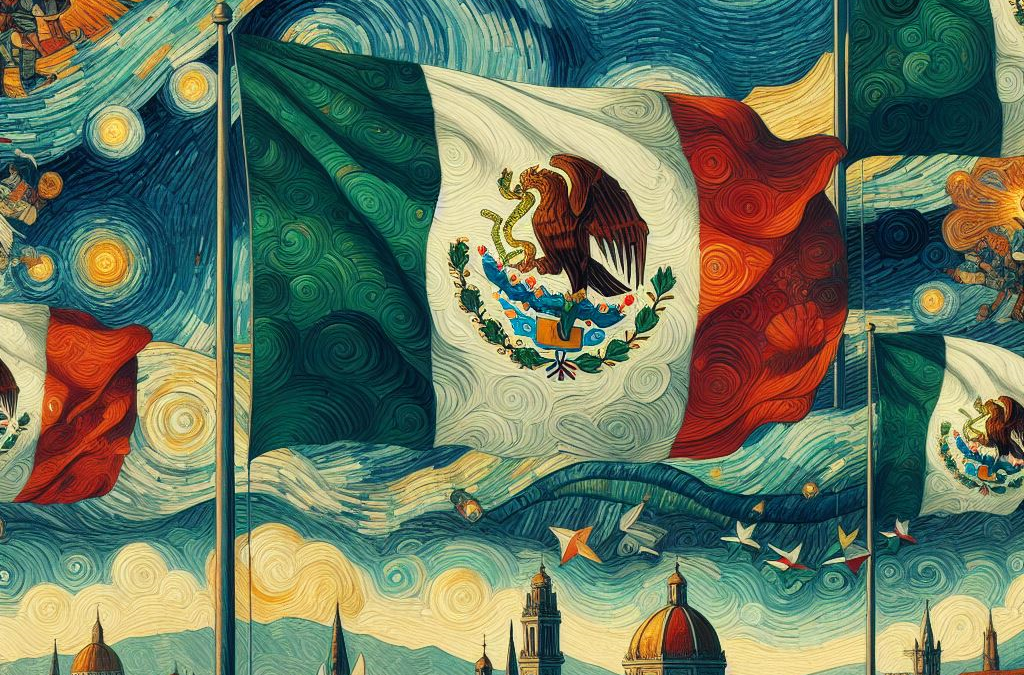
Unraveling Mexico’s Political System
By Tom Seest
At TopCozumelNews, we help travelers enjoy Cozumel by collating information learned from frequently traveling to beautiful Cozumel.
Be sure to read our other related stories at TopCozumelNews to learn more about the Island of Cozumel.
What Is Mexico’s Government Structure?
Mexico’s government structure is as intricate as a marigold garland on a Day of the Dead altar, blending layers of tradition and modernity into a colorful tapestry of governance. At its core, Mexico is a federal republic, which means it operates under a system that balances power between the national and state governments. Picture a family reunion where everyone has a say, but the opinions can diverge just as much as the flavors of the tamales served—what’s good for one may not sit right with another.
At the top of this hierarchy sits the President, who serves as both the head of state and the head of government. Elected every six years, the president holds the keys to the executive office and is often seen as the main architect of national policy. Unlike some positions where incumbents can brush off a lack of popularity, the president in Mexico faces a constant pressure to deliver. Given their limited term, they rush to make their mark, steering the ship through turbulent political waters while keeping an eye on public opinion, which can be as fickle as a piñata at a kid’s birthday party.
Under the president, you have the Cabinet, composed of appointed officials who oversee various departments—everything from defense to education. It’s like a band of mariachis, each tasked with harmonizing their melodies to create a symphony of governance. But the president’s influence doesn’t stop with the Cabinet; they are also backed by a robust bureaucracy that helps implement policies at the ground level, essentially the backbone of day-to-day governance.
Legislatively, Mexico has a bicameral Congress, divided into the Senate and the Chamber of Deputies. Think of it as the protective double layer of a taco: while both chambers contribute to the filling of policymaking, they each have distinct roles. The Senate, with its 128 members, focuses on national matters, diplomatic relations, and the ratification of treaties. Meanwhile, the Chamber, home to 500 deputies, handles local issues and financial decisions, making sure the peso doesn’t take an unplanned trip south.
And let’s not forget the judiciary—a vital branch that ensures the rule of law is upheld. With the Supreme Court at its helm, the judiciary interprets laws and safeguards the constitution, acting as the referee in this political game.
So, that’s a peek into Mexico’s government structure—a complex, vibrant system that reflects both the rich heritage and modern-day challenges of a nation striving for balance. Just like any good fiesta, it takes all parts working together to create a celebration of democracy that’s uniquely Mexican.

What Is Mexico’s Government Structure?
What Is Mexico’s Government Structure?
- Mexico operates as a federal republic, balancing power between national and state governments.
- The President serves as both head of state and head of government, elected every six years.
- The President faces pressure to be popular and deliver results within a limited term.
- The Cabinet consists of appointed officials overseeing various departments, supporting the President’s policies.
- Mexico has a bicameral Congress, consisting of the Senate (128 members) and the Chamber of Deputies (500 deputies).
- The Senate focuses on national issues, diplomatic relations, and treaty ratification, while the Chamber handles local issues and financial decisions.
- The judiciary, led by the Supreme Court, interprets laws and safeguards the constitution, ensuring the rule of law.

What Is Mexico’s Government Structure?
Table Of Contents
- What Is Mexico’s Government Structure?
- Does The President Lead Mexico?
- What Powers Does Mexico’s Federal District Hold?
- What Powers Do Mexico’s State Governments Possess?
- What Powers Do Mexico’s Municipal Governments Hold?
- What Is Mexico’s Judicial System Like?
- What Role Does The Mexican Congress Play?
- What Are The Responsibilities Of The Judiciary In Mexico?
- Conclusion
- Other Resources
- Glossary Of Terms
- Other Questions
- Haiku
- Poem
- Checklist
Does The President Lead Mexico?
When diving into the intricacies of political power in Mexico, one might imagine a figure standing tall and resolute at the helm, guiding a ship through stormy waters. The reality, however, is often a complex tableau of influence, negotiation, and a good measure of cultural nuance. The Mexican president, while undoubtedly a pivotal player on the national stage, operates within a system that demands more than just charisma and decisiveness. It requires navigating the intricate web of public sentiment, regional dynamics, and a legislature that doesn’t always play ball.
To understand the leadership role of the president in Mexico, one must first recognize the country’s storied history and the lingering impact of its revolutionary past. The presidency, since the days of the early 20th century upheavals, has been a symbol of both hope and controversy. With the power to enact significant reforms and enact policies, the president is expected to wield considerable influence. Yet, the reality is often a dance—sometimes a tango, sometimes a two-step—involving cooperation and contention with the Congress, various political factions, and an incredibly diverse populace.
The Mexican constitution endows the president with a variety of powers, from shaping foreign policy to influencing budget allocations. However, presidents cannot push their agendas through sheer will alone. They must engage with governors, mayors, local leaders, and various social movements. In a country where regional identity is strong, and political allegiance can shift like the desert sands, this collaborative approach is crucial. The president’s ability to lead is significantly tested when attempting to unite disparate voices clamoring for attention—each with its own unique needs and aspirations.
And let’s not forget the role of public opinion. In an age where social media can catapult a tweet to national headlines, the Mexican president walks a tightrope. Policies can rise and fall on the tide of public sentiment, and decisions made in the marble halls of power can elicit celebrations or outcries in the streets. The modern leader must be as much a communicator as a decision-maker, adept at both stroking the ego of their party and addressing the needs of their constituents.
While the president certainly leads, they do so amid an orchestra of voices and interests. The true art of leadership in Mexico is not just about holding the reins but knowing when to let others take the lead in the ongoing dialogue that shapes the nation.

Does The President Lead Mexico?
Does The President Lead Mexico?
- The Mexican presidency is characterized by a complex interplay of influence, negotiation, and cultural nuances.
- Presidents navigate a challenging political landscape, requiring cooperation with Congress and various factions.
- The history of revolution in Mexico has established the presidency as a symbol of hope and controversy.
- Presidents hold significant powers but must collaborate with governors, local leaders, and social movements.
- Regional identity and shifting political allegiances necessitate a collaborative leadership approach.
- Public opinion, amplified by social media, significantly impacts governmental decision-making.
- Effective presidential leadership involves balancing decision-making with dialogue among diverse voices.

Does The President Lead Mexico?
What Powers Does Mexico’s Federal District Hold?
Ah, Mexico City’s Federal District—an urban sprawl that thrums with life, energy, and a unique brand of governance. At the heart of this vibrant metropolis lies a complex interplay of powers that shape not just the city itself, but the very fabric of the nation. Think of it as a bustling engine, where each component has a role to play in keeping the whole machine running smoothly.
First off, let’s unpack a key aspect of the Federal District. Unlike any other state in the country, it serves as both the capital and a singular entity that operates under its own set of rules. While other states have governors and legislatures to wield authority, the Federal District is governed by a Mayor and a legislative assembly. This structure grants the district a fair amount of autonomy, allowing it to craft local policies tailored to its unique challenges—everything from managing urban pollution to regulating public transport.
However, hold onto your hats, because there’s more to the story. The Federal District still exists within the broader context of the Mexican federal system. This means that while it has local power over areas such as education, public health, and security, it must also play nice with national legislation. It’s a balancing act, where Mexico City must navigate the sometimes turbulent waters of federal oversight while pushing forward innovative policies designed for its diverse populace.
Now, let’s talk about some real authority. The Federal District has the ability to raise taxes, regulate land use, and implement public projects, which means it can wield significant influence over economic development. Whether it’s zoning laws that pave the way for new skyscrapers or public funding initiatives that support cultural festivals, these decisions will directly affect millions of residents.
Yet, with great power comes great responsibility. The Federal District has faced numerous challenges—crime rates, social inequality, and environmental degradation, to name a few. As such, its governing bodies must stay agile and responsive to the needs of the people, balancing local ambitions with broader national policies.
So, as you stroll through the lively streets of Mexico City, remember that behind every taco stand and towering skyscraper lies a unique governance system, quietly powering the dynamic engine that is the Federal District. Here, decisions are made that ripple out to impact the lives of millions—well beyond the shadows of the towering Palacio de Bellas Artes and the zocalos of this exceptional city.

What Powers Does Mexico’s Federal District Hold?
What Powers Does Mexico’s Federal District Hold?
- The Federal District of Mexico City operates as both the capital and a unique entity with its own governance structure.
- Governance is executed by a Mayor and a legislative assembly, allowing for local autonomy in policy-making.
- While it has local powers over education, health, and security, the Federal District must adhere to national legislation.
- The district holds authority to raise taxes, regulate land use, and implement public projects, impacting economic development.
- Decision-making in the Federal District affects urban issues like pollution and public transportation.
- The district faces challenges including crime, social inequality, and environmental concerns, necessitating responsive governance.
- Policies and decisions made in the Federal District have broad implications for its diverse and populous community.

What Powers Does Mexico’s Federal District Hold?
What Powers Do Mexico’s State Governments Possess?
In the grand tapestry of governance, Mexico’s state governments are the threads that weave the local fabric of society, stitched with a blend of authority and responsibility that’s as nuanced as a finely crafted suit. Each of the 32 states possesses a unique set of powers granted by the country’s Constitution, which empowers them to govern with a degree of autonomy while still being colored by the national framework.
First off, let’s talk about the basics. State governments have control over their own executive, legislative, and judicial branches, a trifecta that allows them to run their affairs with a localized touch. This means that everything from law-making to administration falls under their jurisdiction, provided it doesn’t butt heads with federal law. Think of it like a unique recipe for tamales; while there’s a standard base, every state can add its own cherished ingredients to spice things up.
Education is one area where states flex their muscles. Each state sets its own educational policies and manages public schools, which means that a student in Yucatán might learn about local history differently than a kid in Baja California. This isn’t just a matter of curriculum; it’s about cultural identity and local pride, baking regional flavor right into the educational system.
Then there’s taxation. States have the power to levy their own taxes, from property taxes to sales taxes, enabling them to fund everything from road maintenance to healthcare services. This financial autonomy allows each state to shape its economic landscape, aiming for a sunny business climate or perhaps an innovative green initiative. The diversity in tax structures means that states can either be a haven for entrepreneurs or a tough sell for those looking to start fresh, depending on where they plant their feet.
Let’s not forget the power to create local laws and regulations. Each state can enact legislation that reflects the needs and desires of its residents. Want stricter environmental protections? A state can take the lead. Thinking about regulating the night life scene? Yep, that’s a state decision too.
In essence, Mexico’s state governments are more than just administrative outfits; they are the heartbeats of their communities, each one tailored to the rhythm of local life. They illustrate the dynamic balance of freedom and responsibility, reminding us that governance isn’t merely about rules and regulations, but about understanding the people it serves.

What Powers Do Mexico’s State Governments Possess?
What Powers Do Mexico’s State Governments Possess?
- Mexico’s state governments are essential threads in the country’s governance tapestry, blending authority and responsibility.
- Each of the 32 states has unique powers granted by the Constitution, allowing for a degree of autonomy within a national framework.
- State governments control their own executive, legislative, and judicial branches, enabling localized governance.
- States set their own educational policies and manage public schools, which influences local history and cultural identity.
- States can levy taxes, shaping their economic landscapes and funding essential services like road maintenance and healthcare.
- Each state has the power to create local laws and regulations that reflect the specific needs of its residents.
- Mexico’s state governments embody the balance of freedom and responsibility, focusing on serving their communities.

What Powers Do Mexico’s State Governments Possess?
What Powers Do Mexico’s Municipal Governments Hold?
When you think of government, your mind might drift to grand halls, spirited debates, and suited figures strutting about with impressive titles. But in Mexico, the backbone of governance can be found at the grassroots level: the municipal governments. Picture a robust tapestry of local leaders managing everything from bustling markets to solitary rural roads. They might not wear capes, but these municipal officials wield quite a bit of power—often more than you might expect.
First off, let’s lay down the basics. Mexico is divided into more than 2,400 municipalities, each with its own government structure. These municipalities operate under a framework outlined by the Mexican Constitution, granting them a hefty measure of autonomy. They are responsible for various essential services, including waste management, public safety, urban planning, and even local public health. It’s the local government that decides how to enforce building codes or respond to community needs—big stuff when you consider how much everyday life hinges on these decisions.
One of the most significant powers resting in the hands of municipal governments is financial control. They have the authority to levy taxes and fees within their jurisdictions. This includes property taxes, local sales taxes, and various licensing fees. With this financial muscle, municipalities can fund their projects, maintain infrastructure, and support community programs. In a sense, they are the budget balancers of their respective regions, determining where every peso goes.
But it’s not all about dollars and cents. Municipal governments also serve as a direct line of communication between the people and the larger state government. Residents can approach their local officials with concerns, requests, or suggestions, and it’s the duty of these officials to advocate on their behalf. This can mean everything from lobbying for better road maintenance to pushing for more educational resources in the local schools.
Yet, it’s worth noting that the powers of municipal governments can vary significantly from one region to another. Larger municipalities, like Mexico City, have an expansive scope of authority, while smaller, more rural municipalities may find their powers somewhat limited. Nonetheless, these local authorities remain a crucial part of the democratic fabric, bridging the gap between state mandates and the vibrant needs of their communities.
In a world where we often overlook the complexities of local governance, it’s vital to recognize that it’s here, at the municipal level, where democracy truly plays out. And that’s no small feat—it’s the heartbeat of Mexico, pulsing through its towns and cities, personified by the dedicated public servants working tirelessly to enhance the lives of their neighbors.

What Powers Do Mexico’s Municipal Governments Hold?
What Powers Do Mexico’s Municipal Governments Hold?
- Municipal governments in Mexico form the backbone of governance, managing local affairs from bustling markets to rural roads.
- There are over 2,400 municipalities in Mexico, each with its own autonomous government structure as outlined by the Mexican Constitution.
- Municipal governments provide essential services such as waste management, public safety, urban planning, and local public health.
- They have significant financial control, including the authority to levy property taxes, local sales taxes, and licensing fees.
- Municipalities play a vital role in budgetary decisions, influencing how funds are allocated for community projects and infrastructure maintenance.
- Local governments act as a communication channel between residents and state authorities, advocating for community needs and concerns.
- The powers of municipal governments vary by region, with larger municipalities like Mexico City having more expansive authority than smaller rural areas.

What Powers Do Mexico’s Municipal Governments Hold?
What Is Mexico’s Judicial System Like?
Mexico’s judicial system is a complex tapestry woven from centuries of history, cultural nuances, and evolving legal frameworks. At its core, it’s a structure designed to dispense justice, but like many things in life, it’s a bit more intricate than it appears on the surface.
At the top of this system sits the Supreme Court of Justice, Mexico’s highest court, tasked with interpreting the Constitution and the laws that flow from it. Comprised of 11 justices appointed by the president and confirmed by the Senate, the court serves as the ultimate arbiter in matters of constitutional significance. The justices often find themselves wrestling with issues ranging from human rights to economic policies, and their decisions can have profound implications for millions.
Now, let’s venture a little further down the ladder to the federal and state courts. Mexico operates under a dual system, with federal courts handling cases that break federal laws and state courts dealing with violations of local laws. This creates a layered approach, allowing for a degree of specialization. However, the downside is that citizens often find themselves navigating a maze of bureaucracy that can feel intimidating and, at times, baffling.
And let’s not forget about the public prosecutor’s office (Ministerio Público). They play a pivotal role in investigating crimes and building cases against suspects. Unfortunately, the office has been criticized for its inefficiencies and alleged corruption, which can hinder justice rather than help it. Imagine a game of telephone where the message gets muddled at every step; that’s how many feel when dealing with this side of the system.
One of the most notable changes in recent years has been the shift to an oral adversarial system, which replaced the older written system. This shift aims to bring transparency and efficiency to courtroom proceedings, allowing for a more dynamic presentation of cases. While it’s still a work in progress, early signs suggest it’s a step in the right direction.
However, challenges remain. Issues such as lengthy trials, corruption, and limited access to legal resources continue to plague the system. For many citizens, justice is still a distant prospect, often resembling a marathon rather than a sprint. In a land rich with resilience and resolve, the pursuit of fairness is an ongoing journey, one that reflects the complexities of Mexico itself—vibrant, challenging, and ultimately human.

What Is Mexico’s Judicial System Like?
What Is Mexico’s Judicial System Like?
- Mexico’s judicial system is deeply rooted in history and cultural nuances, designed to dispense justice.
- The Supreme Court of Justice, the highest court, interprets the Constitution and is comprised of 11 justices appointed by the president and confirmed by the Senate.
- Mexico operates under a dual system of federal and state courts, causing complexity and potential bureaucracy for citizens.
- The public prosecutor’s office (Ministerio Público) investigates crimes but faces criticism for inefficiency and corruption.
- Recent reforms have introduced an oral adversarial system to enhance transparency and efficiency in courtroom proceedings.
- Ongoing challenges include lengthy trials, corruption, and limited access to legal resources, affecting citizens’ pursuit of justice.
- The journey toward fairness in Mexico illustrates the country’s resilience and the complexities inherent in its legal system.

What Is Mexico’s Judicial System Like?
What Role Does The Mexican Congress Play?
Alright, let’s dig into the heart of the Mexican political machine—its Congress. You might be thinking, “Why should I care about a bunch of folks in crisp suits and ties?” Well, folks, buckle up because this is where the gears of governance really start to grind.
The Mexican Congress is a bicameral body, meaning it’s split into two distinct houses: the Senate and the Chamber of Deputies. The Senate has 128 members, while the Chamber of Deputies is a bit beefier with 500. Each house has its own unique responsibilities, but they come together to ensure the country runs smoothly—or at least attempts to.
First up, what do these folks do? Well, for starters, they create laws. That’s right! Each time you think, “Why is this happening?” or “Who decided that?” somewhere in the hallowed halls of Congress, a bunch of representatives are bustling around considering the legal framework that governs everything from education to taxes to, yes, even tacos. You’ve heard of the Mexican Constitution, right? Congress plays a crucial role in amending it or crafting new laws that shape the legal landscape of the nation.
But wait, there’s more! The Mexican Congress is also responsible for approving the federal budget. Imagine a household budget but on a massive scale—that’s what Congress tackles every year. They assess how to allocate funds across various sectors, ensuring that there’s money for social programs, infrastructure, and public safety. Think about it: without the men and women of Congress carefully piecing together that financial puzzle, many vital services might just fall through the cracks.
Now, let’s not forget their role in overseeing other branches of government. Congress isn’t just handing out laws like candy at Halloween; they keep an eye on the executive branch to ensure that the president isn’t running amok. They have the power to hold investigations, summon officials for questioning, and even impeach if things get a bit out of hand.
In short, the Mexican Congress is like the grease in a well-oiled machine. They may not always be in the spotlight, but without them, the engine of democracy would struggle to run. It’s a complex, often messy business, but that’s what makes it essential. So, while you may not hear their names every day, remember: they’re hard at work shaping the very framework of life in Mexico.

What Role Does The Mexican Congress Play?
What Role Does The Mexican Congress Play?
- The Mexican Congress is a bicameral body consisting of the Senate (128 members) and the Chamber of Deputies (500 members).
- Congress creates laws that influence various aspects of life in Mexico, including education and taxation.
- It plays a crucial role in amending the Mexican Constitution and crafting new laws.
- The Congress is responsible for approving the federal budget, allocating funds to different sectors.
- They oversee the executive branch to ensure accountability and can investigate or impeach officials if necessary.
- The Mexican Congress is essential for the functioning of democracy in the country.
- Despite not always being in the spotlight, Congress significantly shapes the framework of life in Mexico.

What Role Does The Mexican Congress Play?
What Are The Responsibilities Of The Judiciary In Mexico?
When you peel back the layers of Mexico’s judicial system, you find a complex structure bustling with responsibility and authority. At its core, the judiciary in Mexico plays a critical role in maintaining the balance of power, upholding the rule of law, and ensuring that justice prevails, even when the waters get murky.
First off, let’s talk about the most fundamental responsibility: interpreting and applying the law. The Mexican judiciary, which consists of the Supreme Court, federal tribunals, and local courts, ensures that laws are not just words on a page—they serve real people in real situations. Judges and magistrates must navigate the intricacies of legal codes, sift through mountains of case law, and make decisions that impact lives. They’re not just arbiters; they’re interpreters of justice, shaping how the law is understood and implemented.
Now, we can’t overlook the judiciary’s role as the guardian of constitutional rights. In a country with a rich history of social movements and reforms, the judiciary provides an essential check against abuses of power, whether by the government or private entities. If a citizen feels their rights have been violated—say, by unlawful detention or discrimination—they can turn to the judiciary for redress. It’s a heavy burden, and the stakes are high, but these judges and justices are there to ensure that the fight for fairness and equity continues.
Moreover, the judiciary acts as a mediator in disputes—be it civil, criminal, or administrative. When conflicts arise, whether between neighbors squabbling over property lines or corporations wrestling over contracts, the judiciary steps in to provide a lawful resolution. It’s about more than just settling scores; it’s about fostering a society where people can resolve their differences peacefully and fairly.
Lastly, let’s give a nod to the judiciary’s duty to educate and inform. Through rulings, public statements, and outreach, judges often engage with citizens about their rights and the legal processes at play. This isn’t just about dispensing justice but about cultivating a society informed about its own laws and standing firm for its own rights.
In sum, the Mexican judiciary bears heavy responsibilities that reverberate through the fabric of society. They stand as a vital component of democracy, constantly working to reflect the values and rights that form the backbone of a just nation. It’s not always glamorous, but the work is crucial, and for those who wear the robe, it’s an ongoing journey filled with profound significance.

What Are The Responsibilities Of The Judiciary In Mexico?
What Are The Responsibilities Of The Judiciary In Mexico?
- The Mexican judiciary is a complex system that balances power, upholds the rule of law, and ensures justice.
- Its fundamental role is to interpret and apply laws, impacting real people’s lives.
- The judiciary serves as a guardian of constitutional rights, protecting citizens against abuses of power.
- Judges mediate various disputes, providing lawful resolutions to conflicts in society.
- Through rulings and public engagement, the judiciary educates citizens about their rights and legal processes.
- The judiciary plays a vital role in democracy, reflecting the values and rights essential for a just nation.
- The work of judges is crucial and significant, even if it is not always glamorous.
What Are The Responsibilities Of The Judiciary In Mexico?
Conclusion
In conclusion, Mexico’s government structure is like a vibrant tapestry, richly woven from its historical threads, cultural intricacies, and the palpable spirit of its people. As a federal republic, the nation operates under a dynamic system that deftly balances power between the national and state governments—much like a family gathering where each voice matters, but some opinions can lead to spirited debates. At the helm is the President, serving as both head of state and government, a role filled with the weight of public expectation and the urgency to leave a mark within a limited six-year term.
Beneath the President lies a bustling Cabinet, akin to a group of mariachis harmonizing the diverse interests of the nation. This structure is bolstered by a robust bureaucracy, the skeletal framework that ensures policies shift from legislation to daily life. Correspondingly, Mexico’s bicameral Congress operates as a protective double layer, with the Senate focusing on national interests while the Chamber of Deputies addresses local concerns—an intricate dance that strives for coherence amid the distinct needs of its citizens.
Then we journey into the states, where governors and local legislatures echo the national governance with unique regional flavors. Each of Mexico’s 32 states garners considerable autonomy, shaping educational policies, tax structures, and localized laws, reflecting the distinct character of its citizens. At the grassroots level, municipal governments pulse with life, wielding financial authority and offering responsive governance that directly impacts everyday living.
Let’s not forget the judiciary—a pivotal branch charged with ensuring justice prevails. Anchored by the Supreme Court, the judiciary interprets laws and safeguards constitutional rights, acting as the essential referee in this political symphony. As it addresses the contemporary challenges of corruption and access to justice, it showcases the ongoing evolution of the legal landscape.
Taken together, the various layers of Mexico’s political system form a complex, colorful machine fueled by diverse voices and interests. Each component plays a crucial role in promoting democracy and striving for a more just society. So, whether you’re wandering the streets bustling with ambition or navigating through legislative halls echoing with debate, remember: Mexico’s governance is a collaborative fiesta, a spirited celebration where every voice matters, and every decision resonates deeply through its vibrant communities.

Conclusion
Conclusion:
- Mexico’s government is a federal republic, balancing power between national and state governments.
- The President serves as both head of state and government, with a six-year term filled with public expectations.
- A bustling Cabinet harmonizes diverse national interests, similar to a mariachi group.
- Mexico’s bicameral Congress includes the Senate for national interests and the Chamber of Deputies for local concerns.
- Each of Mexico’s 32 states has considerable autonomy, shaping local policies and laws.
- The judiciary, led by the Supreme Court, plays a crucial role in interpreting laws and safeguarding rights.
- Mexico’s political system is a collaborative fiesta, reflecting its vibrant communities and promoting democracy.
Conclusion
Other Resources

Other Resources
Most of the people who read this are also figuring out where to stay. A couple of places we run or know well, in case it’s useful: Cozumel Relaxing is a walled-garden 2-bedroom villa in Gonzalo Guerrero built for slow mornings and long stays. Cozumel Journey is an editorial guide to Cozumel — neighborhoods, planning tips, and life on the island for travelers who want context, not a cruise schedule.
Here is a list of other resources you can review online to learn more:
- Cozumel Museum
- Playa Palancar Beach Club
- Chardonnay Italian Mexican Food Restaurant Cozumel
- Hard Rock Cafe Cozumel
- Cozumel Amazing Tours
- The Westin Cozumel
- U.S. Department of State
- Viva Mexico Snackbar
- Breakfast At Silvias
- Cozumel Relaxing
- cozumeljourney.com
Use This Prompt To Get More Resources With Your Favorite Online AI Tool: Please provide me with a list of online articles with their URLs in a bulleted list that I can read regarding What Is Mexico’s Government Structure?

Other Resources
Glossary Terms
What Is Mexico’s Government Structure? – Glossary Of Terms
1. Federal Republic: A political structure in which power is divided between a central government and individual states.
2. Constitution: The supreme law of Mexico, established in 1917, outlining the country’s government framework and citizen rights.
3. Executive Branch: The part of the government responsible for implementing and enforcing laws, headed by the President of Mexico.
4. Legislative Branch: The government body consisting of elected representatives that create, amend, and repeal laws; in Mexico, it includes the Chamber of Deputies and the Senate.
5. Judicial Branch: The system of courts responsible for interpreting laws and administering justice, ensuring the rule of law in the nation.
6. President: The head of state and head of government in Mexico, elected for a six-year term and responsible for the administration of the country.
7. Senate: The upper house of Mexico’s Congress, consisting of 128 senators who represent the states and are involved in law-making.
8. Chamber of Deputies: The lower house of Mexico’s Congress, composed of 500 deputies who draft and approve legislation.
9. Municipalities: The smallest administrative divisions in Mexico, responsible for local governance, services, and community needs.
10. Governorship: The role of overseeing a state within Mexico, with governors elected for a six-year term.
11. Political Parties: Organized groups that seek to gain power through elections; Mexico has multiple parties, including the PRI, PAN, and Morena.
12. Electoral Commission (INE): The National Electoral Institute responsible for overseeing elections, voter registration, and electoral fairness.
13. Amendment: A formal change or addition proposed to the Constitution or legislation, requiring specific procedures to be enacted.
14. Checks and Balances: A system that ensures no one branch of government becomes too powerful, with each branch having powers to limit the others.
15. Judicial Review: The authority of courts to review legislative acts and executive actions for compliance with the Constitution.
16. Suffrage: The right to vote in elections, which has expanded over time in Mexico to include all adult citizens.
17. Cabinet: A group of senior government officials appointed by the President, often heads of government departments, assisting in policymaking and administration.
18. NAFTA: The North American Free Trade Agreement, which affects economic policies and international trade relations involving Mexico, the U. S. , and Canada.
19. Supreme Court: The highest court in the judicial branch, which interprets constitutional issues and finalizes legal disputes.
20. State of Emergency: A situation in which normal constitutional procedures are suspended, often in response to crises or national threats.
21. Vice President: Unlike many countries, Mexico does not have an official vice president; instead, the President designates officials to support them.
22. Indigenous Rights: Legal protections and recognition afforded to Mexico’s indigenous populations, impacting governance and cultural preservation.
23. Civil Society: The arena of uncoerced collective action around shared interests, often influencing political processes and policy-making.
24. Referendum: A direct vote in which the electorate is invited to vote on a particular proposal, often regarding constitutional amendments or new laws.
25. Transparency: The principle that governmental actions and decisions should be open and accessible to the public to promote accountability.
26. Decentralization: The transfer of authority from central government to local or regional administrations, enhancing local governance.
27. Proportional Representation: A voting system used in Mexico that allocates seats in the legislature based on the percentage of votes received by each party.
28. Corruption: The abuse of power for personal gain, which has been a significant issue in Mexican politics and administration.
29. Human Rights: Fundamental rights inherent to all human beings, which Mexico’s government is obligated to protect under national and international law.
30. Political Reform: Changes aimed at improving the political system, enhancing democracy, and addressing issues such as corruption and electoral integrity.

Glossary Of Terms
Other Questions
What Is Mexico’s Government Structure? – Other Questions
If you wish to explore and discover more, consider looking for answers to these questions:
- What are the key differences between the roles of the Senate and the Chamber of Deputies in Mexico?
- How is the President of Mexico elected and what are the eligibility requirements?
- What challenges does the President of Mexico face in their leadership role?
- How is the Federal District governed differently from other Mexican states?
- What are the specific responsibilities of the Mayor of Mexico City?
- How do state governments in Mexico interact with the federal government?
- What are the limitations of municipal governments in Mexico?
- How does the Mexican judicial system address issues of corruption?
- What recent reforms have been implemented in Mexico’s judicial system?
- What is the process for amending the Mexican Constitution?
- How does public opinion influence the decisions made by the Mexican Congress?
- What mechanisms does Congress use to oversee the executive branch?
- How can citizens engage with their local municipal governments in Mexico?
- What role do social movements play in shaping Mexican political policies?
- What are the major legal rights protected by the Mexican judiciary?
- How does the judiciary in Mexico promote access to justice for marginalized communities?

Other Questions
Haiku
What Is Mexico’s Government Structure? – A Haiku
Power shapes and binds,
Mexico’s vibrant fabric—
Voices weave through time.

Haiku
Poem
What Is Mexico’s Government Structure? – A Poem
In Mexico’s heart, a marigold thrives,
A vibrant blend where tradition survives.
A federal republic, a tapestry spun,
A dance of governance, where all voices run.
At the helm stands the President, bold,
Leading the charge, with stories untold.
A six-year journey through waters so deep,
Navigating the tides where the public hearts leap.
Like mariachis strumming in varied delight,
The Cabinet plays on, from dawn until night.
In Congress, two chambers, a taco’s embrace,
Together they craft, each law finds a place.
The Senate, the Chamber, with duties assigned,
Balancing local with national declines.
And the judiciary, a steadfast guide,
In the maze of laws, where justice must bide.
Beneath the grand layers, municipalities hum,
Two thousand strong, where decisions can come.
From taxes to safety, they mold local life,
Bridging the gaps, through struggle and strife.
State governments wield unique might,
Crafting laws, in culture’s own light.
Education and taxes, each state finds its way,
In this rich panorama, they flourish and sway.
In the courthouses echo those seeking their right,
A dynamic system, where wrong battles right.
Yet issues persist in the quest for the fair,
As citizens strive for justice to stare.
So here lies a snapshot of Mexico’s grace,
A dance of democracy, diverse in its face.
With voices united, across every street,
In the heart of the nation, their spirits compete.
From the capital’s pulse to the rural’s embrace,
In every corner, governance finds its own place.
A collage of voices, a rhythm so true,
In the land of the marigold, life blossoms anew.

Poem
Checklist
What Is Mexico’s Government Structure? – A Checklist
1. Overview of Government Structure
_____ Recognize Mexico as a federal republic.
_____ Understand the balance of power between national and state governments.
2. The Presidential Role
_____ Identify the President as both head of state and head of government.
_____ Familiarize with the President’s election cycle (every six years).
_____ Understand the role of the Cabinet in supporting the President.
_____ Recognize the influence of public opinion on presidential decision-making.
3. Legislative Structure
_____ Learn about the bicameral Congress (Senate and Chamber of Deputies).
_____ Understand the distinct roles of the Senate (128 members) and Chamber of Deputies (500 members).
_____ Recognize Congress’s responsibilities in lawmaking and budget approval.
4. Judicial System
_____ Identify the Supreme Court as the highest court in Mexico.
_____ Understand the dual system of federal and state courts.
_____ Familiarize with the role of the public prosecutor’s office (Ministerio Público).
5. Federal District Autonomy
_____ Recognize that Mexico City functions as its own entity with a Mayor and legislative assembly.
_____ Understand the powers of the Federal District in managing local policies and governance.
6. State Government Powers
_____ Identify the powers of Mexico’s 32 state governments.
_____ Recognize state authority over education, taxation, and local law-making.
7. Municipal Government Roles
_____ Understand the structure and powers of over 2,400 municipalities in Mexico.
_____ Familiarize with municipal responsibilities in providing essential services and advocating for local needs.
8. Judicial Responsibilities
_____ Recognize the judiciary’s role in interpreting and applying the law.
_____ Understand the judiciary’s duty to protect constitutional rights and mediate disputes.
_____ Familiarize with the importance of engaging and educating citizens about the judiciary.
This checklist can serve as a helpful summary for readers to ensure they grasp the key components of Mexico’s government structure as discussed in the article.

Checklist
At TopCozumelNews, we help travelers enjoy Cozumel by collating information learned from frequently traveling to beautiful Cozumel.
Be sure to read our other related stories at TopCozumelNews to learn more about the Island of Cozumel.